

CRUISE ID # OCEANWIDERVR14-27
Longyearbyen TO Longyearbyen
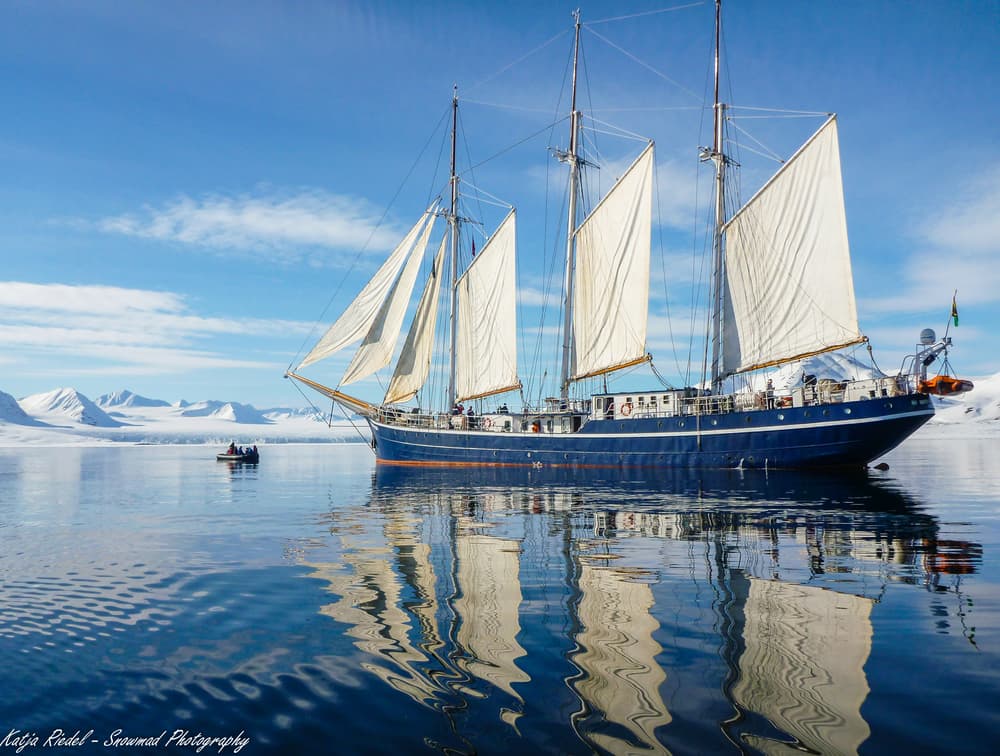

All itineraries are for guidance only. Programs may vary depending on local ice, weather, and wildlife conditions. Landings are subject to site availabilities, permissions, and environmental concerns per AECO regulations. Official sailing plans and landing slots are scheduled with AECO prior to the start of the season, but the expedition leader determines the final plan. Flexibility is paramount for expedition cruises, and willingness to compromise on comfort is a basic requirement on board a historic sailing vessel. Important information about the use of sails: The vessel is equipped with sails to be used in good conditions (based on open sea, water depth, wind, and time allowance), but the use of sails is not guaranteed. The captain decides whether to use the sails or the engine. If sails are used, the crew will operate them. Guests must follow the safety instructions of the team. The average cruising speed for s/v Rembrandt van Rijn is 6.5 knots.
$8,950
WITH SPECIAL SAVINGS APPLIED
FARES SHOWN ARE PER GUEST
Suites & Fares
CHOOSE START DATE
: July 28, 2027
Itinerary
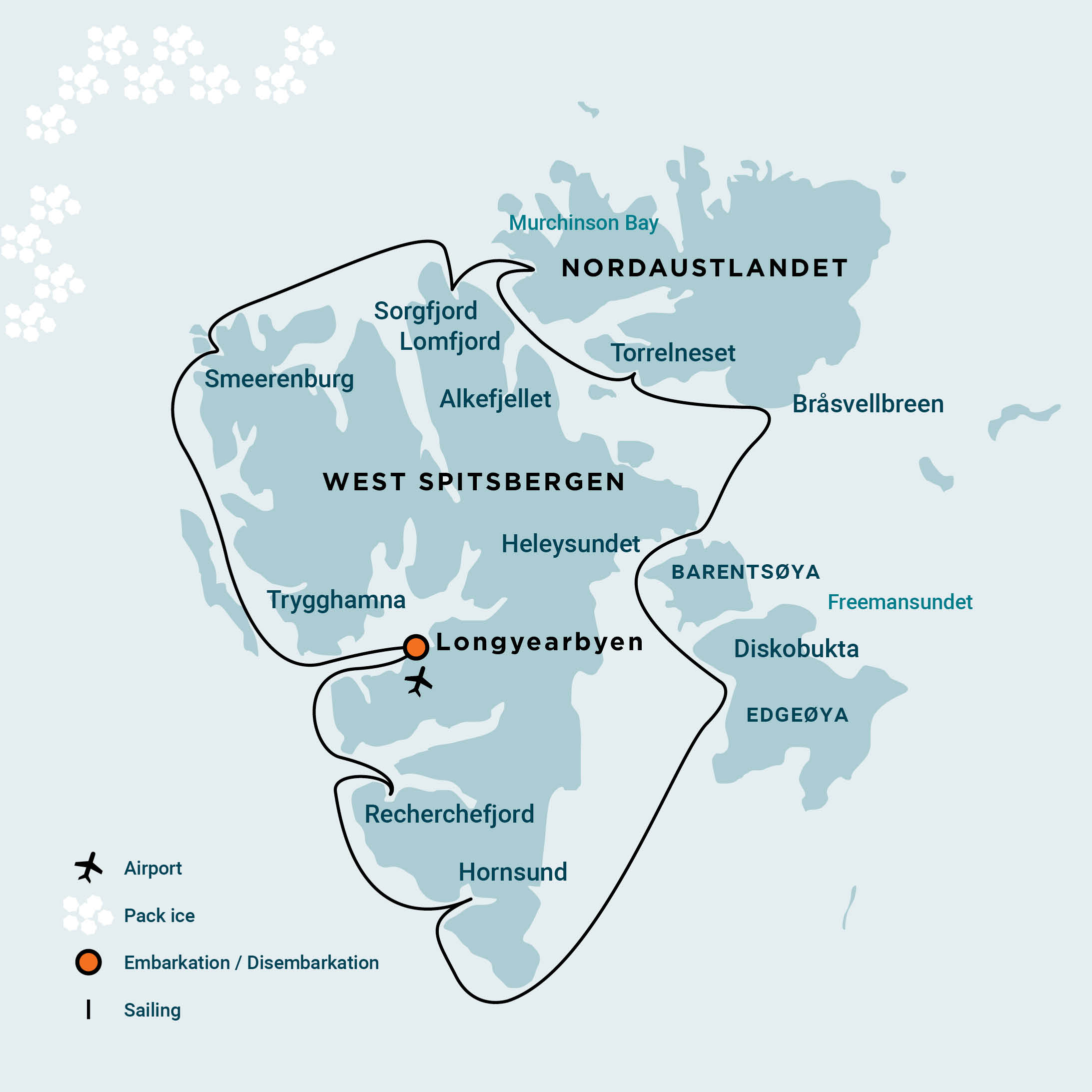
You touch down in Longyearbyen, the administrative center of Spitsbergen, the largest island of the Svalbard archipelago. Enjoy strolling around this former mining town, whose parish church and Svalbard Museum make for fascinating attractions. Though the countryside appears stark, more than a hundred species of plant have been recorded in it.
In the early evening the ship sails out of Isfjorden, where you might spot the first minke whale of your voyage. In the evening you sail for Trygghamna, where you see the remains of a 17th-century English whaling station and 18th-century Pomor hunting station, both of which you can visit the next morning.
From Trygghamna you walk to Alkhornet, a large seabird cliff where the birds are scouting out breeding places. Below the cliffs is a common place to spot Arctic foxes, and you may also see reindeer grazing on the lush vegetation if there’s not too much snow.
You sail into Fuglefjorden amid views of Svitjodbreen and Birgerbukta, both breeding areas for great skuas as well as likely spots to see a polar bear. On Birgerbukta you can see 17th-century Basque ovens once used for cooking whale blubber. The aim next is to visit Ytre Norskøya, a small island that served for many years as a Dutch whaling lookout. Here you can still follow the whalers’ tracks to the summit of the island, passing popular bird cliffs on the way. On shore are the remains of more 17th-century blubber ovens, while Arctic skuas and common eiders breed among the graves of some two hundred Dutch whalers.
Today you start by sailing either to Sorgfjord or Murchison Bay, on the north side of which lies an extensive polar desert that is home to numerous reindeer as well as a Swedish research station. You then continue through Hinlopen Strait, surrounded by lofty ice caps.
Over the following days, you may visit the following sites:
Lomfjord – This is a beautiful fjord fringed by towering mountains offering a great opportunities for a hike.
Wilhelmøya – A tundra landscape in which polar bears can possibly be seen, Wilhelmøya is also a good area for shoreline, inland, and altitude-gaining hikes.
Svartknausflya – You may take an excursion to this stark polar desert, which is almost devoid of vegetation but rich with invertebrate fossils and whale skeletons along its raised beaches.
Heleysundet – A narrow but picturesque waterway between Spitsbergen and Barents withthis route can only be made against the current.
Freemansundet – Depending on conditions, you may also sail through this waterway. A walk at Kapp Lee may introduce you to a few new reindeer and walruses, and you might also visit a large colony of kittiwakes nesting in a canyon in Diskobukta. Arctic foxes and polar bears with their young often roam this canyon, scavenging for birds that fall from the ledges. Sub-fossilized whale bones are scattered across the raised beaches.
Hornsund – You continue your Spitsbergen voyage by sailing into the labyrinth of side fjords around Hornsund. At Brepollen rests a large glacial deposit at the head of the fjord. Sailing along the glacier front will afford you good chances of spotting bearded seals and polar bears. The geological formations in this area are vibrant and mesmerizing.
Bellsund – En route to Longyearbyen, you may reach Ahlstrandhalvøya. More fascinating geological formations can be seen here, as well as the remains of 20th-century beluga hunting. (This is still a good area to see beluga.)
Today you start by sailing either to Sorgfjord or Murchison Bay, on the north side of which lies an extensive polar desert that is home to numerous reindeer as well as a Swedish research station. You then continue through Hinlopen Strait, surrounded by lofty ice caps.
Over the following days, you may visit the following sites:
Lomfjord – This is a beautiful fjord fringed by towering mountains offering a great opportunities for a hike.
Wilhelmøya – A tundra landscape in which polar bears can possibly be seen, Wilhelmøya is also a good area for shoreline, inland, and altitude-gaining hikes.
Svartknausflya – You may take an excursion to this stark polar desert, which is almost devoid of vegetation but rich with invertebrate fossils and whale skeletons along its raised beaches.
Heleysundet – A narrow but picturesque waterway between Spitsbergen and Barents withthis route can only be made against the current.
Freemansundet – Depending on conditions, you may also sail through this waterway. A walk at Kapp Lee may introduce you to a few new reindeer and walruses, and you might also visit a large colony of kittiwakes nesting in a canyon in Diskobukta. Arctic foxes and polar bears with their young often roam this canyon, scavenging for birds that fall from the ledges. Sub-fossilized whale bones are scattered across the raised beaches.
Hornsund – You continue your Spitsbergen voyage by sailing into the labyrinth of side fjords around Hornsund. At Brepollen rests a large glacial deposit at the head of the fjord. Sailing along the glacier front will afford you good chances of spotting bearded seals and polar bears. The geological formations in this area are vibrant and mesmerizing.
Bellsund – En route to Longyearbyen, you may reach Ahlstrandhalvøya. More fascinating geological formations can be seen here, as well as the remains of 20th-century beluga hunting. (This is still a good area to see beluga.)
Today you start by sailing either to Sorgfjord or Murchison Bay, on the north side of which lies an extensive polar desert that is home to numerous reindeer as well as a Swedish research station. You then continue through Hinlopen Strait, surrounded by lofty ice caps.
Over the following days, you may visit the following sites:
Lomfjord – This is a beautiful fjord fringed by towering mountains offering a great opportunities for a hike.
Wilhelmøya – A tundra landscape in which polar bears can possibly be seen, Wilhelmøya is also a good area for shoreline, inland, and altitude-gaining hikes.
Svartknausflya – You may take an excursion to this stark polar desert, which is almost devoid of vegetation but rich with invertebrate fossils and whale skeletons along its raised beaches.
Heleysundet – A narrow but picturesque waterway between Spitsbergen and Barents withthis route can only be made against the current.
Freemansundet – Depending on conditions, you may also sail through this waterway. A walk at Kapp Lee may introduce you to a few new reindeer and walruses, and you might also visit a large colony of kittiwakes nesting in a canyon in Diskobukta. Arctic foxes and polar bears with their young often roam this canyon, scavenging for birds that fall from the ledges. Sub-fossilized whale bones are scattered across the raised beaches.
Hornsund – You continue your Spitsbergen voyage by sailing into the labyrinth of side fjords around Hornsund. At Brepollen rests a large glacial deposit at the head of the fjord. Sailing along the glacier front will afford you good chances of spotting bearded seals and polar bears. The geological formations in this area are vibrant and mesmerizing.
Bellsund – En route to Longyearbyen, you may reach Ahlstrandhalvøya. More fascinating geological formations can be seen here, as well as the remains of 20th-century beluga hunting. (This is still a good area to see beluga.)
Today you start by sailing either to Sorgfjord or Murchison Bay, on the north side of which lies an extensive polar desert that is home to numerous reindeer as well as a Swedish research station. You then continue through Hinlopen Strait, surrounded by lofty ice caps.
Over the following days, you may visit the following sites:
Lomfjord – This is a beautiful fjord fringed by towering mountains offering a great opportunities for a hike.
Wilhelmøya – A tundra landscape in which polar bears can possibly be seen, Wilhelmøya is also a good area for shoreline, inland, and altitude-gaining hikes.
Svartknausflya – You may take an excursion to this stark polar desert, which is almost devoid of vegetation but rich with invertebrate fossils and whale skeletons along its raised beaches.
Heleysundet – A narrow but picturesque waterway between Spitsbergen and Barents withthis route can only be made against the current.
Freemansundet – Depending on conditions, you may also sail through this waterway. A walk at Kapp Lee may introduce you to a few new reindeer and walruses, and you might also visit a large colony of kittiwakes nesting in a canyon in Diskobukta. Arctic foxes and polar bears with their young often roam this canyon, scavenging for birds that fall from the ledges. Sub-fossilized whale bones are scattered across the raised beaches.
Hornsund – You continue your Spitsbergen voyage by sailing into the labyrinth of side fjords around Hornsund. At Brepollen rests a large glacial deposit at the head of the fjord. Sailing along the glacier front will afford you good chances of spotting bearded seals and polar bears. The geological formations in this area are vibrant and mesmerizing.
Bellsund – En route to Longyearbyen, you may reach Ahlstrandhalvøya. More fascinating geological formations can be seen here, as well as the remains of 20th-century beluga hunting. (This is still a good area to see beluga.)
Today you start by sailing either to Sorgfjord or Murchison Bay, on the north side of which lies an extensive polar desert that is home to numerous reindeer as well as a Swedish research station. You then continue through Hinlopen Strait, surrounded by lofty ice caps.
Over the following days, you may visit the following sites:
Lomfjord – This is a beautiful fjord fringed by towering mountains offering a great opportunities for a hike.
Wilhelmøya – A tundra landscape in which polar bears can possibly be seen, Wilhelmøya is also a good area for shoreline, inland, and altitude-gaining hikes.
Svartknausflya – You may take an excursion to this stark polar desert, which is almost devoid of vegetation but rich with invertebrate fossils and whale skeletons along its raised beaches.
Heleysundet – A narrow but picturesque waterway between Spitsbergen and Barents withthis route can only be made against the current.
Freemansundet – Depending on conditions, you may also sail through this waterway. A walk at Kapp Lee may introduce you to a few new reindeer and walruses, and you might also visit a large colony of kittiwakes nesting in a canyon in Diskobukta. Arctic foxes and polar bears with their young often roam this canyon, scavenging for birds that fall from the ledges. Sub-fossilized whale bones are scattered across the raised beaches.
Hornsund – You continue your Spitsbergen voyage by sailing into the labyrinth of side fjords around Hornsund. At Brepollen rests a large glacial deposit at the head of the fjord. Sailing along the glacier front will afford you good chances of spotting bearded seals and polar bears. The geological formations in this area are vibrant and mesmerizing.
Bellsund – En route to Longyearbyen, you may reach Ahlstrandhalvøya. More fascinating geological formations can be seen here, as well as the remains of 20th-century beluga hunting. (This is still a good area to see beluga.)
Today you start by sailing either to Sorgfjord or Murchison Bay, on the north side of which lies an extensive polar desert that is home to numerous reindeer as well as a Swedish research station. You then continue through Hinlopen Strait, surrounded by lofty ice caps.
Over the following days, you may visit the following sites:
Lomfjord – This is a beautiful fjord fringed by towering mountains offering a great opportunities for a hike.
Wilhelmøya – A tundra landscape in which polar bears can possibly be seen, Wilhelmøya is also a good area for shoreline, inland, and altitude-gaining hikes.
Svartknausflya – You may take an excursion to this stark polar desert, which is almost devoid of vegetation but rich with invertebrate fossils and whale skeletons along its raised beaches.
Heleysundet – A narrow but picturesque waterway between Spitsbergen and Barents withthis route can only be made against the current.
Freemansundet – Depending on conditions, you may also sail through this waterway. A walk at Kapp Lee may introduce you to a few new reindeer and walruses, and you might also visit a large colony of kittiwakes nesting in a canyon in Diskobukta. Arctic foxes and polar bears with their young often roam this canyon, scavenging for birds that fall from the ledges. Sub-fossilized whale bones are scattered across the raised beaches.
Hornsund – You continue your Spitsbergen voyage by sailing into the labyrinth of side fjords around Hornsund. At Brepollen rests a large glacial deposit at the head of the fjord. Sailing along the glacier front will afford you good chances of spotting bearded seals and polar bears. The geological formations in this area are vibrant and mesmerizing.
Bellsund – En route to Longyearbyen, you may reach Ahlstrandhalvøya. More fascinating geological formations can be seen here, as well as the remains of 20th-century beluga hunting. (This is still a good area to see beluga.)
Today you start by sailing either to Sorgfjord or Murchison Bay, on the north side of which lies an extensive polar desert that is home to numerous reindeer as well as a Swedish research station. You then continue through Hinlopen Strait, surrounded by lofty ice caps.
Over the following days, you may visit the following sites:
Lomfjord – This is a beautiful fjord fringed by towering mountains offering a great opportunities for a hike.
Wilhelmøya – A tundra landscape in which polar bears can possibly be seen, Wilhelmøya is also a good area for shoreline, inland, and altitude-gaining hikes.
Svartknausflya – You may take an excursion to this stark polar desert, which is almost devoid of vegetation but rich with invertebrate fossils and whale skeletons along its raised beaches.
Heleysundet – A narrow but picturesque waterway between Spitsbergen and Barents withthis route can only be made against the current.
Freemansundet – Depending on conditions, you may also sail through this waterway. A walk at Kapp Lee may introduce you to a few new reindeer and walruses, and you might also visit a large colony of kittiwakes nesting in a canyon in Diskobukta. Arctic foxes and polar bears with their young often roam this canyon, scavenging for birds that fall from the ledges. Sub-fossilized whale bones are scattered across the raised beaches.
Hornsund – You continue your Spitsbergen voyage by sailing into the labyrinth of side fjords around Hornsund. At Brepollen rests a large glacial deposit at the head of the fjord. Sailing along the glacier front will afford you good chances of spotting bearded seals and polar bears. The geological formations in this area are vibrant and mesmerizing.
Bellsund – En route to Longyearbyen, you may reach Ahlstrandhalvøya. More fascinating geological formations can be seen here, as well as the remains of 20th-century beluga hunting. (This is still a good area to see beluga.)
Today you start by sailing either to Sorgfjord or Murchison Bay, on the north side of which lies an extensive polar desert that is home to numerous reindeer as well as a Swedish research station. You then continue through Hinlopen Strait, surrounded by lofty ice caps.
Over the following days, you may visit the following sites:
Lomfjord – This is a beautiful fjord fringed by towering mountains offering a great opportunities for a hike.
Wilhelmøya – A tundra landscape in which polar bears can possibly be seen, Wilhelmøya is also a good area for shoreline, inland, and altitude-gaining hikes.
Svartknausflya – You may take an excursion to this stark polar desert, which is almost devoid of vegetation but rich with invertebrate fossils and whale skeletons along its raised beaches.
Heleysundet – A narrow but picturesque waterway between Spitsbergen and Barents withthis route can only be made against the current.
Freemansundet – Depending on conditions, you may also sail through this waterway. A walk at Kapp Lee may introduce you to a few new reindeer and walruses, and you might also visit a large colony of kittiwakes nesting in a canyon in Diskobukta. Arctic foxes and polar bears with their young often roam this canyon, scavenging for birds that fall from the ledges. Sub-fossilized whale bones are scattered across the raised beaches.
Hornsund – You continue your Spitsbergen voyage by sailing into the labyrinth of side fjords around Hornsund. At Brepollen rests a large glacial deposit at the head of the fjord. Sailing along the glacier front will afford you good chances of spotting bearded seals and polar bears. The geological formations in this area are vibrant and mesmerizing.
Bellsund – En route to Longyearbyen, you may reach Ahlstrandhalvøya. More fascinating geological formations can be seen here, as well as the remains of 20th-century beluga hunting. (This is still a good area to see beluga.)
Today you start by sailing either to Sorgfjord or Murchison Bay, on the north side of which lies an extensive polar desert that is home to numerous reindeer as well as a Swedish research station. You then continue through Hinlopen Strait, surrounded by lofty ice caps.
Over the following days, you may visit the following sites:
Lomfjord – This is a beautiful fjord fringed by towering mountains offering a great opportunities for a hike.
Wilhelmøya – A tundra landscape in which polar bears can possibly be seen, Wilhelmøya is also a good area for shoreline, inland, and altitude-gaining hikes.
Svartknausflya – You may take an excursion to this stark polar desert, which is almost devoid of vegetation but rich with invertebrate fossils and whale skeletons along its raised beaches.
Heleysundet – A narrow but picturesque waterway between Spitsbergen and Barents withthis route can only be made against the current.
Freemansundet – Depending on conditions, you may also sail through this waterway. A walk at Kapp Lee may introduce you to a few new reindeer and walruses, and you might also visit a large colony of kittiwakes nesting in a canyon in Diskobukta. Arctic foxes and polar bears with their young often roam this canyon, scavenging for birds that fall from the ledges. Sub-fossilized whale bones are scattered across the raised beaches.
Hornsund – You continue your Spitsbergen voyage by sailing into the labyrinth of side fjords around Hornsund. At Brepollen rests a large glacial deposit at the head of the fjord. Sailing along the glacier front will afford you good chances of spotting bearded seals and polar bears. The geological formations in this area are vibrant and mesmerizing.
Bellsund – En route to Longyearbyen, you may reach Ahlstrandhalvøya. More fascinating geological formations can be seen here, as well as the remains of 20th-century beluga hunting. (This is still a good area to see beluga.)
Today you start by sailing either to Sorgfjord or Murchison Bay, on the north side of which lies an extensive polar desert that is home to numerous reindeer as well as a Swedish research station. You then continue through Hinlopen Strait, surrounded by lofty ice caps.
Over the following days, you may visit the following sites:
Lomfjord – This is a beautiful fjord fringed by towering mountains offering a great opportunities for a hike.
Wilhelmøya – A tundra landscape in which polar bears can possibly be seen, Wilhelmøya is also a good area for shoreline, inland, and altitude-gaining hikes.
Svartknausflya – You may take an excursion to this stark polar desert, which is almost devoid of vegetation but rich with invertebrate fossils and whale skeletons along its raised beaches.
Heleysundet – A narrow but picturesque waterway between Spitsbergen and Barents withthis route can only be made against the current.
Freemansundet – Depending on conditions, you may also sail through this waterway. A walk at Kapp Lee may introduce you to a few new reindeer and walruses, and you might also visit a large colony of kittiwakes nesting in a canyon in Diskobukta. Arctic foxes and polar bears with their young often roam this canyon, scavenging for birds that fall from the ledges. Sub-fossilized whale bones are scattered across the raised beaches.
Hornsund – You continue your Spitsbergen voyage by sailing into the labyrinth of side fjords around Hornsund. At Brepollen rests a large glacial deposit at the head of the fjord. Sailing along the glacier front will afford you good chances of spotting bearded seals and polar bears. The geological formations in this area are vibrant and mesmerizing.
Bellsund – En route to Longyearbyen, you may reach Ahlstrandhalvøya. More fascinating geological formations can be seen here, as well as the remains of 20th-century beluga hunting. (This is still a good area to see beluga.)
Today you start by sailing either to Sorgfjord or Murchison Bay, on the north side of which lies an extensive polar desert that is home to numerous reindeer as well as a Swedish research station. You then continue through Hinlopen Strait, surrounded by lofty ice caps.
Over the following days, you may visit the following sites:
Lomfjord – This is a beautiful fjord fringed by towering mountains offering a great opportunities for a hike.
Wilhelmøya – A tundra landscape in which polar bears can possibly be seen, Wilhelmøya is also a good area for shoreline, inland, and altitude-gaining hikes.
Svartknausflya – You may take an excursion to this stark polar desert, which is almost devoid of vegetation but rich with invertebrate fossils and whale skeletons along its raised beaches.
Heleysundet – A narrow but picturesque waterway between Spitsbergen and Barents withthis route can only be made against the current.
Freemansundet – Depending on conditions, you may also sail through this waterway. A walk at Kapp Lee may introduce you to a few new reindeer and walruses, and you might also visit a large colony of kittiwakes nesting in a canyon in Diskobukta. Arctic foxes and polar bears with their young often roam this canyon, scavenging for birds that fall from the ledges. Sub-fossilized whale bones are scattered across the raised beaches.
Hornsund – You continue your Spitsbergen voyage by sailing into the labyrinth of side fjords around Hornsund. At Brepollen rests a large glacial deposit at the head of the fjord. Sailing along the glacier front will afford you good chances of spotting bearded seals and polar bears. The geological formations in this area are vibrant and mesmerizing.
Bellsund – En route to Longyearbyen, you may reach Ahlstrandhalvøya. More fascinating geological formations can be seen here, as well as the remains of 20th-century beluga hunting. (This is still a good area to see beluga.)
Every adventure, no matter how grand, must eventually come to an end. You disembark in Longyearbyen, taking home memories that will accompany you wherever your next adventure lies.
About the Ship
Name
s/v Rembrandt van Rijn
Operator
Oceanwide Expeditions

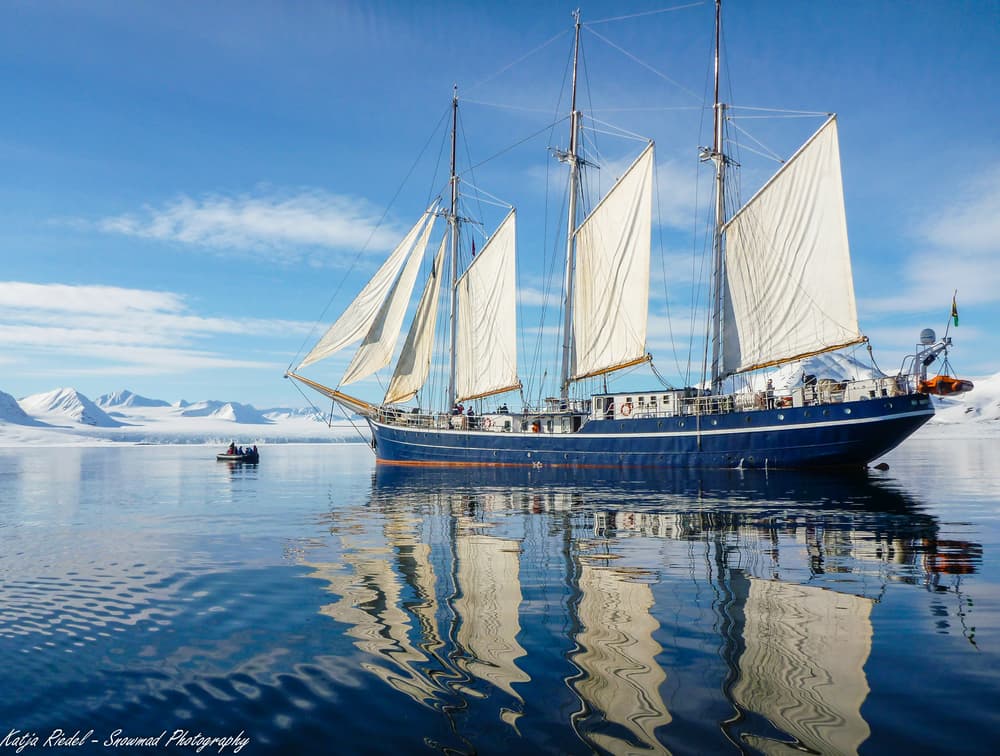
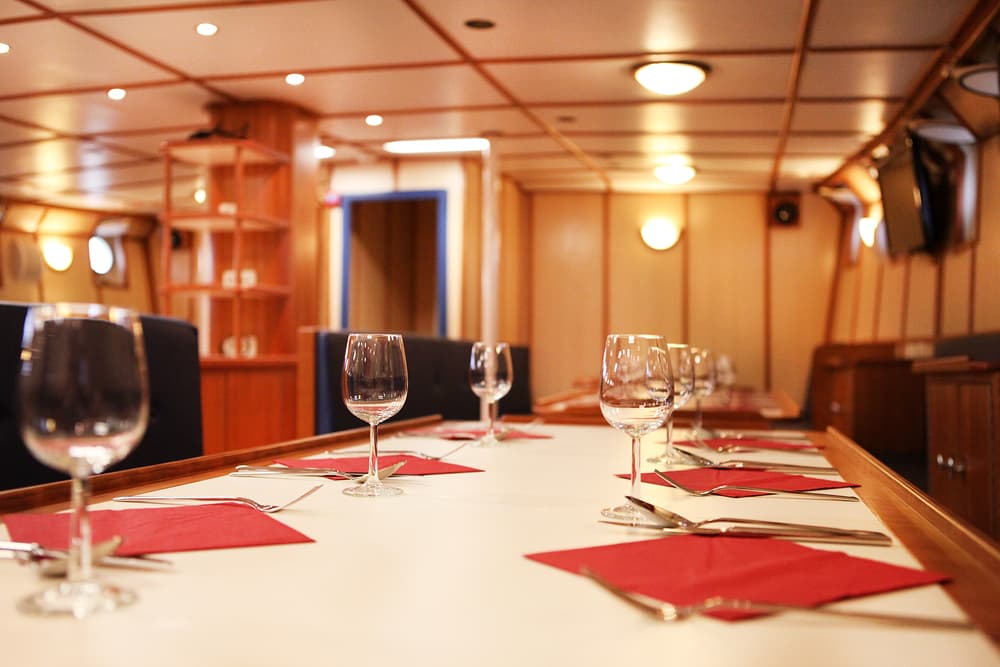
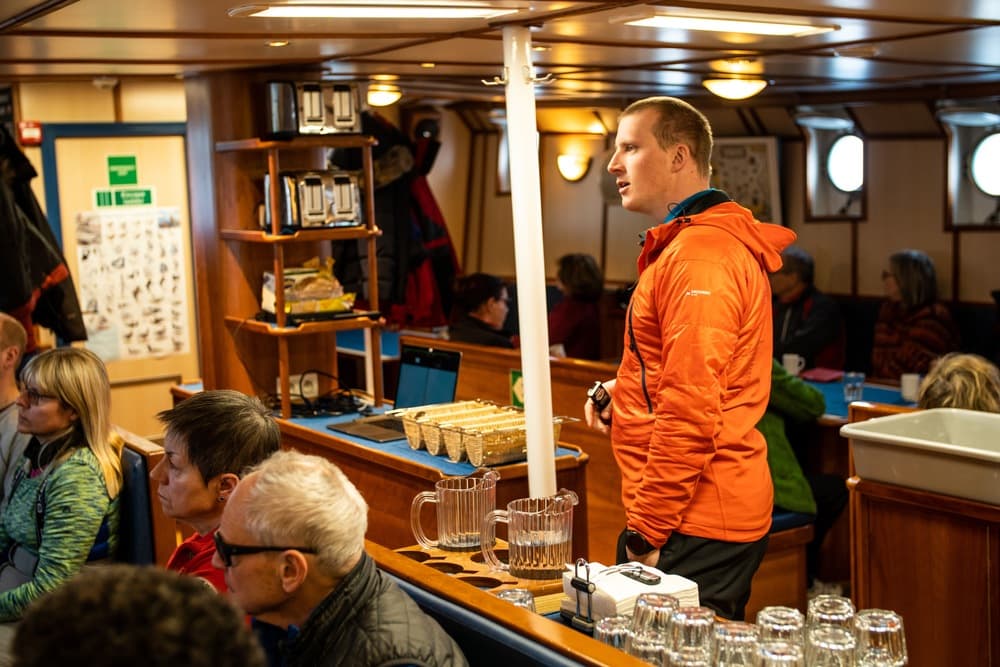
s/v Rembrandt van Rijn was originally built as a herring lugger in 1947, then rebuilt as a three-mast passenger schooner in the Netherlands in 1994.
Loading...





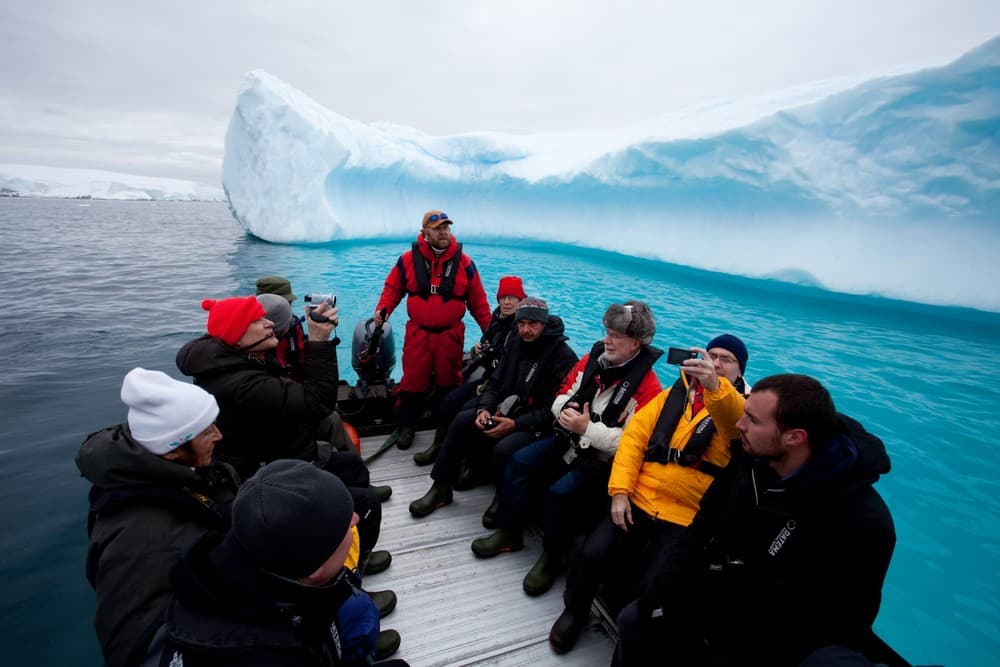
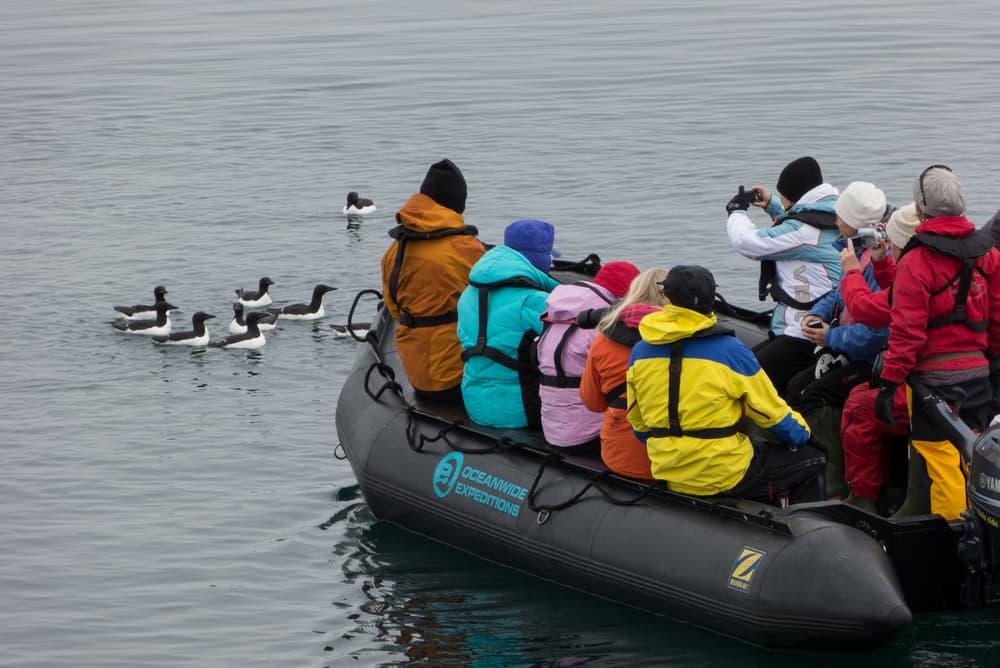
Every day there will be excursions on land, weather and ice permitting. The landings will take three to six hours per day over untracked area. According to circumstances (the weather, the ice-situation or the passengers´ wishes) the program can sometimes be adjusted. Ample time will be devoted to wildlife, vegetation, geography and history.
Loading...
Our voyages are primarily defined as explorations and we spend as much time ashore as possible. We can be flexible, taking advantage of wildlife opportunities by using our zodiacs for both landings and cruises. Our knowledgeable guides assist on these outings, providing detailed information. This is supplemented by lectures on board which covers topics such as wildlife, nature and history.
Zodiac cruising instructions
The pr....


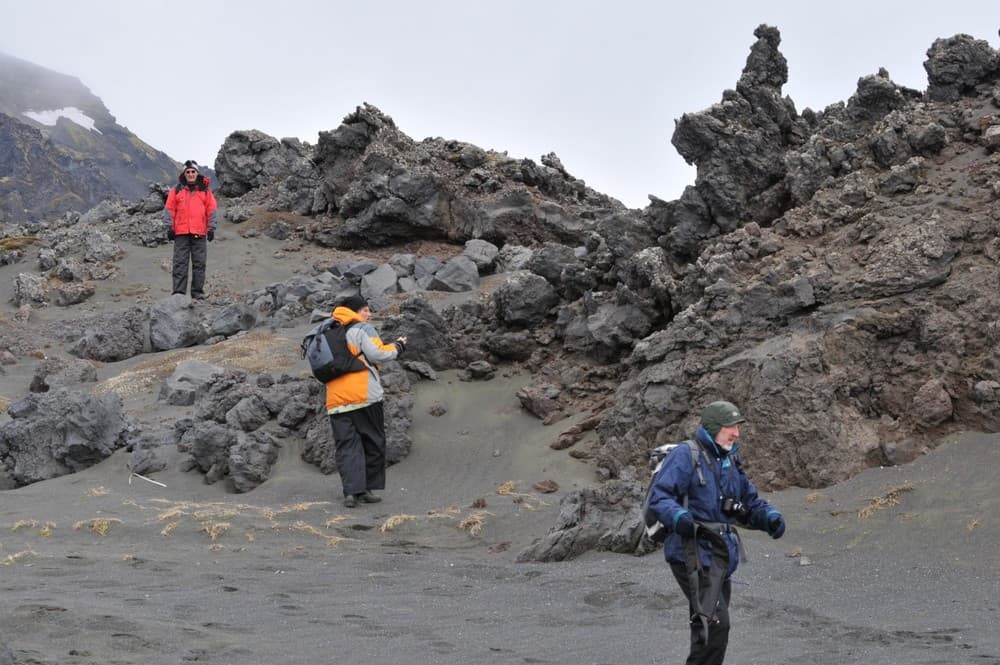
Hiking the surreal terrain of the Arctic
There’s no closer way to explore a new area than on your own two feet. With this in mind, we offer a number of hiking expeditions built for all levels of hiker – from the casual walker to the hard-core hiking enthusiast.
Do you need to be an experienced hiker?
For basic walks, you just need to be in reasonably good shape and health. Hikes usually last somewhere between tw....

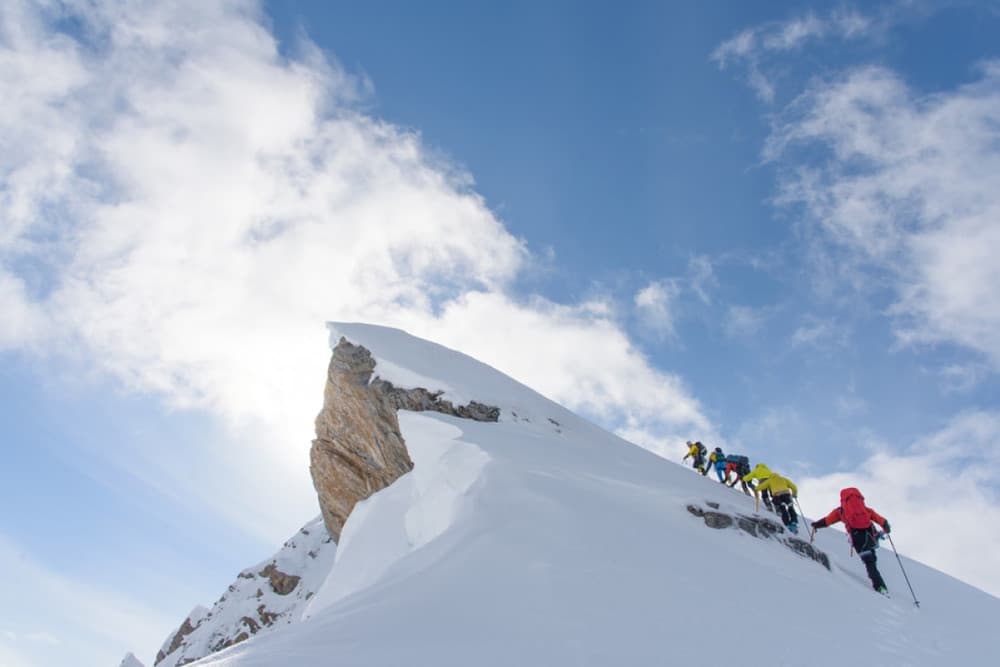
Dramatic ascents and breathtaking descents
Interested in something slightly more adventurous than shoreline walks and wildlife watching? Our ski mountaineering trips give you an invigorating up-close experience of the rugged peaks and majestic mountains flanking the high Arctic fjords.
Along the way, you’ll be able to enjoy all the usual perks of polar expedition cruising: expansive scenery, exploratory outings, and the chanc....



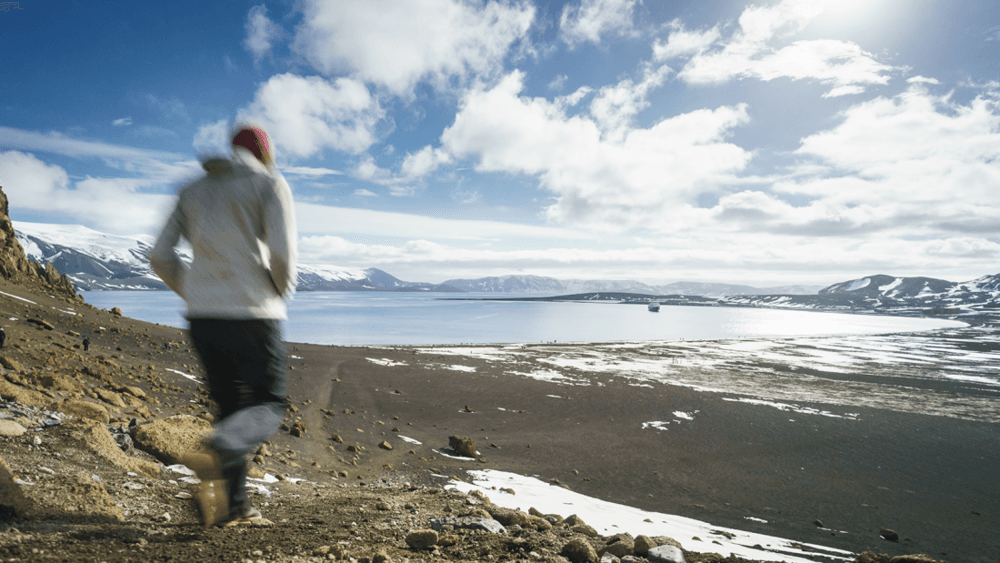
Snowshoeing in the Arctic
There really is no better way to take in a new place than by exploring it on foot. With that in mind Oceanwide Expeditions offers you the chance to explore your way inland from the Polar shorelines with a wide variety of snowshoeing expeditions built for everyone. From the casual explorer to the hard-core snowshoe-er.
Do I need to be experienced? How physically fit do I need to be?
For....


There are no children's facilities onboard.
Loading...
Promoting polar awareness
In 1983 the Arctic Centre of Groningen University in the Netherlands launched a research program to Spitsbergen, the largest island of the Norwegian archipelago of Svalbard. This research program, which became known as....

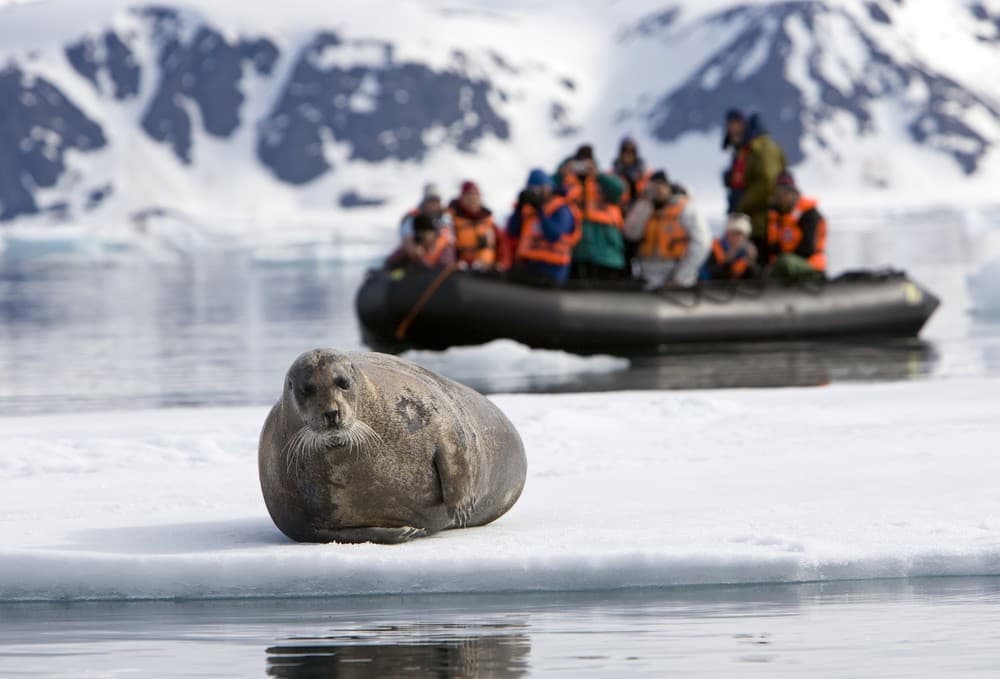
We are required to keep a minimum distance from all wildlife. This distance may vary depending on the species, but the aim is always to reduce the possibility of disturbing the animals while also keeping our passengers safe. Your expedition guides will inform you as to the distance we are required to keep from various animals.
Sometimes curious wildlife (such as penguins and young seals) may approach you, but we ask that you refrain from....
- Avoid unnecessary damage to the ground surface and vegetarian cover, as regeneration rates are extremely slow. Do not take specimens from plants. Do not pick flowers.
- Avoid disturbing or feeding the wildlife. Be aware of your activities and whether they are resulting in a change of the animals' behaviour. Be aware that Rabies does occur on Spitsbergen, particularly in Arctic Foxes. Be careful when moving in areas where bir....
Unfortunately, we’re only able to provide voyages to passengers who meet a certain level of physical ability. Rough seas, rugged terrain, and physically demanding weather conditions are all commonly encountered during our voyages, which can at times be challenging even for people in peak physical fitness.
The added difficulty of a wheelchair or other physical disability, therefor, could prevent us from making safe and timely shore landin....
You can travel if you are pregnant, although with certain restrictions. Please first consult your gynecologist and obtain all necessary medical advice before booking or making a voyage with Oceanwide Expeditions.
Also, be aware that we may not be able to provide you a voyage at all if your pregnancy has advanced beyond a certain point (usually 29 to 36 weeks, depending on your circumstances). Our onboard infirmaries are not equipped to a....