

CRUISE ID # PONANTCC121226
Helsinki TO Helsinki



$11,260
WITH SPECIAL SAVINGS APPLIED
FARES SHOWN ARE PER GUEST
Suites & Fares
CHOOSE START DATE
: December 12, 2026
Itinerary
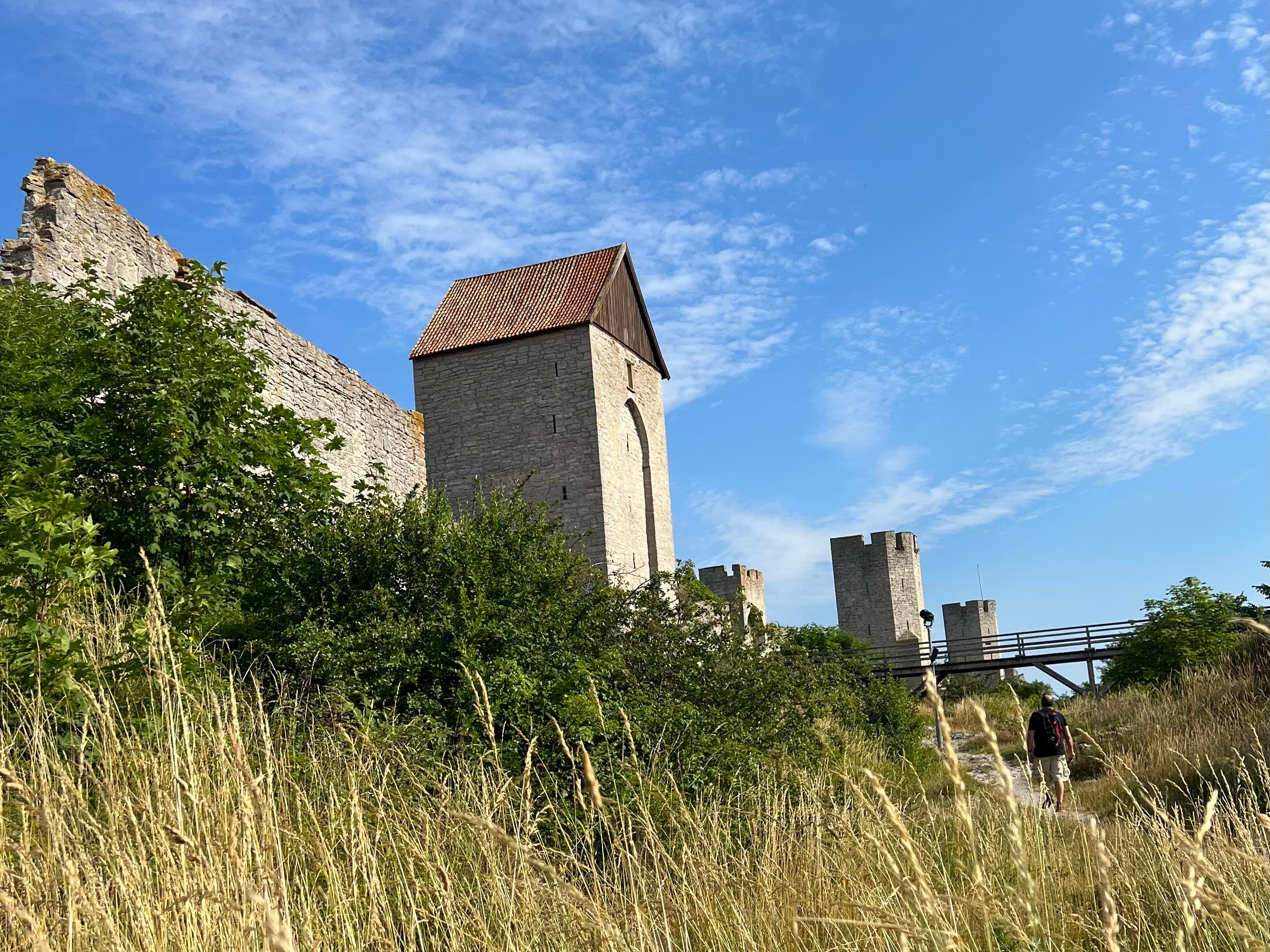
A city of the sea, Helsinki was built along a series of oddly shaped peninsulas and islands jutting into the Baltic coast along the Gulf of Finland. Streets and avenues curve around bays, bridges reach to nearby islands, and ferries ply among offshore islands.Having grown dramatically since World War II, Helsinki now absorbs more than one-tenth of the Finnish population. The metro area covers 764 square km (474 square miles) and 315 islands. Most sights, hotels, and restaurants cluster on one peninsula, forming a compact central hub. The greater Helsinki metropolitan area, which includes Espoo and Vantaa, has a total population of more than a million people.Helsinki is a relatively young city compared with other European capitals. In the 16th century, King Gustav Vasa of Sweden decided to woo trade from the Estonian city of Tallinn and thus challenge the Hanseatic League's monopoly on Baltic trade. Accordingly, he commanded the people of four Finnish towns to pack up their belongings and relocate to the rapids on the River Vantaa. The new town, founded on June 12, 1550, was named Helsinki.For three centuries, Helsinki (Helsingfors in Swedish) had its ups and downs as a trading town. Turku, to the west, remained Finland's capital and intellectual center. However, Helsinki's fortunes improved when Finland fell under Russian rule as an autonomous grand duchy. Czar Alexander I wanted Finland's political center closer to Russia and, in 1812, selected Helsinki as the new capital. Shortly afterward, Turku suffered a disastrous fire, forcing the university to move to Helsinki. The town's future was secure.Just before the czar's proclamation, a fire destroyed many of Helsinki's traditional wooden structures, precipitating the construction of new buildings suitable for a nation's capital. The German-born architect Carl Ludvig Engel was commissioned to rebuild the city, and as a result, Helsinki has some of the purest neoclassical architecture in the world. Add to this foundation the influence of Stockholm and St. Petersburg with the local inspiration of 20th-century Finnish design, and the result is a European capital city that is as architecturally eye-catching as it is distinct from other Scandinavian capitals. You are bound to discover endless engaging details—a grimacing gargoyle; a foursome of males supporting a balcony's weight on their shoulders; a building painted in striking colors with contrasting flowers in the windows. The city's 400 or so parks make it particularly inviting in summer.Today, Helsinki is still a meeting point of eastern and western Europe, which is reflected in its cosmopolitan image, the influx of Russians and Estonians, and generally multilingual population. Outdoor summer bars ("terrassit" as the locals call them) and cafés in the city center are perfect for people watching on a summer afternoon.
Stockholm is a city in the flush of its second youth. Since the mid-1990s, Sweden's capital has emerged from its cold, Nordic shadow to take the stage as a truly international city. What started with entry into the European Union in 1995 gained pace with the extraordinary IT boom of the late 1990s, strengthened with the Skype-led IT second wave of 2003, and solidified with the hedge-fund invasion that is still happening today as Stockholm gains even more global confidence. And despite more recent economic turmoil, Stockholm's 1 million or so inhabitants have, almost as one, realized that their city is one to rival Paris, London, New York, or any other great metropolis.With this realization comes change. Stockholm has become a city of design, fashion, innovation, technology, and world-class food, pairing homegrown talent with an international outlook. The streets are flowing with a young and confident population keen to drink in everything the city has to offer. The glittering feeling of optimism, success, and living in the here and now is rampant in Stockholm.Stockholm also has plenty of history. Positioned where the waters of Lake Mälaren rush into the Baltic, it’s been an important trading site and a wealthy international city for centuries. Built on 14 islands joined by bridges crossing open bays and narrow channels, Stockholm boasts the story of its history in its glorious medieval old town, grand palaces, ancient churches, sturdy edifices, public parks, and 19th-century museums—its history is soaked into the very fabric of its airy boulevards, built as a public display of trading glory.
Gotland is Sweden's main holiday island, a place of ancient history, a relaxed summer-party vibe, wide sandy beaches, and wild cliff formations called raukar (the remnants of reefs formed more than 400 million years ago). Measuring 125 km (78 miles) long and 52 km (32 miles) at its widest point, Gotland is where Swedish sheep farming has its home. In its charming glades, 35 varieties of wild orchids thrive, attracting botanists from all over the world.
Rīga has an upscale, big-city feel unmatched in the region. The capital (almost as large as Tallinn and Vilnius combined) is the business center of the area while original, high-quality restaurants and hotels have earned Rīga some bragging rights among its Western European counterparts. The city also doesn't lack for beauty—Rīga's Old Town (now a UNESCO World Heritage site) is one of Europe’s most striking examples of the art nouveau architectural style. Long avenues of complex and sometimes whimsical Jugendstil facades hint at Rīga's grand past. Many were designed by Mikhail Eisenstein, the father of Soviet director Sergei. This style dominates the city center. In many ways, the wonder of Rīga resides less in its individual attractions and more in the fabric of the town itself. In the medieval Old Town, an ornate gable or architrave catches the eye at every turn. The somber and the flamboyant are both represented in this quarter's 1,000 years of architectural history. Don't hesitate to just follow where your desire leads—the Old Town is compact and bounded by canals, so it's difficult to get totally lost. When the Old Town eventually became too crowded, the city burst out into the newer inner suburbs. The rich could afford to leave and build themselves fine fashionable mansions in the style of the day; consequently, city planners created a whole new Rīga. Across the narrow canal, you'll find the Esplanāde, a vast expanse of parkland with formal gardens and period mansions where the well-heeled stroll and play. Surrounding this is the art nouveau district. Encompassing avenues of splendid family homes (now spruced up in the postcommunist era), the collection has been praised by UNESCO as Europe's finest in the art nouveau style. The best examples are at Alberta 2, 2a, 4, 6, 8, and 13; Elizabetes 10b; and Strēlnieku 4a. If the weather permits, eschew public transport and stroll between the two districts, taking in the varied skylines and multifaceted facades, and perhaps stopping at a café or two as you go. The city has churches in five Christian denominations and more than 50 museums, many of which cater to eclectic or specialist tastes.
Estonia's history is sprinkled liberally with long stretches of foreign domination, beginning in 1219 with the Danes, followed without interruption by the Germans, Swedes, and Russians. Only after World War I, with Russia in revolutionary wreckage, was Estonia able to declare its independence. Shortly before World War II, in 1940, that independence was usurped by the Soviets, who—save for a brief three-year occupation by Hitler's Nazis—proceeded to suppress all forms of national Estonian pride for the next 50 years. Estonia finally regained independence in 1991. In the early 1990s, Estonia's own Riigikogu (Parliament), not some other nation's puppet ruler, handed down from the Upper City reforms that forced Estonia to blaze its post-Soviet trail to the European Union. Estonia has been a member of the EU since 2004, and in 2011, the country and its growing economy joined the Eurozone. Tallinn was also named the European City of Culture in 2011, cementing its growing reputation as a cultural hot spot.
A city of the sea, Helsinki was built along a series of oddly shaped peninsulas and islands jutting into the Baltic coast along the Gulf of Finland. Streets and avenues curve around bays, bridges reach to nearby islands, and ferries ply among offshore islands.Having grown dramatically since World War II, Helsinki now absorbs more than one-tenth of the Finnish population. The metro area covers 764 square km (474 square miles) and 315 islands. Most sights, hotels, and restaurants cluster on one peninsula, forming a compact central hub. The greater Helsinki metropolitan area, which includes Espoo and Vantaa, has a total population of more than a million people.Helsinki is a relatively young city compared with other European capitals. In the 16th century, King Gustav Vasa of Sweden decided to woo trade from the Estonian city of Tallinn and thus challenge the Hanseatic League's monopoly on Baltic trade. Accordingly, he commanded the people of four Finnish towns to pack up their belongings and relocate to the rapids on the River Vantaa. The new town, founded on June 12, 1550, was named Helsinki.For three centuries, Helsinki (Helsingfors in Swedish) had its ups and downs as a trading town. Turku, to the west, remained Finland's capital and intellectual center. However, Helsinki's fortunes improved when Finland fell under Russian rule as an autonomous grand duchy. Czar Alexander I wanted Finland's political center closer to Russia and, in 1812, selected Helsinki as the new capital. Shortly afterward, Turku suffered a disastrous fire, forcing the university to move to Helsinki. The town's future was secure.Just before the czar's proclamation, a fire destroyed many of Helsinki's traditional wooden structures, precipitating the construction of new buildings suitable for a nation's capital. The German-born architect Carl Ludvig Engel was commissioned to rebuild the city, and as a result, Helsinki has some of the purest neoclassical architecture in the world. Add to this foundation the influence of Stockholm and St. Petersburg with the local inspiration of 20th-century Finnish design, and the result is a European capital city that is as architecturally eye-catching as it is distinct from other Scandinavian capitals. You are bound to discover endless engaging details—a grimacing gargoyle; a foursome of males supporting a balcony's weight on their shoulders; a building painted in striking colors with contrasting flowers in the windows. The city's 400 or so parks make it particularly inviting in summer.Today, Helsinki is still a meeting point of eastern and western Europe, which is reflected in its cosmopolitan image, the influx of Russians and Estonians, and generally multilingual population. Outdoor summer bars ("terrassit" as the locals call them) and cafés in the city center are perfect for people watching on a summer afternoon.
About the Ship
Name
Le Commandant Charcot
Operator
PONANT EXPLORATIONS


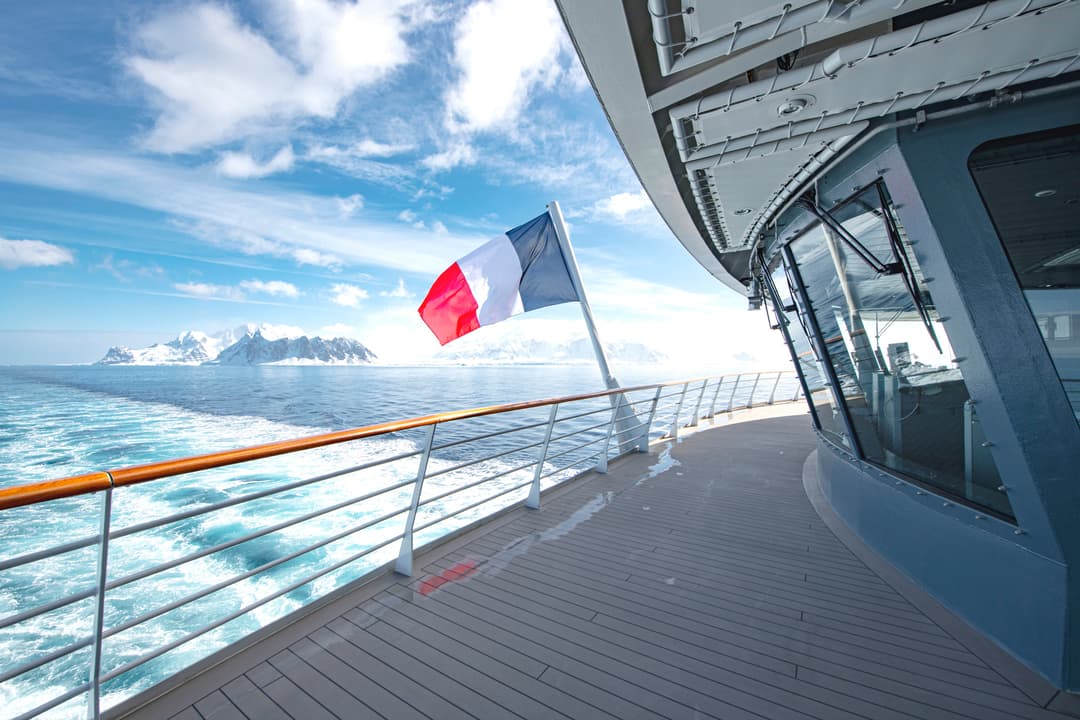
Le Commandant Charcot is the first hybrid electric and liquefied natural gas polar exploration vessel, the result of a more responsible design never seen before in the polar environment.
Loading...
To provide exceptional culinary experiences at sea is the challenge taken up by the company's chefs, accompanied by the teams of Alain Ducasse and Ducasse Conseil during each journey. An invitation to extend the exploration.
Exceptional tables
Intimate atmosphere or panoramic views, fine dining is making its way to the sea. On board Le Commandant Charcot, book your table at Nuna, the only Alain Ducasse restaurant at sea.
Tastings
Caviar from Maison Kaviari, Pata Negra from Berman Ibéricos, macarons from Pierre Hermé, butter and cheeses from Bordier, olive oil from Château Virant, Valrhona chocolate, pastries and bread prepared on board, gourmet afternoon tea, culinary demonstrations... every day, let yourself be surprised by gourmet moments.
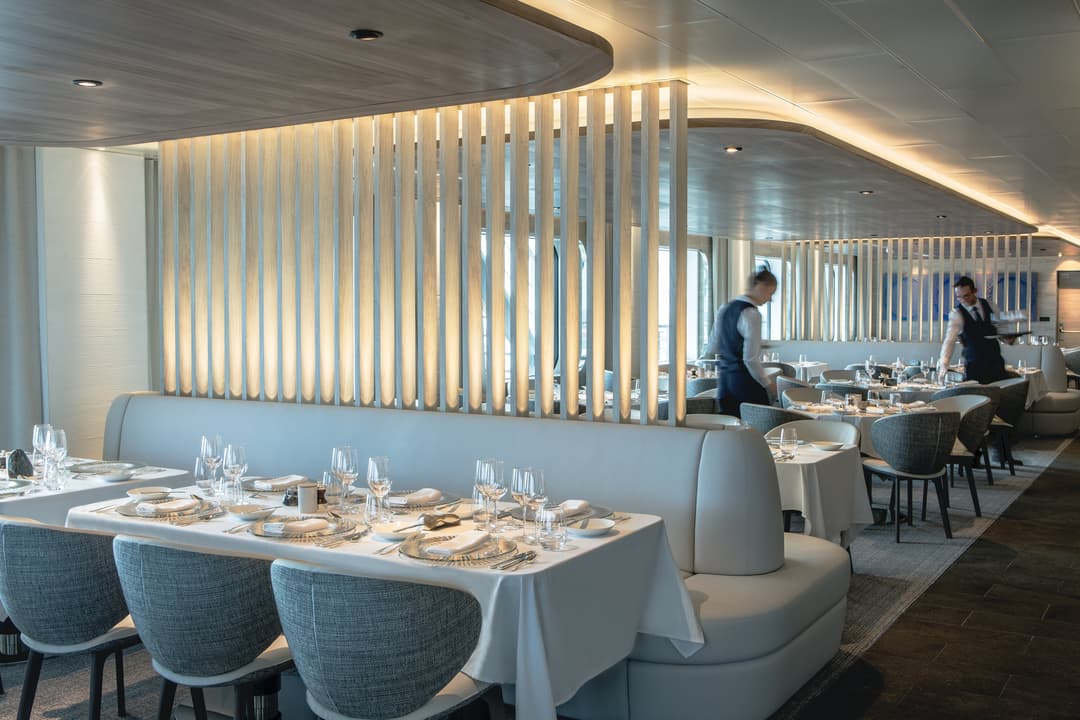


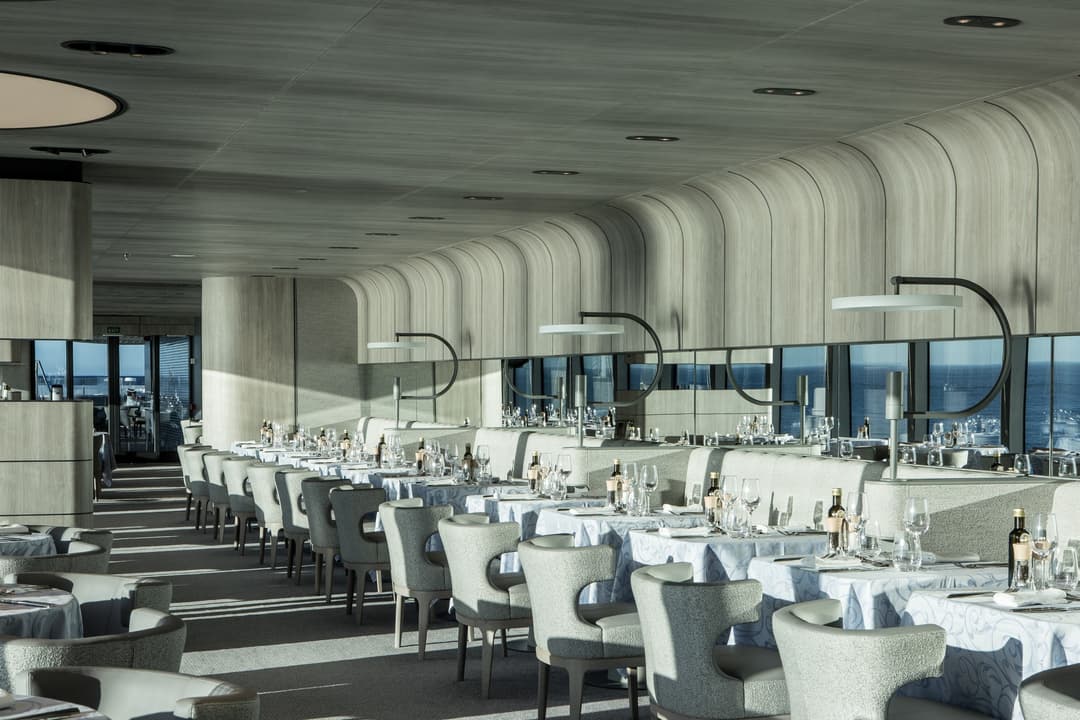


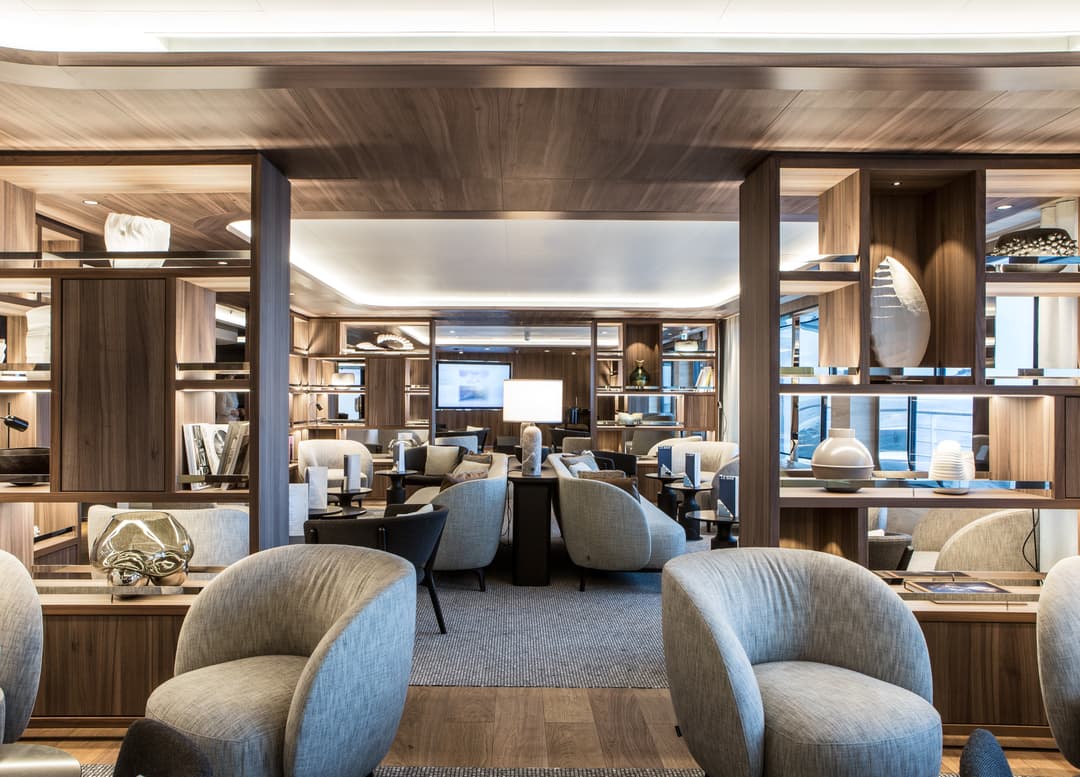
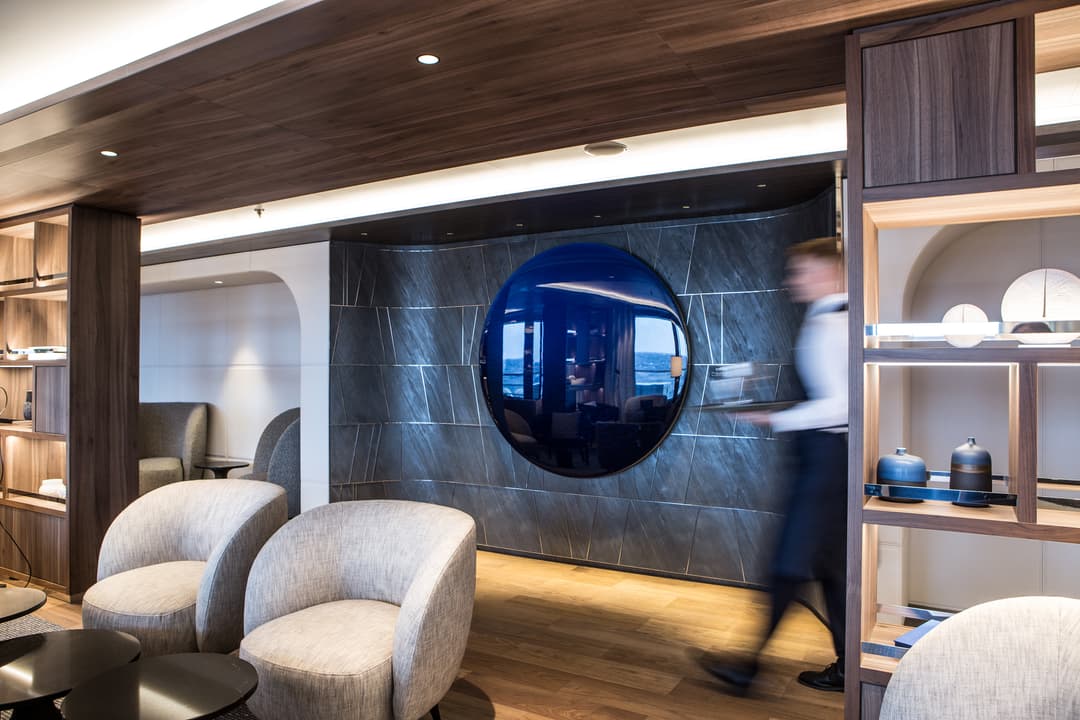
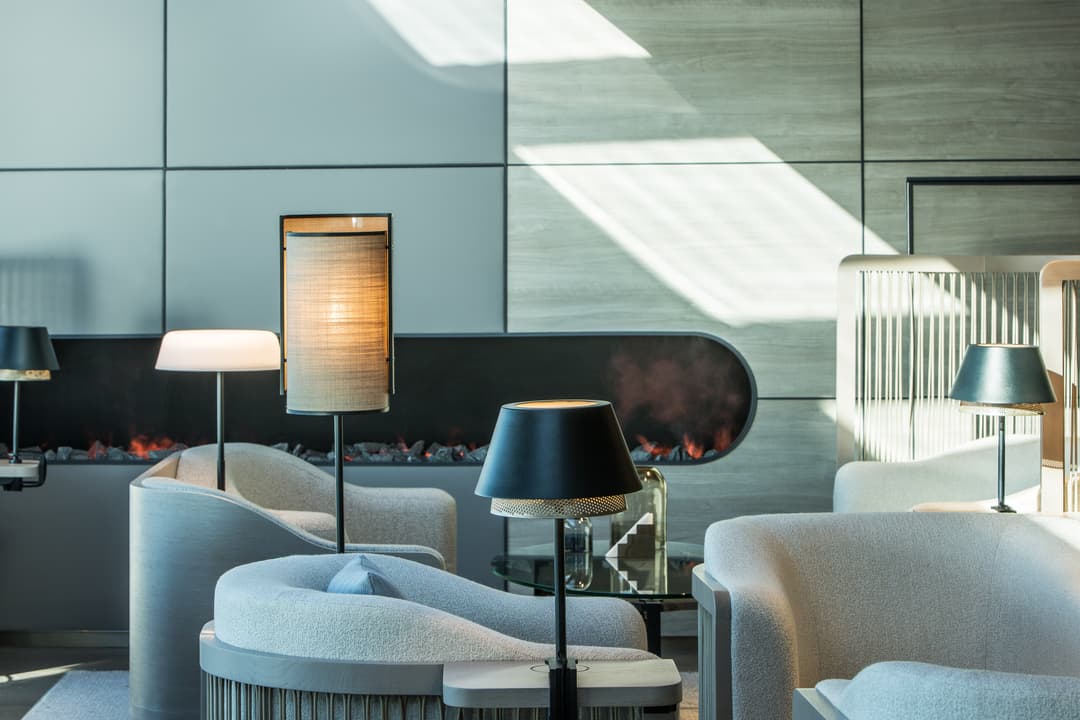
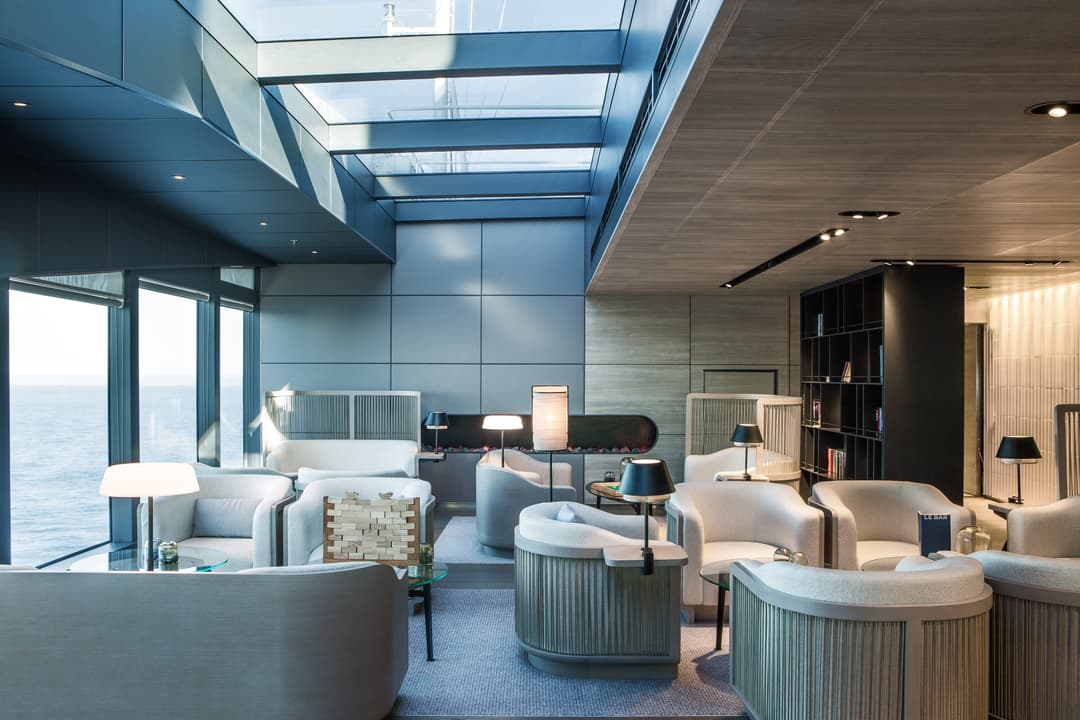
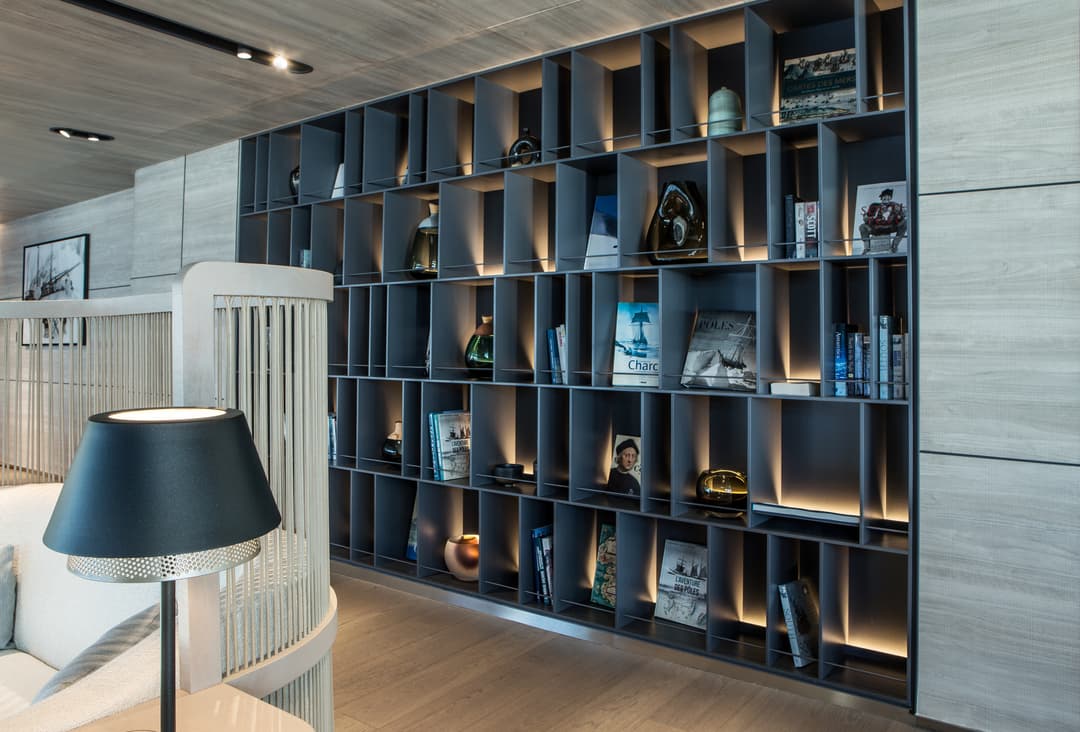
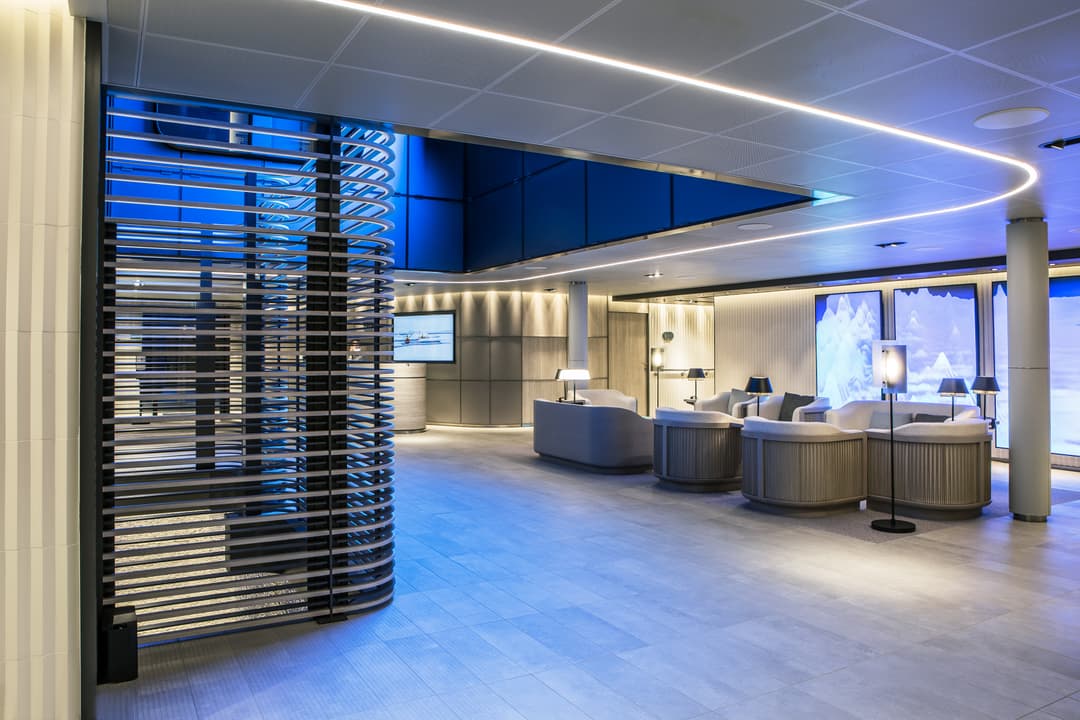
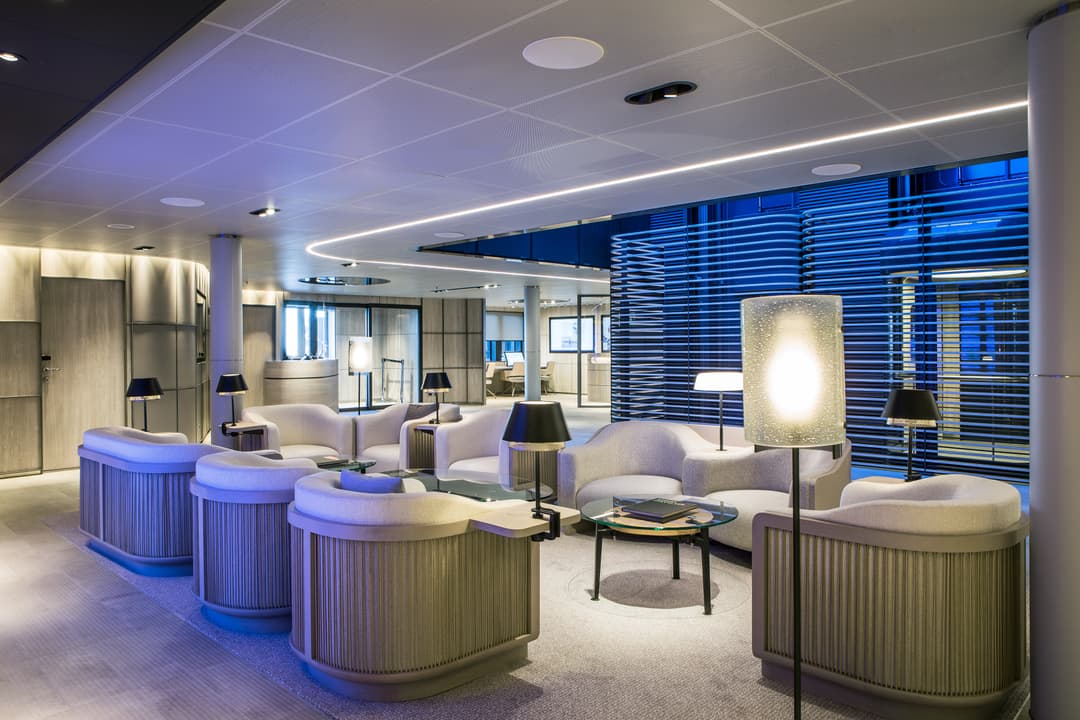
Elegance, intimacy, openness to the polar environment... Share your passion for exploration while relaxing in the ship's lounges.
Enjoy a cocktail while admiring the ice sparkling under the last rays of the day. A moment of serenity and exchange that enhances shared memories.





An extension of the journey and the ship, la Boutique ILLU offers an exclusive shopping experience with ready-to-wear and technical gear for polar adventures (Swarovski Optik, Garmin, Vuarnet, Feelfree, Columbia, Arctic Edge), classic products to treat yourself (Eric Bompard, 727Sailbags, Le Minor, children’s collection, jewelry, luxury BRIONI), unique souvenirs and adventure novels. Hours follow the voyage schedule, including days at sea, and....




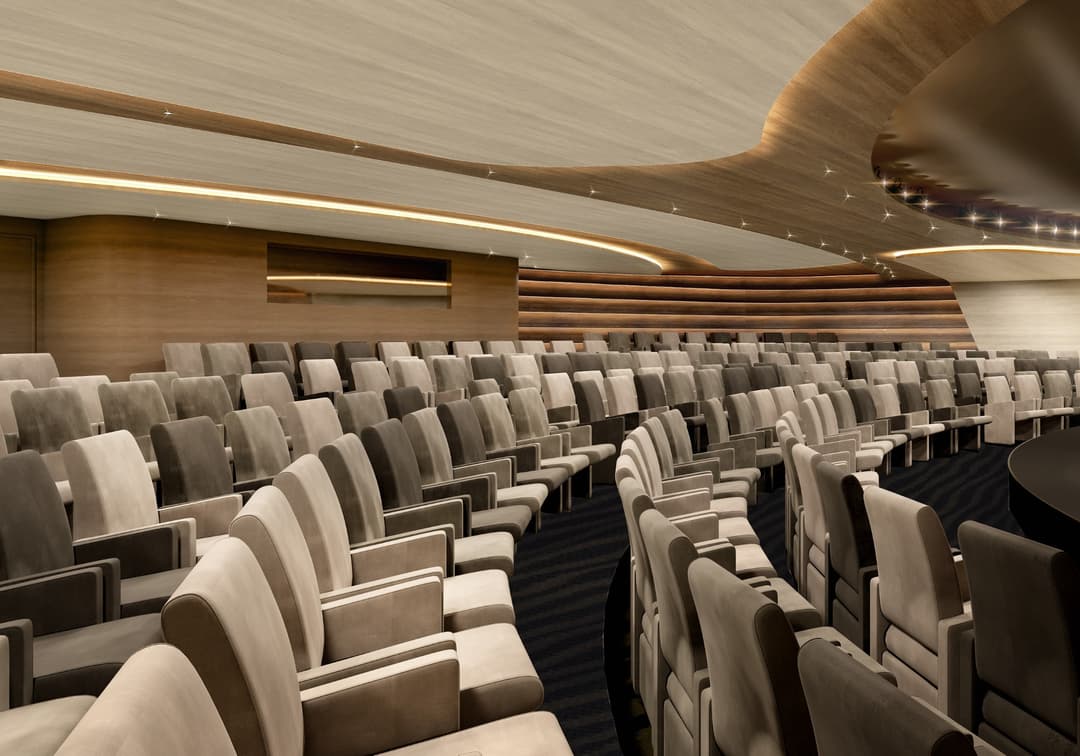
Comfortably seated, you can attend conferences given by the guests and teams of naturalists, as well as the various shows, concerts and performances organised by professional dancers and musicians on board.
Music and dance
Opera, jazz, piano recitals, concerts or ballets at sea or on land: musical cruises and dance cruises offer privileged experiences, in small groups, alongside prestigious partners, such as Radio Classique ....


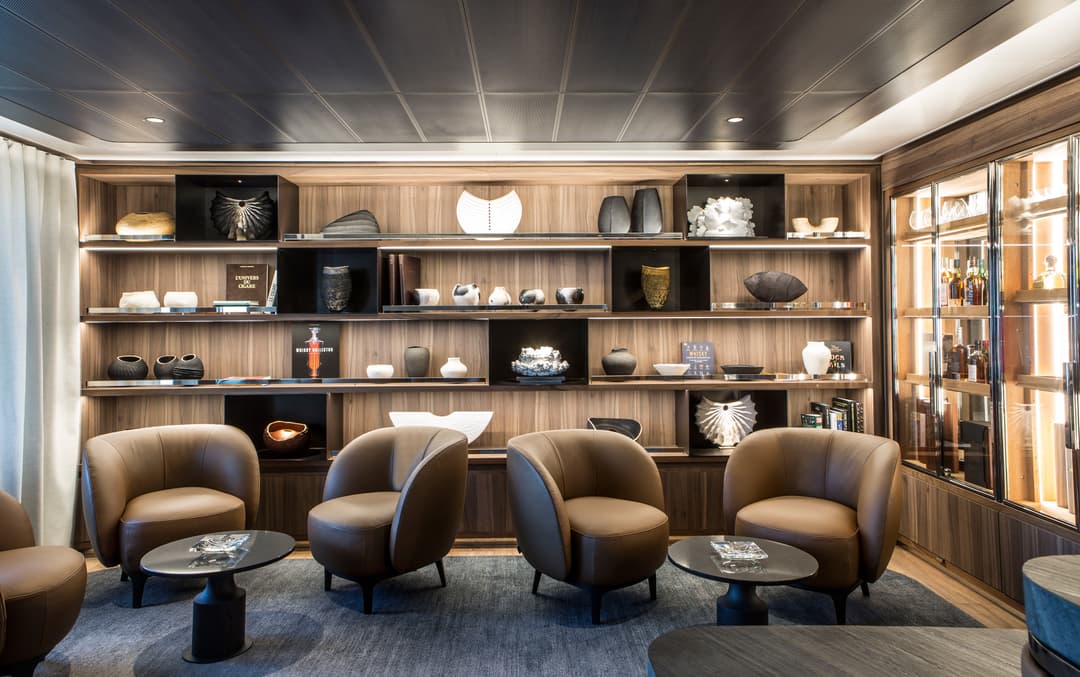
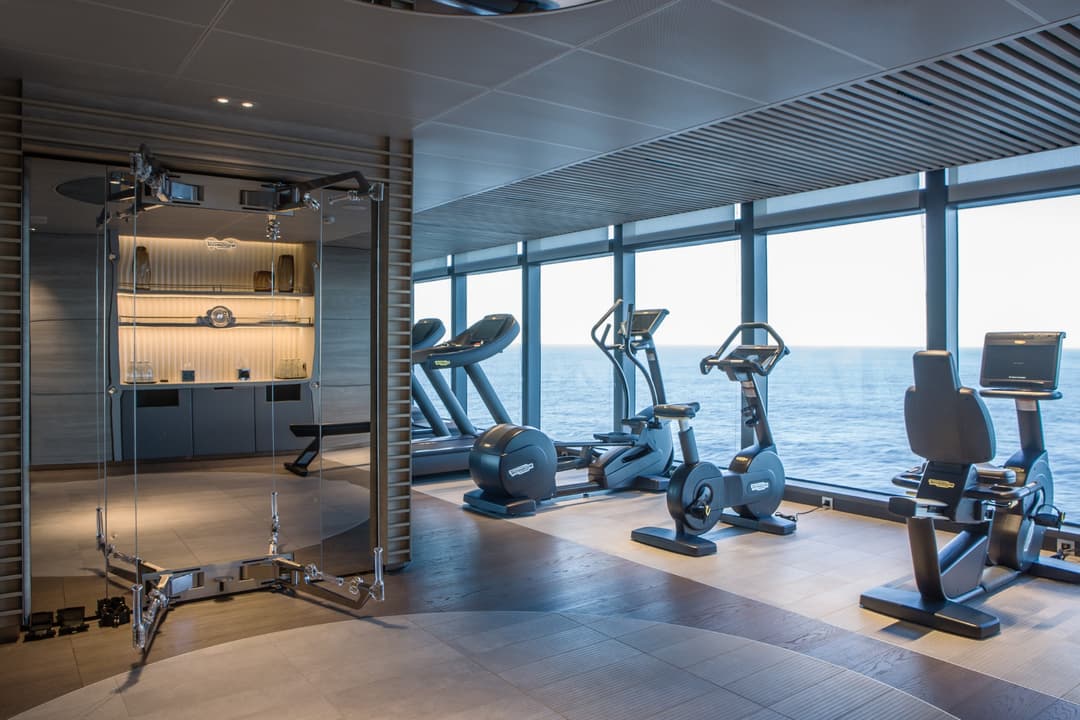
Well-being
On board Le Commandant Charcot, exploration is synonymous with Nordic ritual and communion with the polar environment.
The awakening of the senses
Meet at the wellness area for a detox cocktail at the heated indoor pool bar or try the experience of combining the benefits of the spa, sauna, and snow cabin.




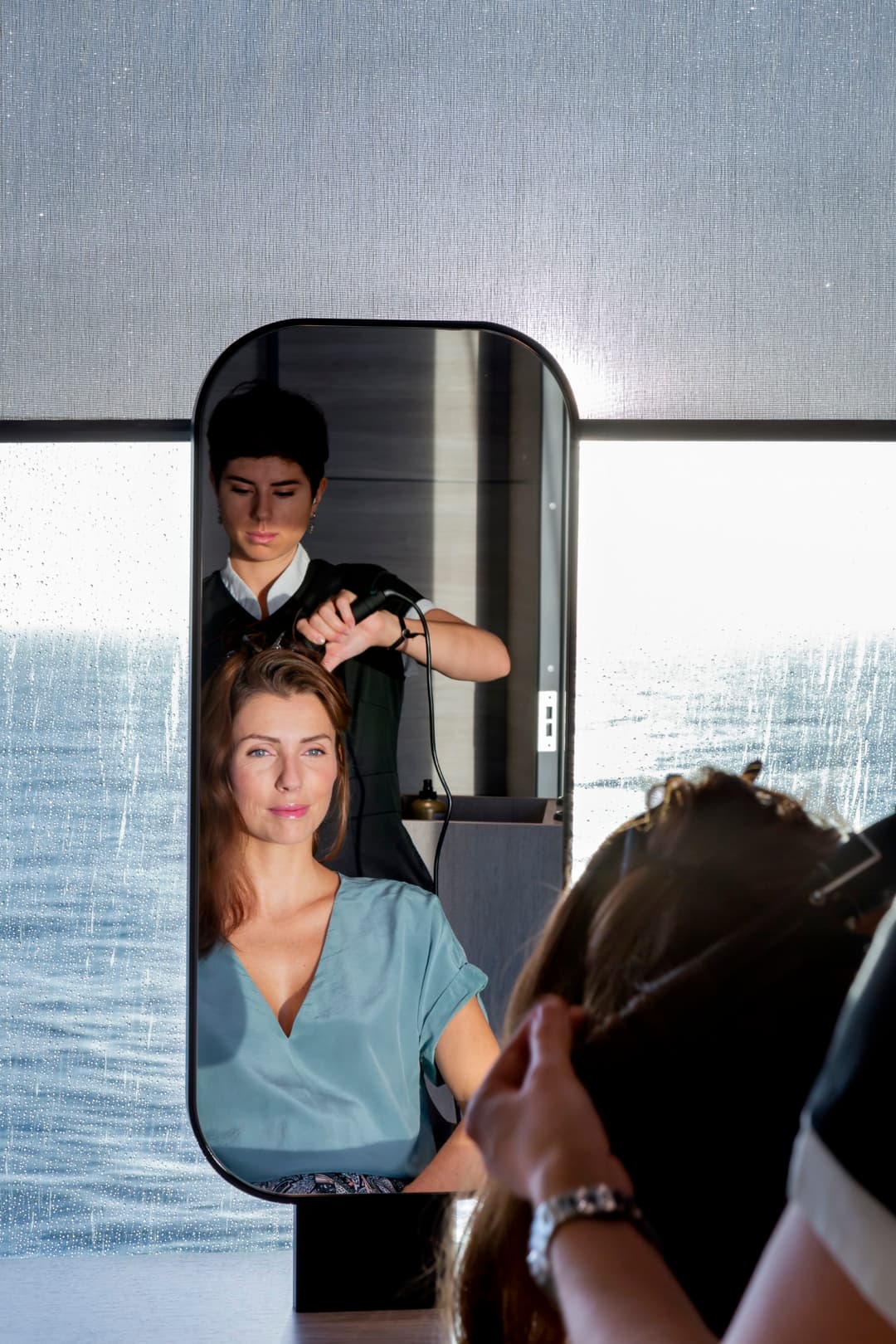
Each product has been crafted using the most advanced cosmetic technologies and natural ingredients. Developed and packaged while minimising the environmental impact, Davines® products are inspired by the Sustainable Beauty ideal, an inseparable unit between Beauty and Being. During your cruise, treat your hair to a unique beauty experience. Our expert stylist will do an in-depth analysis of your hair and recommend the most appropriate treatme....
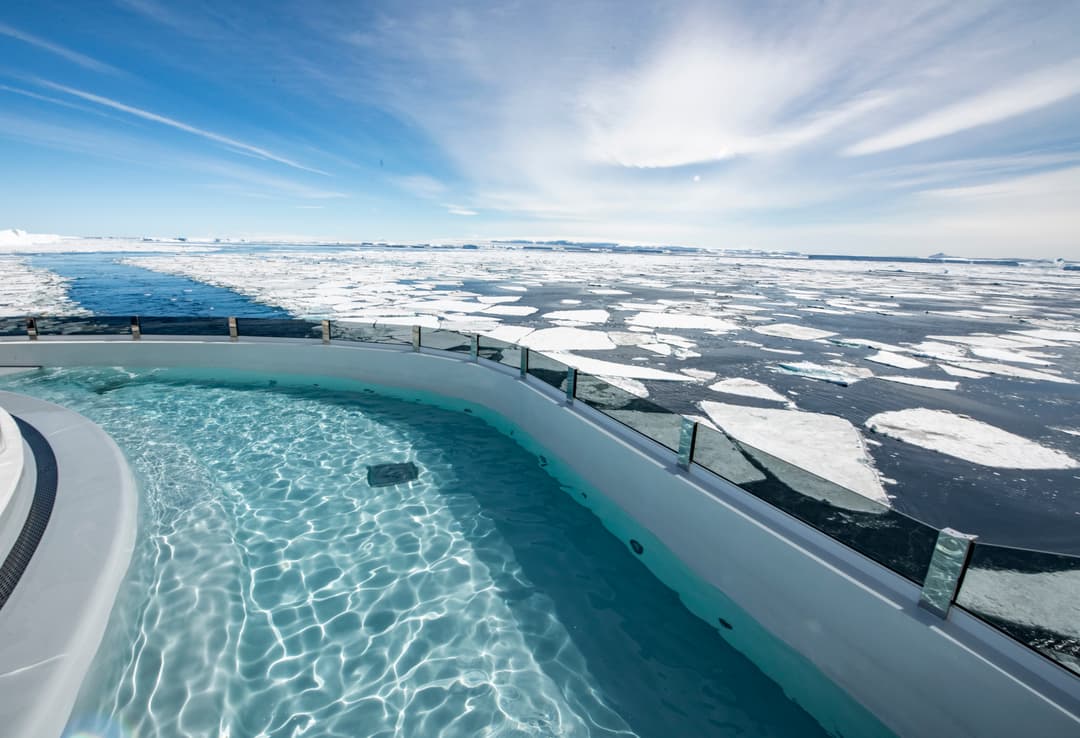
Marvel at the sun rising over the pristine glaciers of Spitsbergen, set out to discover the mysteries of Scotland, enjoy enriching encounters in Alaska∘ or just relax, take your time, and choose a sun kissed journey through the Mediterranean.
The trip of a lifetime, a romantic getaway or a family holiday: cruising the PONANT EXPLORATIONS way allows∘ you the freedom to organise your Odyssey∘ as a unique experience and tailor it according to your desires. Whether you have the spirit of a refined adventurer, a meditative mind or you love the great outdoors, PONANT EXPLORATIONS will fulfil all your travel desires.
Take the time to extend the pleasure of a stay in a country before boarding your yacht, get to the heart of a culture or simply have fun for a while: the guides, lecturers and travel advisers are there to assist you. Music, golf, gastronomy; from port to port, the themed cruises allow passengers∘ to live their hobby to the full - or to discover a new one.
Carefully designed itineraries, quality guest speakers, attentive service: for more than 25 years, on land and at sea, or teams and their crews have been there to help you get the most out of your cruise.
There are many ways to see the world. But to truly discover it? Unexplored shores, authentic encounters, iconic wildlife... Our experts imagine the most beautiful travel stories for you.
Unforgettable moments
Holding your breath to better perceive that of a distant whale, stepping foot on Antarctica for the first time, watching through binoculars the passage of a polar bear in the Arctic, marvelling at the splendour of the M....


Kangerlussuaq, Grundarfjördur, Longyearbyen, Kivitoo... If there are city and village names that evoke the Far North, they are indeed those of Greenland, Iceland, Norway, and Canada. Icebergs, ice seas, volcanoes, polar bears: going on a cruise in the Arctic is letting oneself be carried away into a world where man is a spectator of a sovereign nature.
3 reasons to explore the Arctic
It is said to be mythical, at leas....
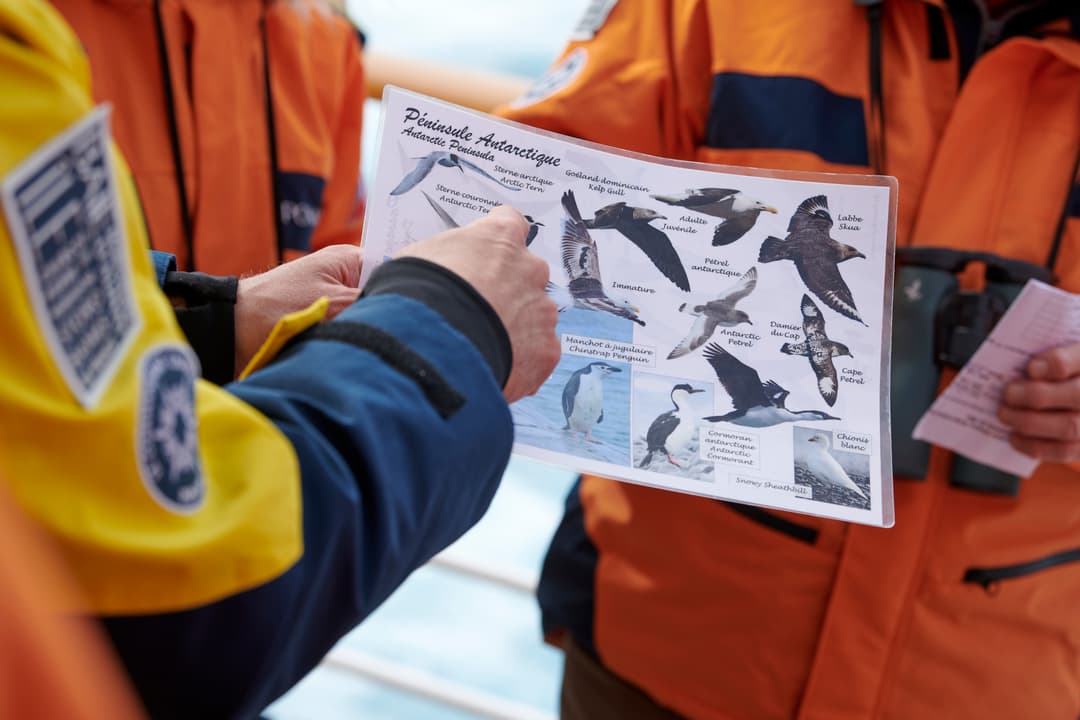
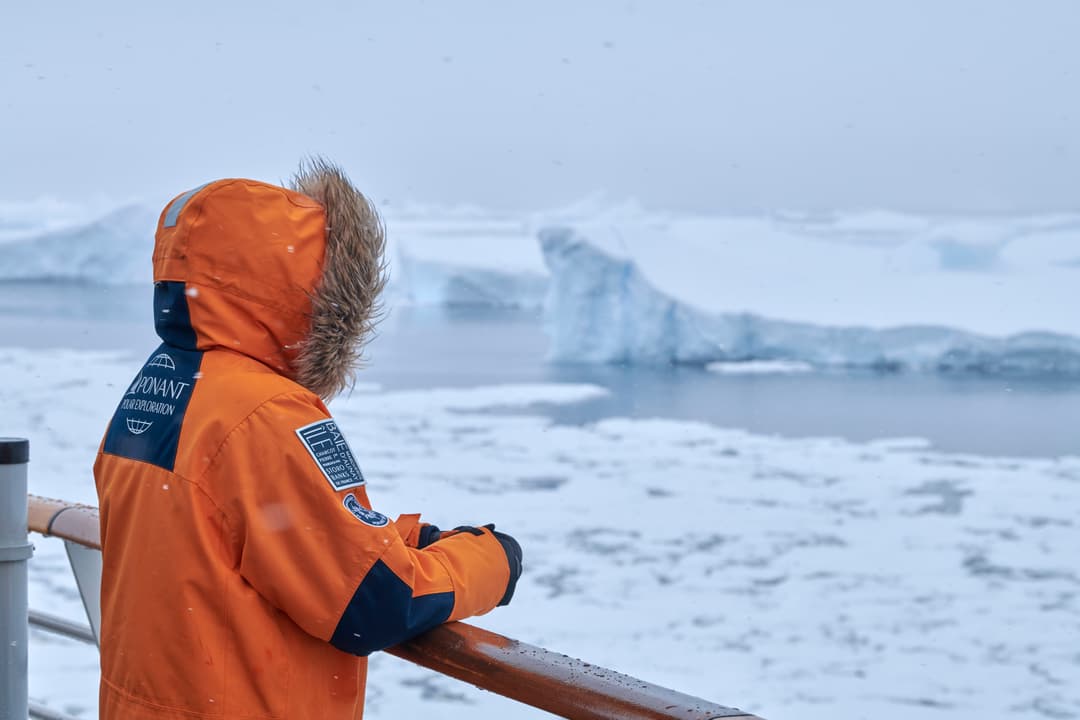
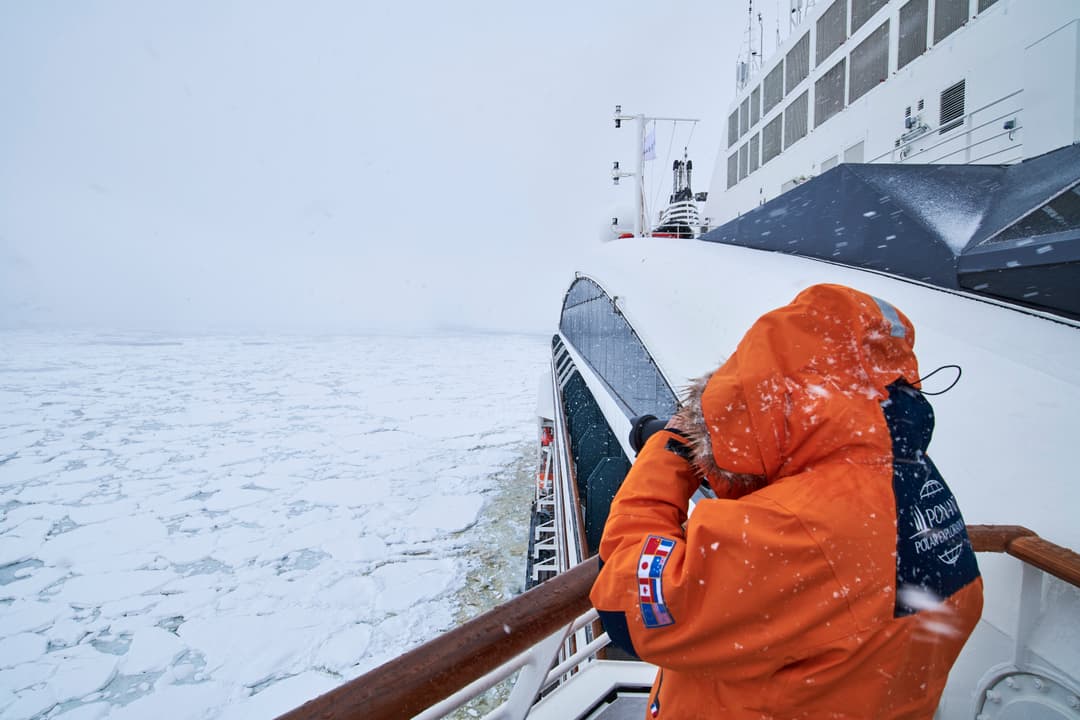


Captains, expedition leaders, experienced naturalist guides, lecturers, wildlife photographers, personalities from the world of art, science, culture and gastronomy... Experts share their passions with you on board or on land.
Captains
Your captain is responsible for ensuring the smooth running of your journey on board. An expert in navigating polar or tropical waters, their announcements punctuate your day. And when wildlif....


Electrical plug adapters are provided on board, they are available at the reception.
Are the electrical outlets on board compliant with European standards?
Yes, the alternating current 220 volts 50 Hertz is distributed through outlets compliant with European standards. The electricity on board is in 220 volts AC (European standard) and 110 volts AC (North American standard). For safety reasons, the use of hair straighteners ....
Children under one (1 year old / 12 months) are not permitted on PONANT EXPLORATIONS cruises.
On Classic cruises, children are permitted from one (1 year old), with a maximum of five children aged one to six (1 to 6 years old) on board each voyage.
Children aged four years and older are welcome at the Kids’ Club when the service is offered on board.
On Expedition cruises, children are accepted from the age of six (6 years), a....
There is a doctor on board available to the passengers on all our ships:
The schedules of consultation are listed each day in the log book (emergency consultation 24/7).
The Sisterships, PONANT Explorers and Le Commandant Charcot also have a hospital for any small surgery.
During the excursions, the passengers are accompanied by a doctor or a nurse.
There is a fee for consultations on board . The price may vary accordin....
Only the Sisterships, the PONANT Explorers, Paul Gauguin and Le Commandant Charcot have been designed to accommodate passengers with reduced mobility.
Staterooms specially designed on board the Sisterships, decks 3 (307), 4 (407) and 5 (509) 3 c for two people aged 18. in a wheelchair, with a double bed (180 x 200) cm) or two single beds (90 x 200 shower and toilet in the bathroom as well as a balcony of 4 2 (only for cabins on the deck....
Dress Code
We recommend wearing casual and elegant outfits, cocktail attire for gala evenings, and white or black and white attire for the Officers' evening. Shorts and bermudas are not allowed in the evening at gourmet restaurants.
Expedition Cruise
For an expedition cruise, pack practical clothing and comfortable shoes. During your polar cruises, a polar parka in your size will be provided and boots in your si....
Each of us can contribute to building a better world. Travelling aboard Le Commandant Charcot means committing to leaving a minimal footprint, in line with the values we defend and share in this code of ethics. In polar regions, the expedition team will provide you with guidance for ensuring compliance with the IAATO and AECO regulations, the organisations that govern these regions.
BEFORE THE TRIP
- Take an interest in....
A complete offer (excluding Spirit of PONANT and La Désirade¹)
SERVICES INCLUDED ON ALL OUR CRUISES
- Full board from arrival to departure day
- High-end gastronomy in all restaurants
- All drinks in restaurants, bars and minibars. All drinks are included² (selection of champagnes, wines and spirits, beers, cocktails, water, soft drinks, hot drinks)
- 24-hour room service
- Butler service for certa....
Our app accompanies you in your preparations and during your stay on board. Find the services offered and the information that facilitates your journey.
Are you soon boarding with us?
Thanks to its app, PONANT accompanies you in your travel preparations, and then during your stay on board. Find our services and information that will make your cruise even easier.
Prepare your cruise with peace of mind
- ....