

CRUISE ID # QUARKWVO20290305
Buenos Aires TO Buenos Aires
$13,597.23
WITH SPECIAL SAVINGS APPLIED
FARES SHOWN ARE PER GUEST
Suites & Fares
CHOOSE START DATE
: March 05, 2029
Itinerary

Upon arriving in this splendid city, known for its vibrant Argentinian culture, European architecture and cosmopolitan vibe, you will independently transfer to the designated group hotel, which is included in your Charter Flight & Hotel package.
After an early breakfast at the hotel, the group will transfer to the airport and board our private charter flight to Ushuaia, Argentina. Upon arrival, you will be transferred from the airport to a central downtown location to explore this quaint port town on your own before making your way to the designated meeting spot. After a late afternoon embarkation, you will sail along the historic Beagle Channel, which transects the Tierra del Fuego archipelago in the extreme south of South America. Excitement builds in anticipation of your next stop: the Antarctic.
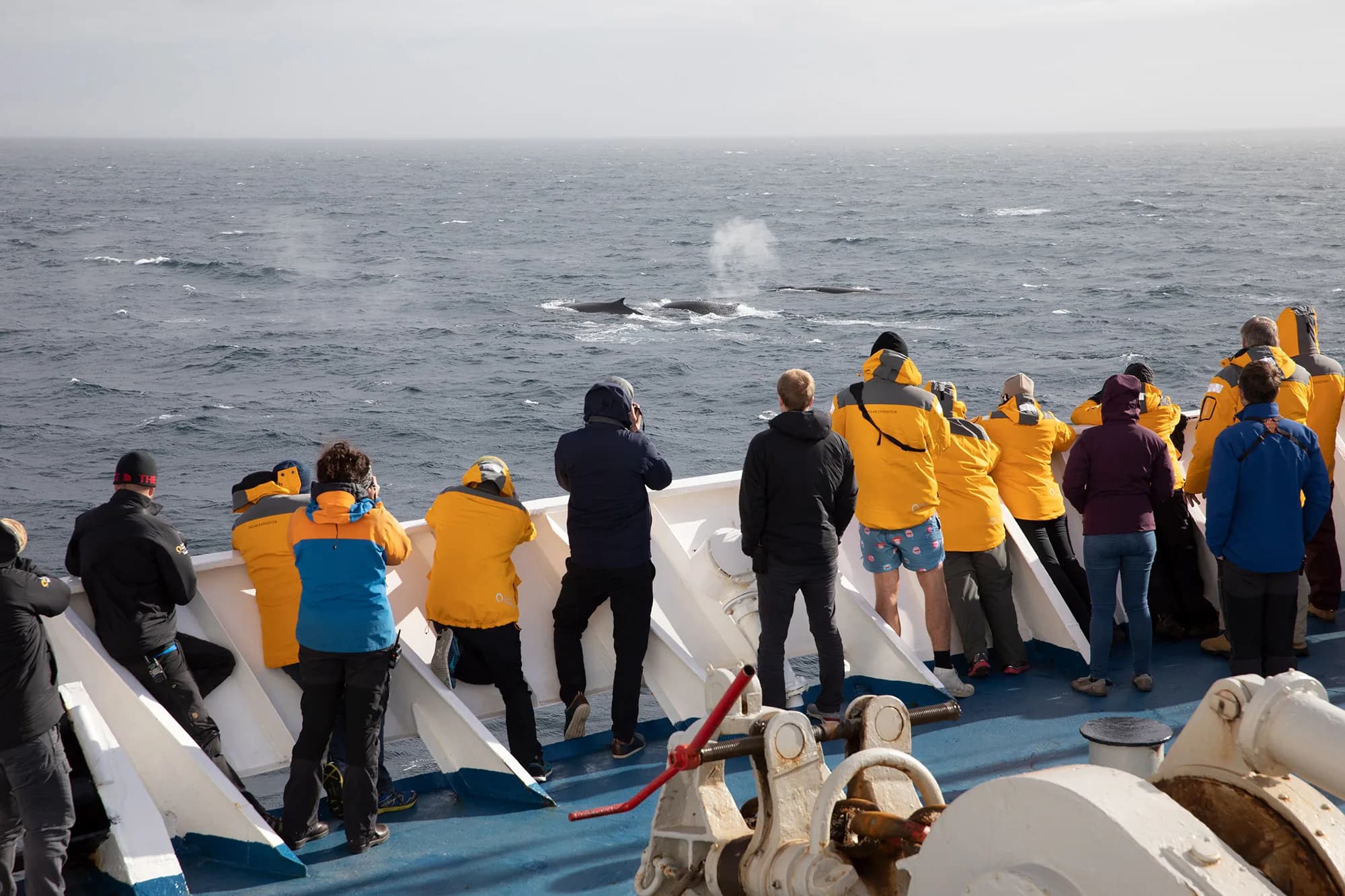
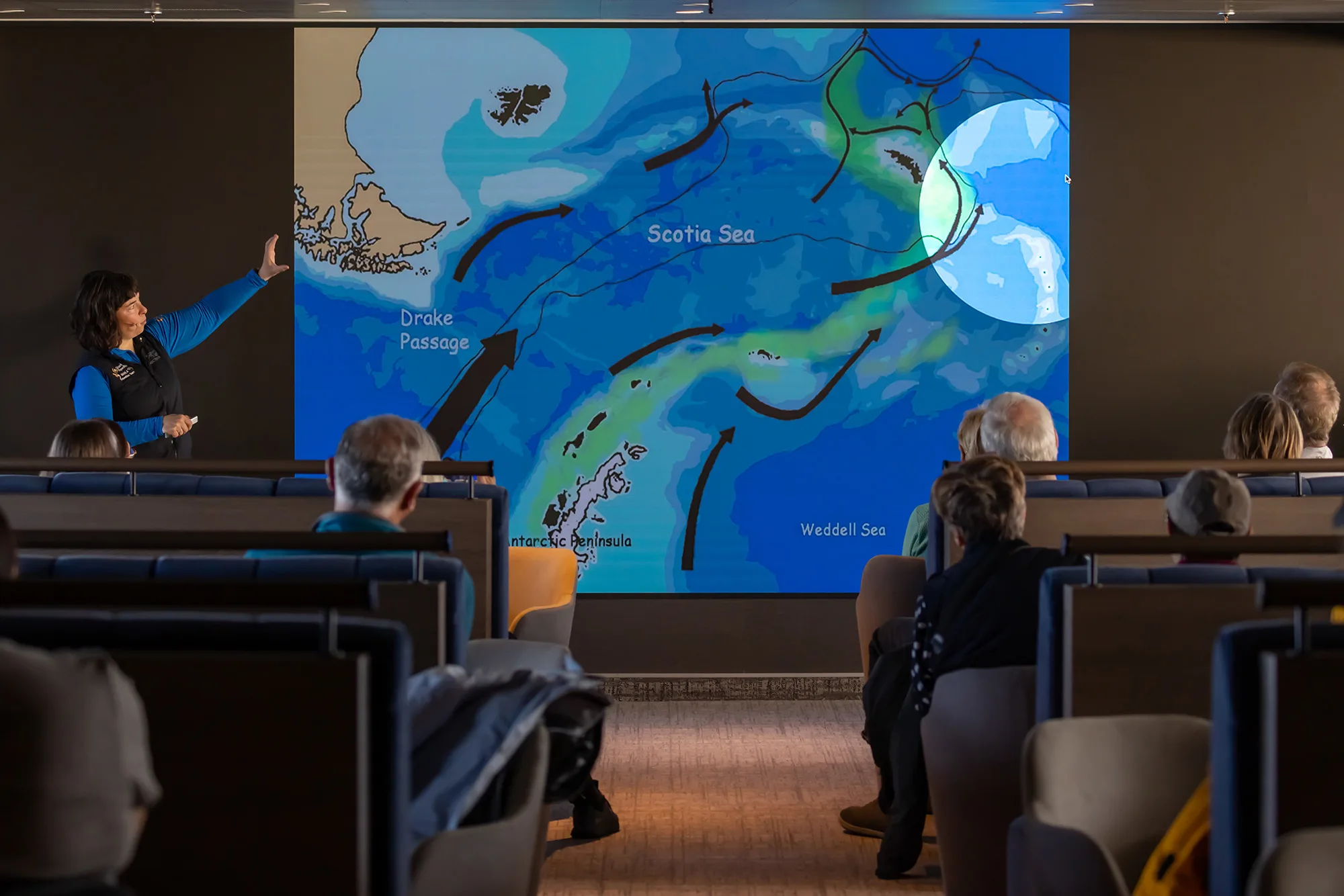
Crossing the 800-km Drake is considered a rite of passage for many travelers. Traversing this legendary waterway means you’ll experience the Antarctic Convergence, where the cold, northward-flowing Antarctic waters meet the warmer, southward-flowing water of the sub-Antarctic. The mixing of cold and warm waters creates a nutrient-rich feeding ground, especially for whales and other marine mammals. Guests are encouraged to keep binoculars close at hand—and to be prepared for Expedition Team members to announce any whale sightings. The team of guest scientists will be introduced early in the voyage. Ari Friedlaender, who co-developed this itinerary, and members of his team from the Friedlaender Lab, are global authorities on the underwater behavior and ecology of marine mammals, particularly whales. Guests will also meet a research associate with the Happywhale platform, which enables citizens to upload their whale photos to help identify species and, possibly, individual whales.
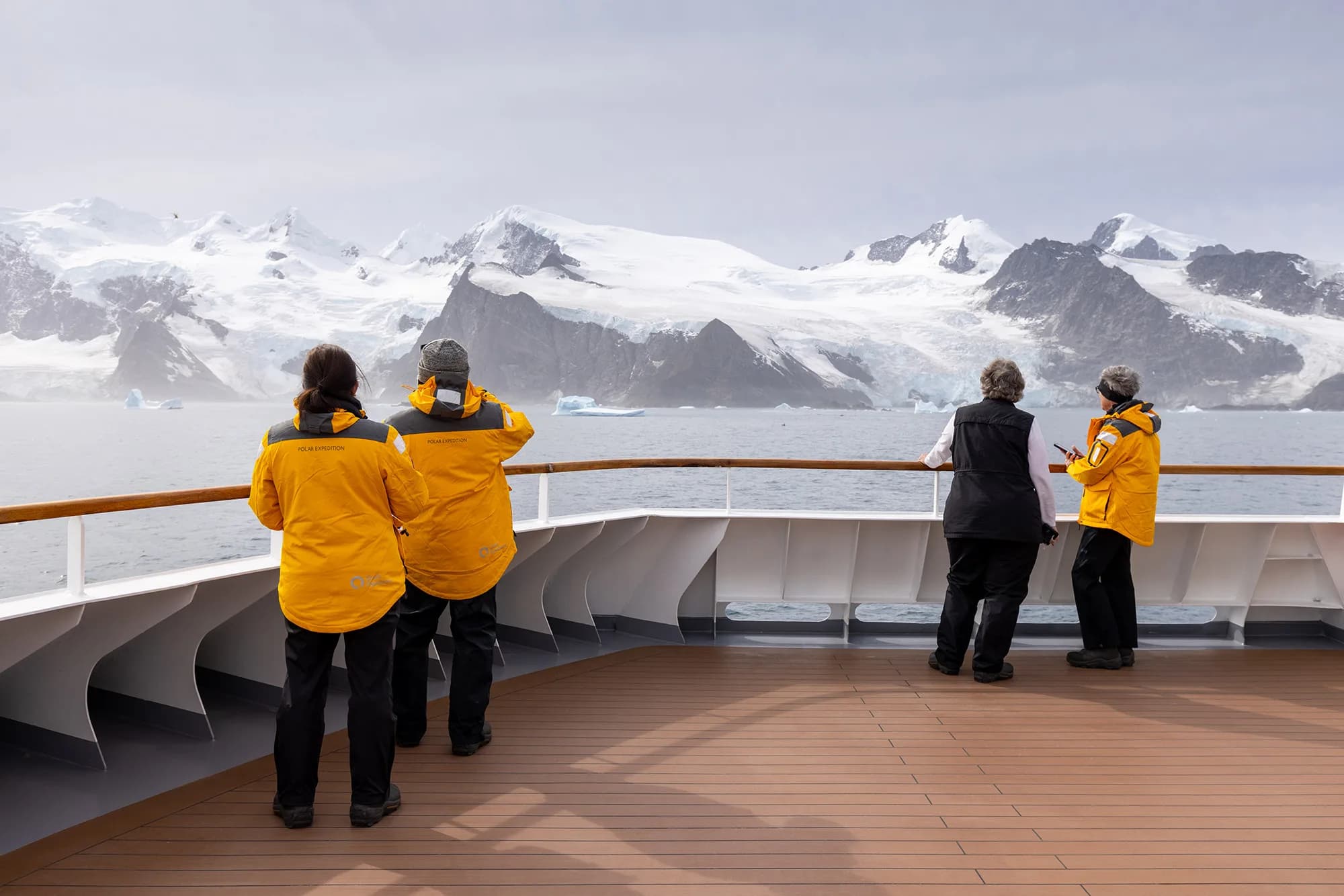
The second day of your Drake Passage crossing is an ideal time to attend scheduled polar presentations that will enhance your Antarctic experience. It’s also an excellent opportunity to visit the Science Hub on Deck 4, an instrumental part of your voyage. Spend time on deck watching for whales, which increase in number as we approach the Peninsula—and remember to upload your whale photos to the Happywhale platform.
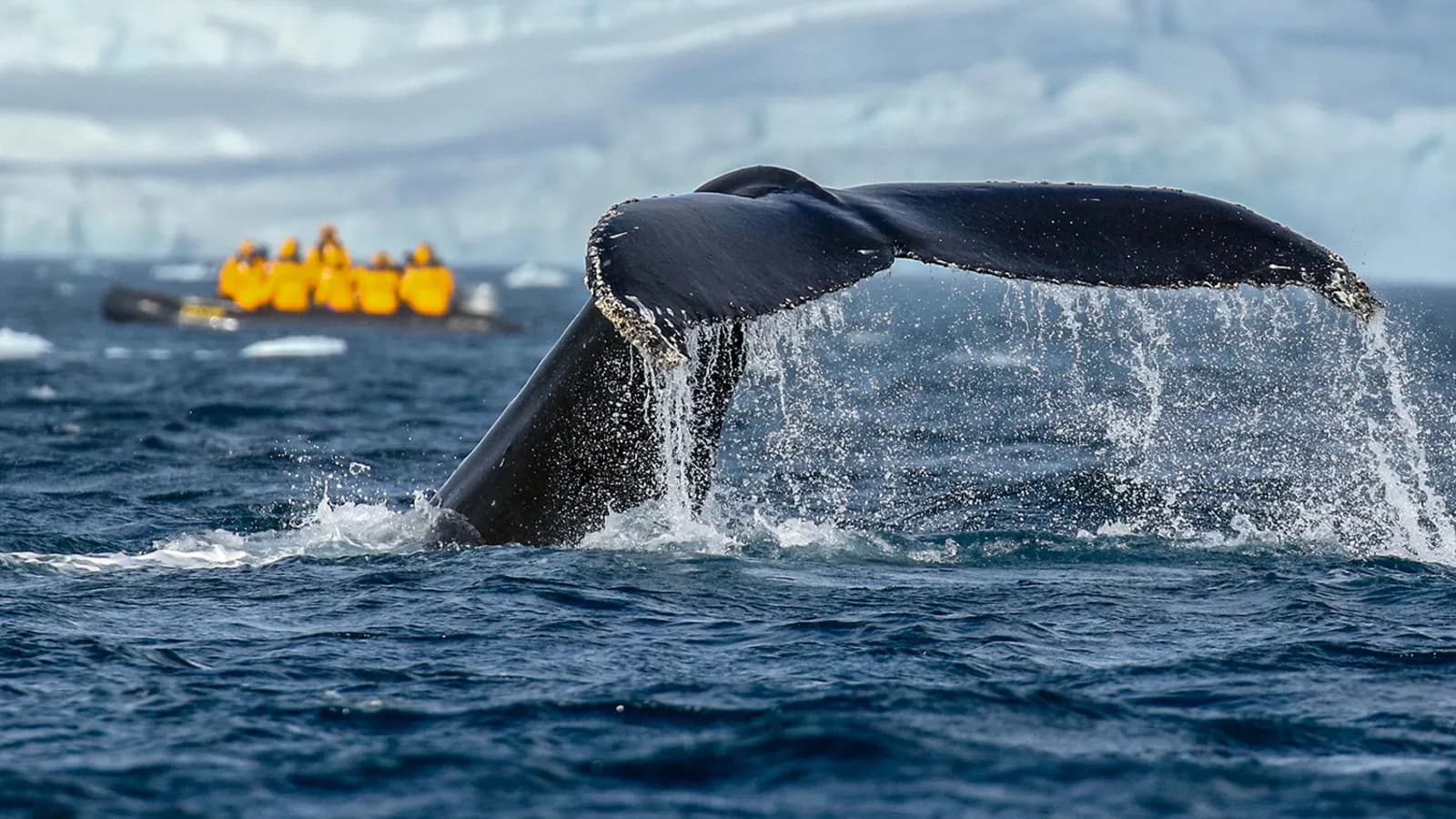
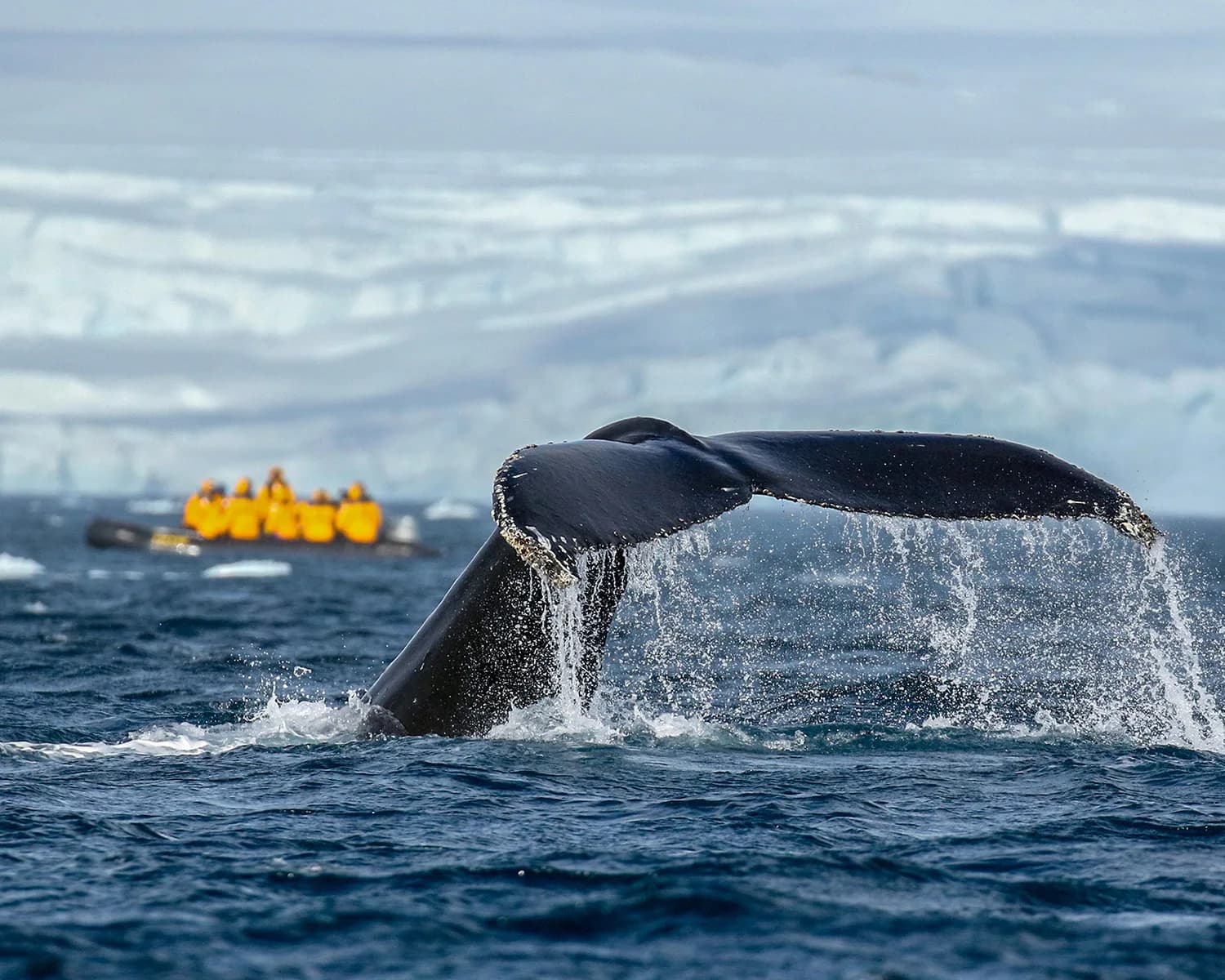
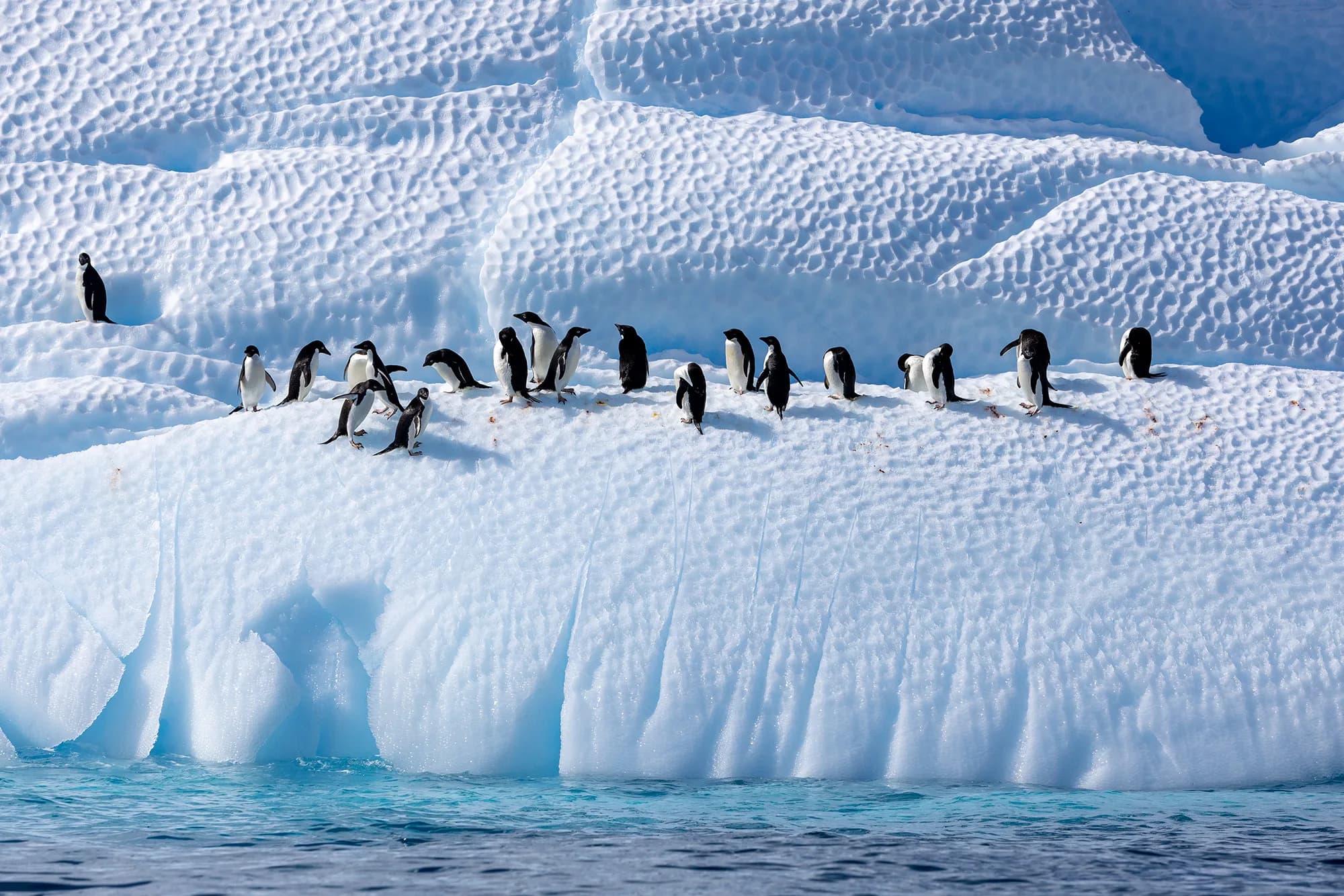
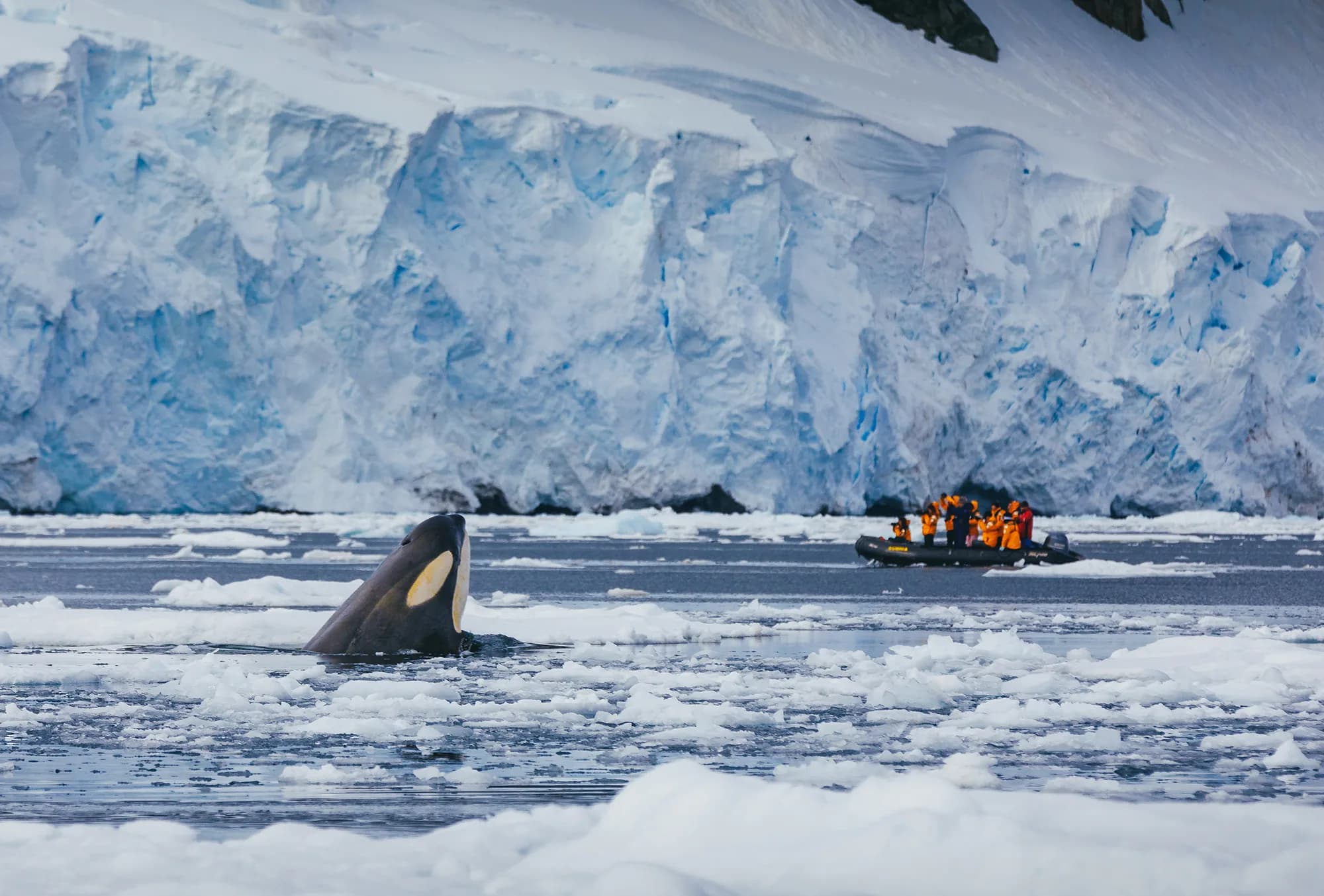
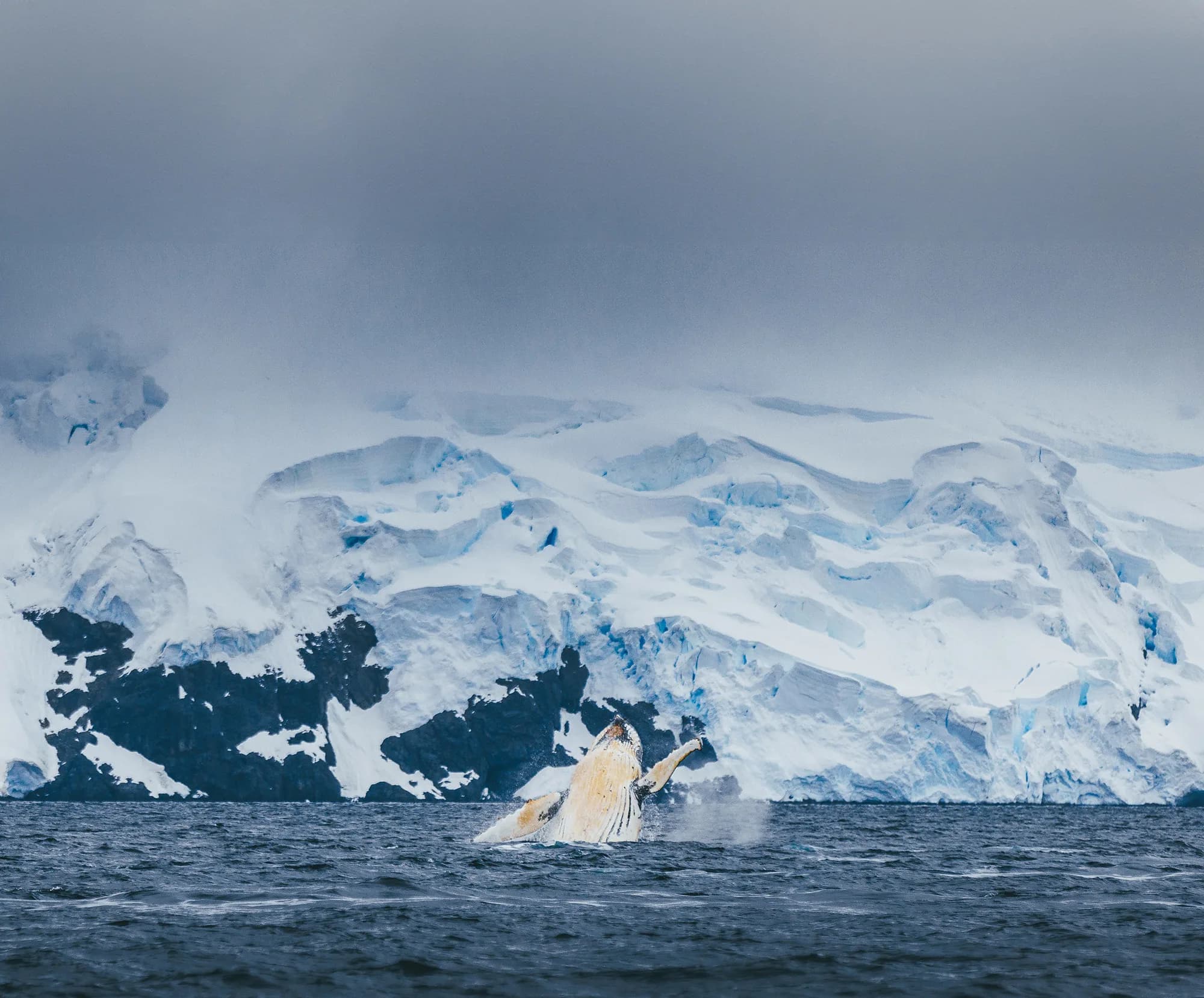
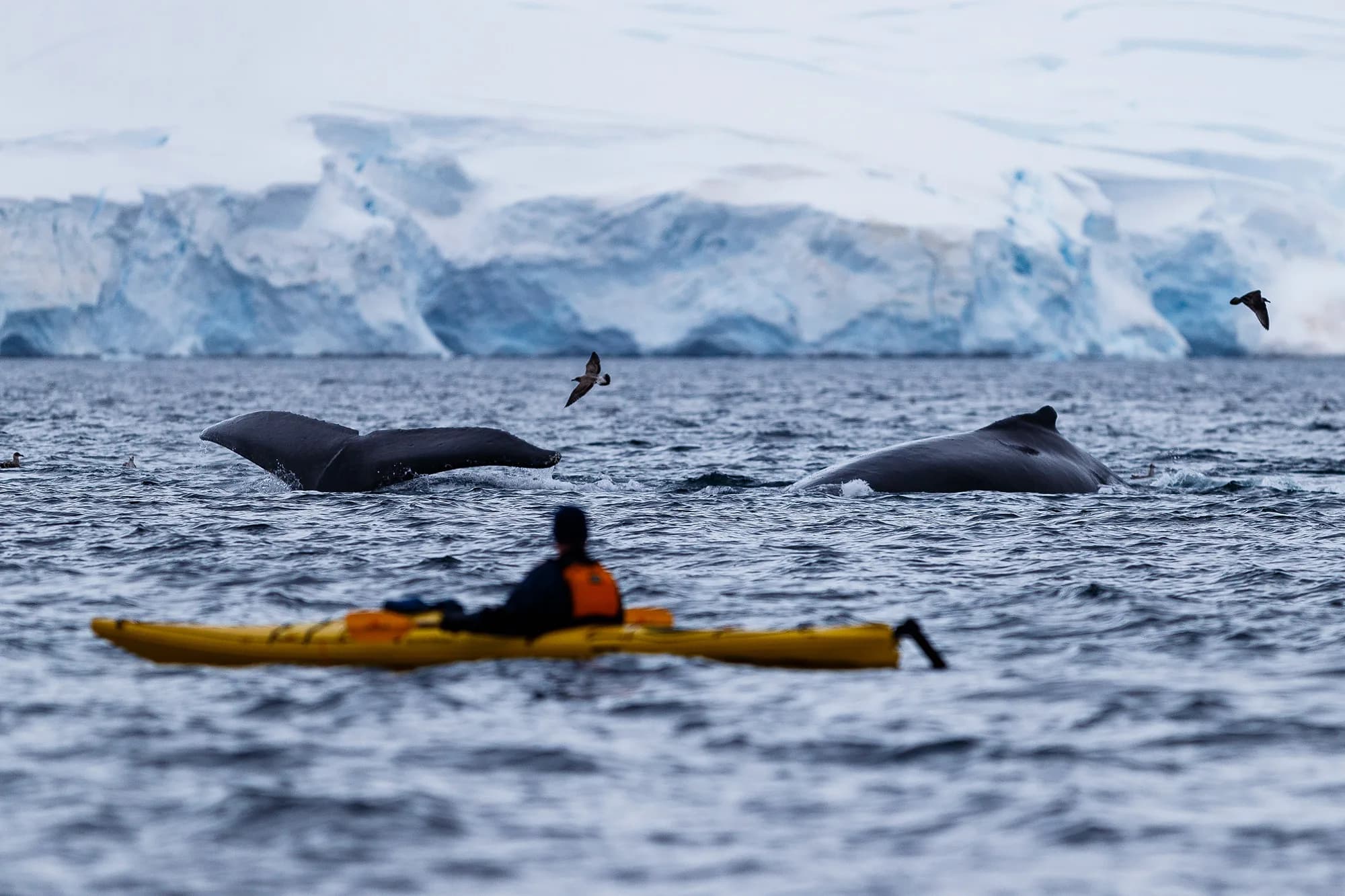
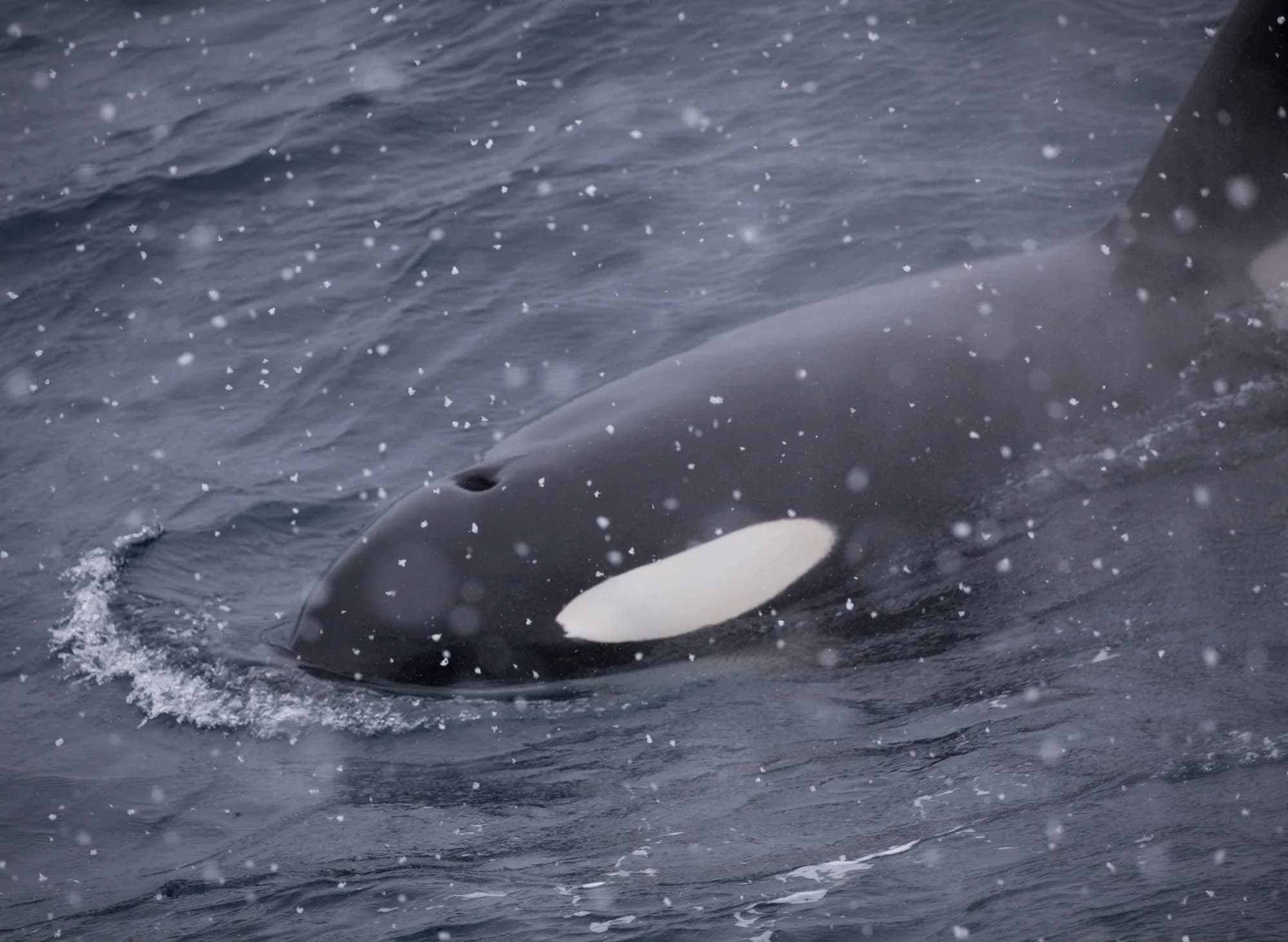
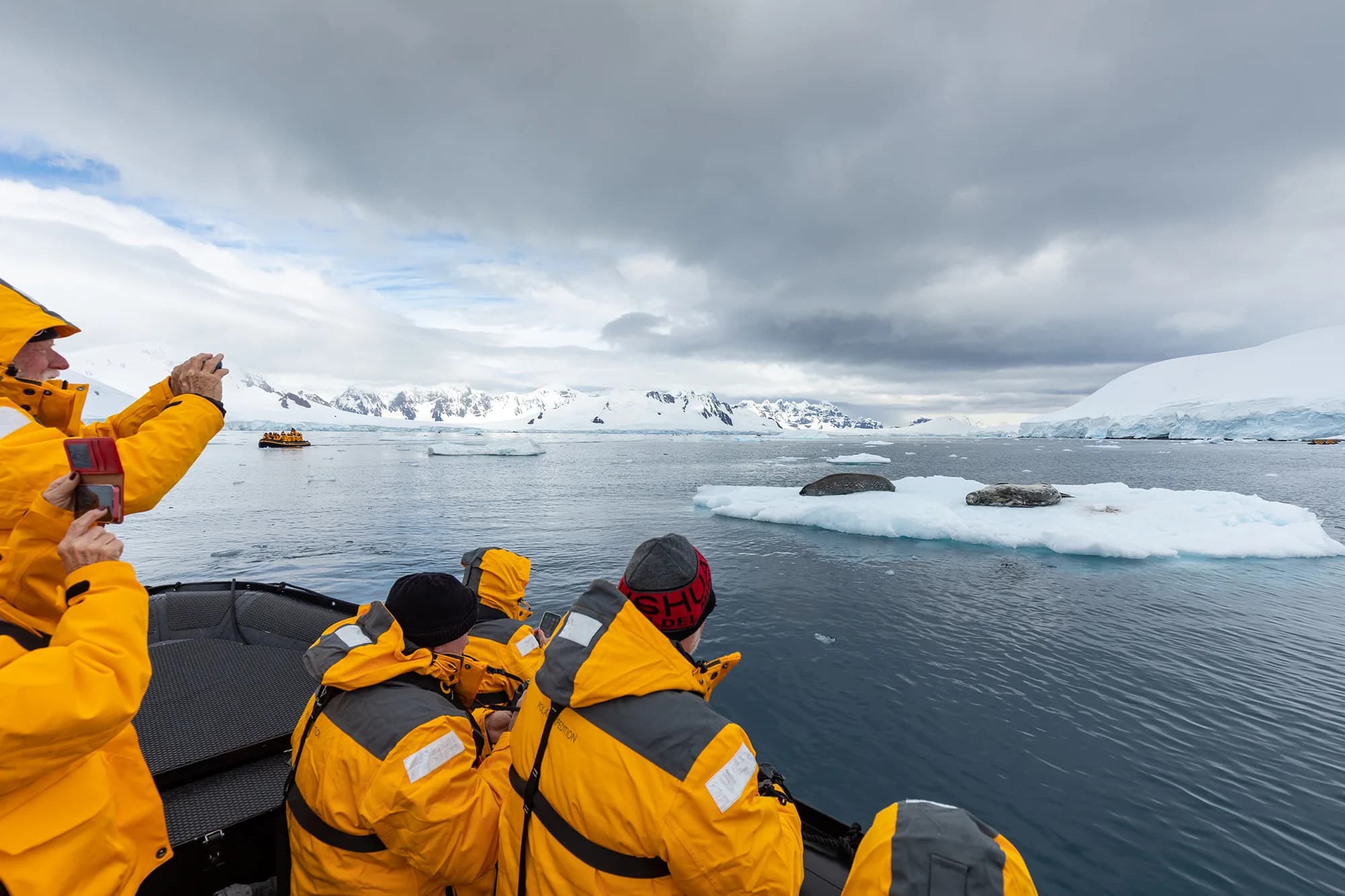
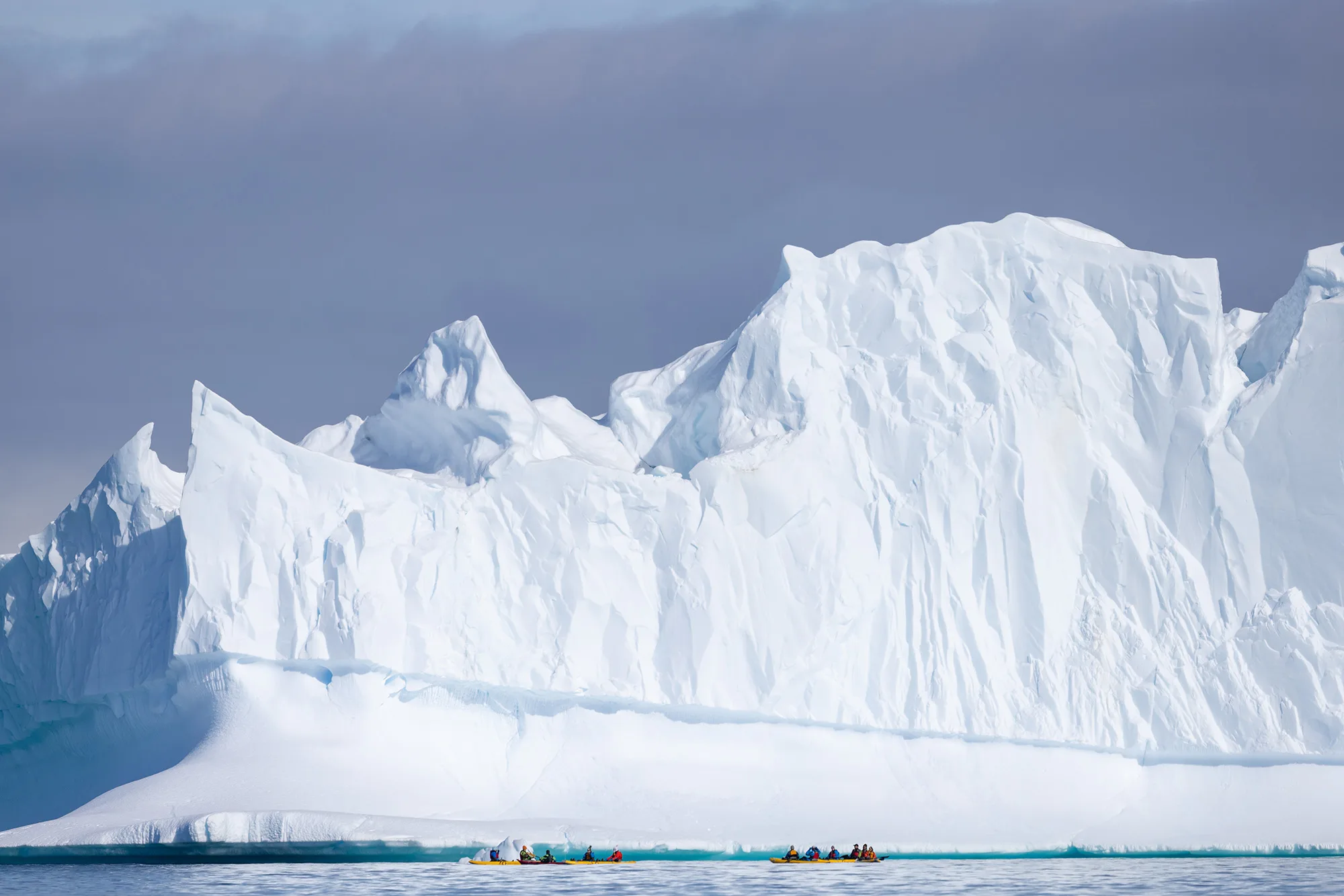
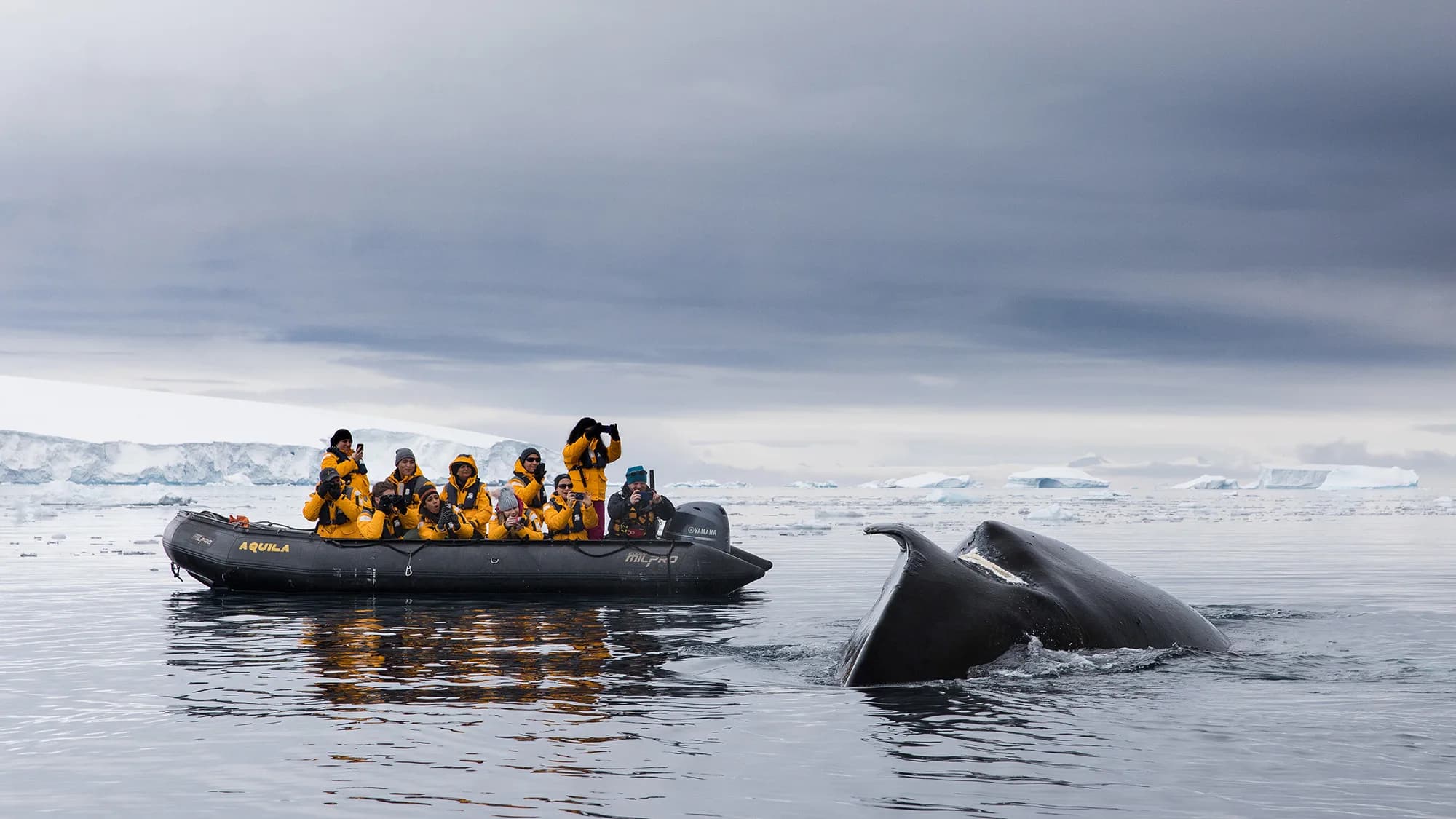
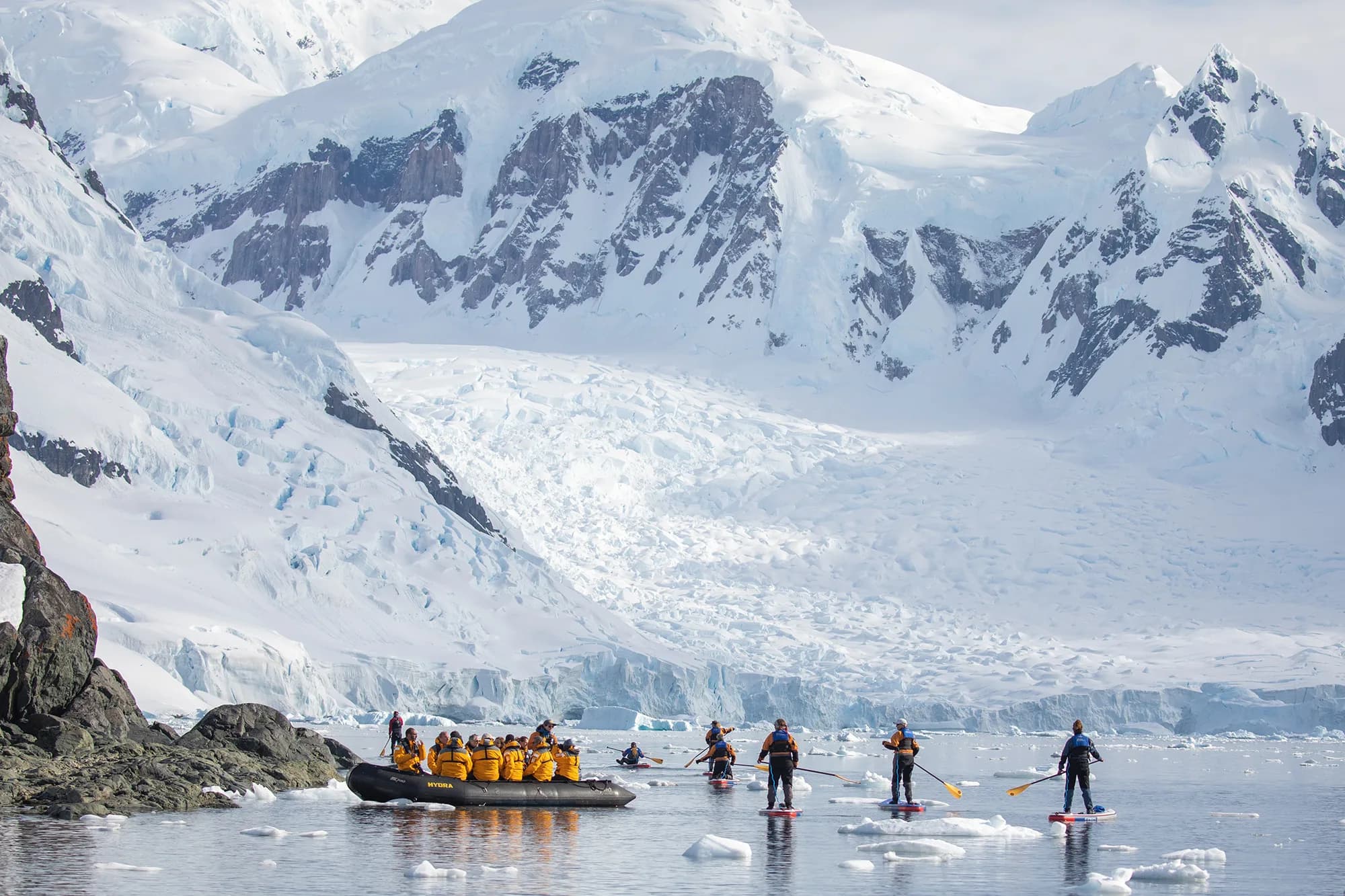
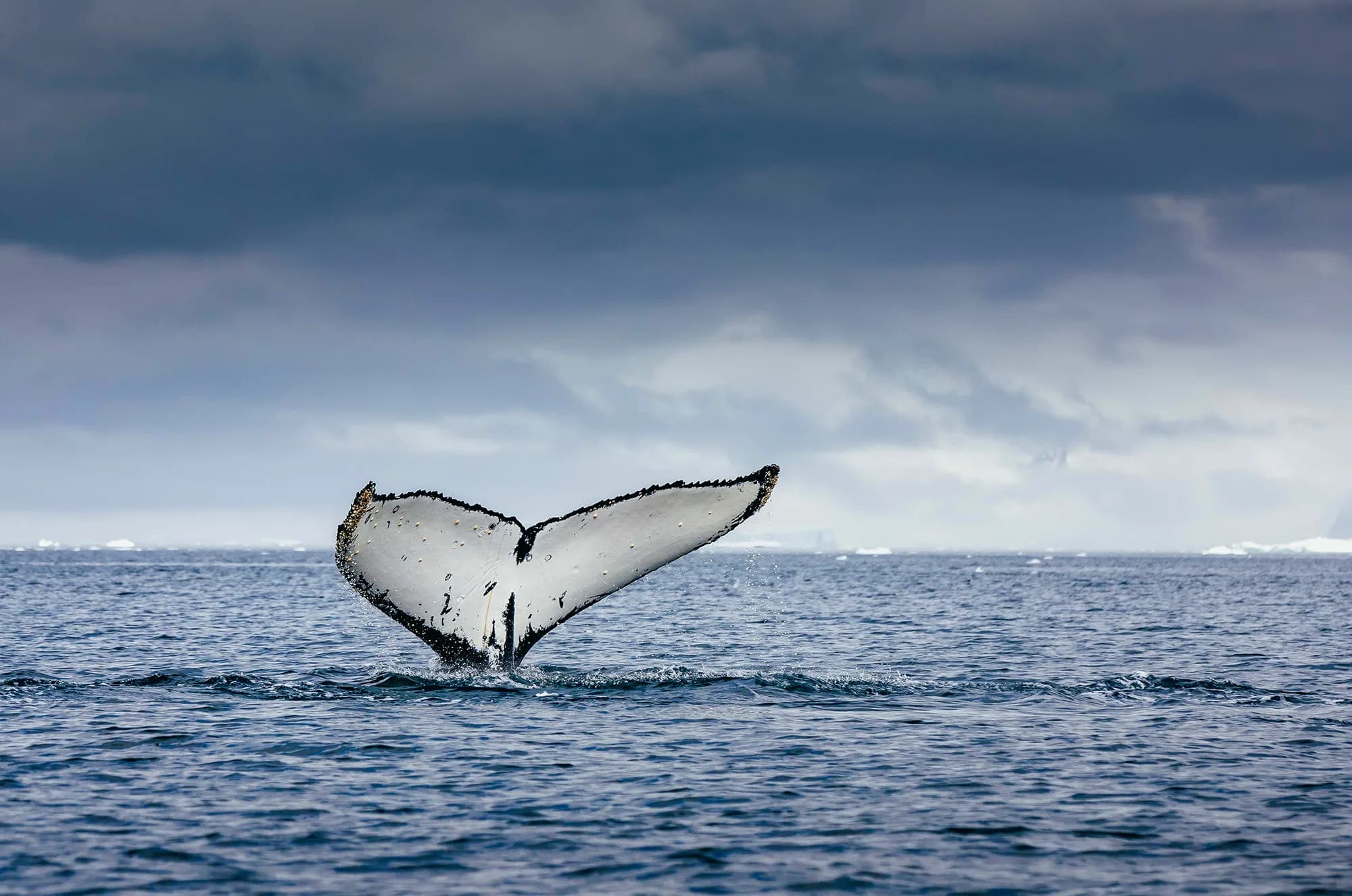
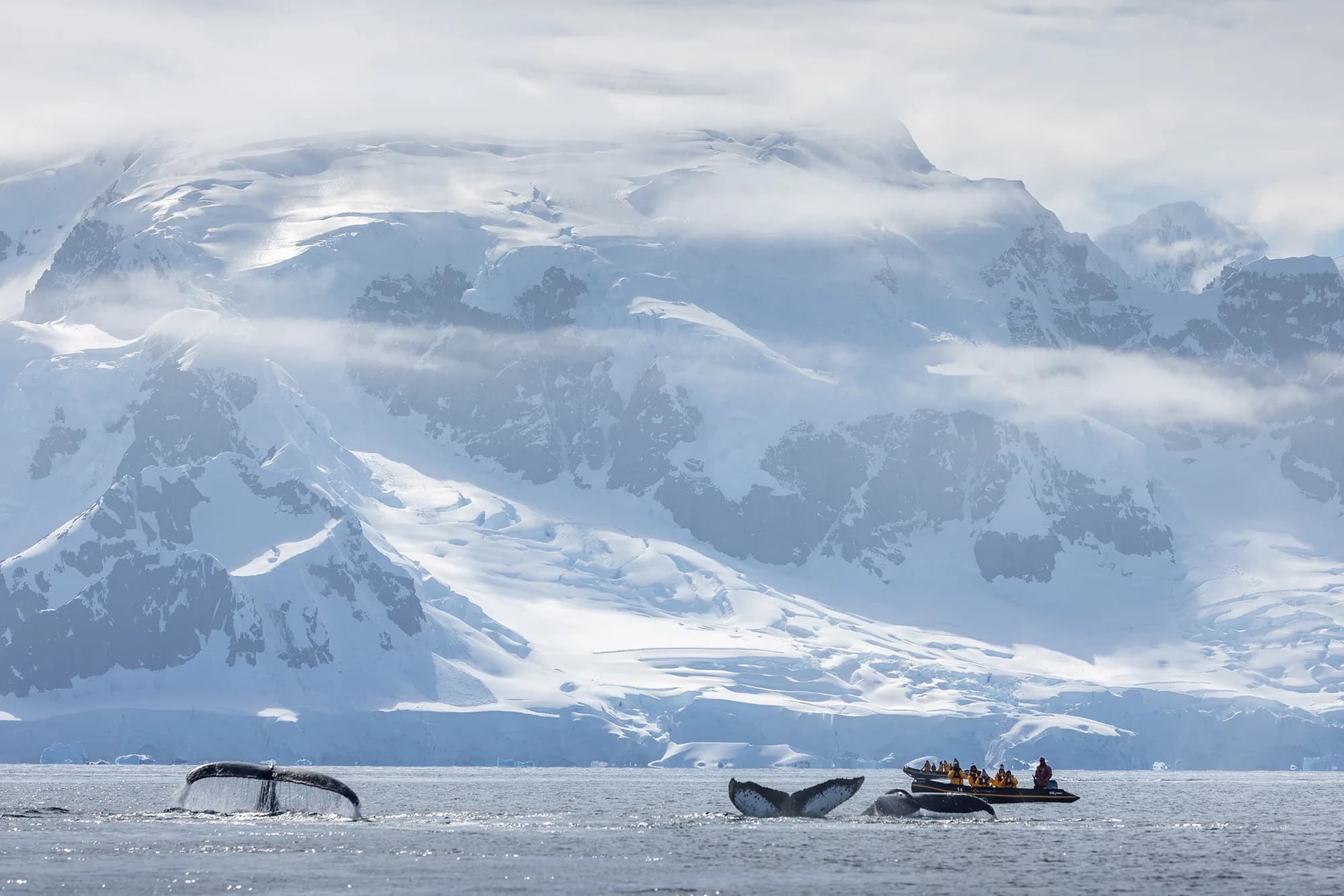
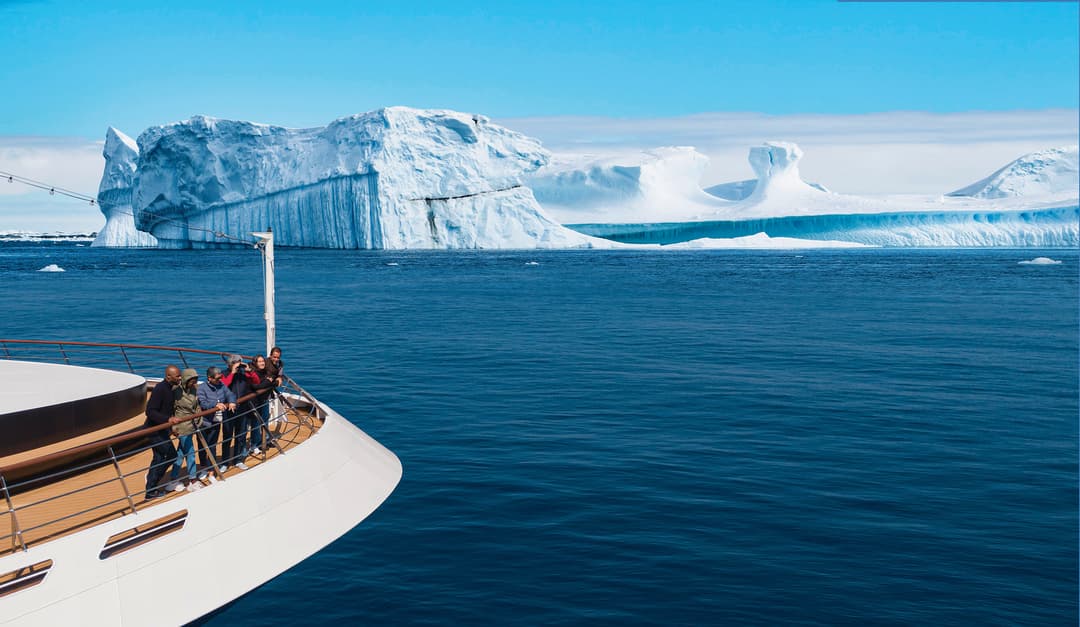
The timing of this voyage maximizes opportunities to observe various whale species along the Antarctic Peninsula. After the ice recedes in October and November, the food chain begins to re-establish itself. Whales, seals and other marine mammals are drawn to these rich feeding grounds—especially for the krill. By February and March, these creatures, which have been intensely feeding, are satiated and relaxed, making them more easier to spot. In addition to the Zodiac and paddling excursions, we plan to spend a lot of time on the outer decks and other vantage points on the ship to spot—and photograph—wildlife. We’ll spend our days in key marine mammal habitats of the Gerlache Strait and remote inner glacial bays. Over the next three days, we aim to explore whale hotspots such as Charlotte Bay, Portal Point, Graham Passage, Errera Channel, Cuverville Island, Andvord Bay, Fournier Bay and Dallmann Bay. Past whale sightings in these areas have included minke, humpback, fin, orca and the elusive, deep-diving Arnoux’s beaked whale. Antarctic Marine Mammals: The World of Whales & Seals is our only itinerary during which we’ll deploy hydrophones—underwater microphones that detect and record sound below the surface. You will have opportunities—during Zodiac cruises and paddling programs—to accompany Friedlaender Lab scientists as they deploy hydrophones to monitor and study marine mammal behavior, such as the vocalizations of whales. Four scientists will accompany guests in Zodiacs, with one hydrophone shared between two groups. Speakers will enable participants to listen for and, hopefully, hear whale sounds beneath the ocean surface. Engaging with scientists who are actively collecting and collating data that can be shared in real time on the water, and, through digital visual aids, brings marine biology to life in a way that transcends the water line. This activity is also available to World Voyager guests who join the Stand-Up Paddle Boarding (SUP) program. In addition to the citizen science programming, this itinerary will also feature the wonders of Antarctica: penguins, seals, immense glaciers, snow-capped mountains, icebergs, shore landings, and the polar plunge.
The timing of this voyage maximizes opportunities to observe various whale species along the Antarctic Peninsula. After the ice recedes in October and November, the food chain begins to re-establish itself. Whales, seals and other marine mammals are drawn to these rich feeding grounds—especially for the krill. By February and March, these creatures, which have been intensely feeding, are satiated and relaxed, making them more easier to spot. In addition to the Zodiac and paddling excursions, we plan to spend a lot of time on the outer decks and other vantage points on the ship to spot—and photograph—wildlife. We’ll spend our days in key marine mammal habitats of the Gerlache Strait and remote inner glacial bays. Over the next three days, we aim to explore whale hotspots such as Charlotte Bay, Portal Point, Graham Passage, Errera Channel, Cuverville Island, Andvord Bay, Fournier Bay and Dallmann Bay. Past whale sightings in these areas have included minke, humpback, fin, orca and the elusive, deep-diving Arnoux’s beaked whale. Antarctic Marine Mammals: The World of Whales & Seals is our only itinerary during which we’ll deploy hydrophones—underwater microphones that detect and record sound below the surface. You will have opportunities—during Zodiac cruises and paddling programs—to accompany Friedlaender Lab scientists as they deploy hydrophones to monitor and study marine mammal behavior, such as the vocalizations of whales. Four scientists will accompany guests in Zodiacs, with one hydrophone shared between two groups. Speakers will enable participants to listen for and, hopefully, hear whale sounds beneath the ocean surface. Engaging with scientists who are actively collecting and collating data that can be shared in real time on the water, and, through digital visual aids, brings marine biology to life in a way that transcends the water line. This activity is also available to World Voyager guests who join the Stand-Up Paddle Boarding (SUP) program. In addition to the citizen science programming, this itinerary will also feature the wonders of Antarctica: penguins, seals, immense glaciers, snow-capped mountains, icebergs, shore landings, and the polar plunge.
The timing of this voyage maximizes opportunities to observe various whale species along the Antarctic Peninsula. After the ice recedes in October and November, the food chain begins to re-establish itself. Whales, seals and other marine mammals are drawn to these rich feeding grounds—especially for the krill. By February and March, these creatures, which have been intensely feeding, are satiated and relaxed, making them more easier to spot. In addition to the Zodiac and paddling excursions, we plan to spend a lot of time on the outer decks and other vantage points on the ship to spot—and photograph—wildlife. We’ll spend our days in key marine mammal habitats of the Gerlache Strait and remote inner glacial bays. Over the next three days, we aim to explore whale hotspots such as Charlotte Bay, Portal Point, Graham Passage, Errera Channel, Cuverville Island, Andvord Bay, Fournier Bay and Dallmann Bay. Past whale sightings in these areas have included minke, humpback, fin, orca and the elusive, deep-diving Arnoux’s beaked whale. Antarctic Marine Mammals: The World of Whales & Seals is our only itinerary during which we’ll deploy hydrophones—underwater microphones that detect and record sound below the surface. You will have opportunities—during Zodiac cruises and paddling programs—to accompany Friedlaender Lab scientists as they deploy hydrophones to monitor and study marine mammal behavior, such as the vocalizations of whales. Four scientists will accompany guests in Zodiacs, with one hydrophone shared between two groups. Speakers will enable participants to listen for and, hopefully, hear whale sounds beneath the ocean surface. Engaging with scientists who are actively collecting and collating data that can be shared in real time on the water, and, through digital visual aids, brings marine biology to life in a way that transcends the water line. This activity is also available to World Voyager guests who join the Stand-Up Paddle Boarding (SUP) program. In addition to the citizen science programming, this itinerary will also feature the wonders of Antarctica: penguins, seals, immense glaciers, snow-capped mountains, icebergs, shore landings, and the polar plunge.
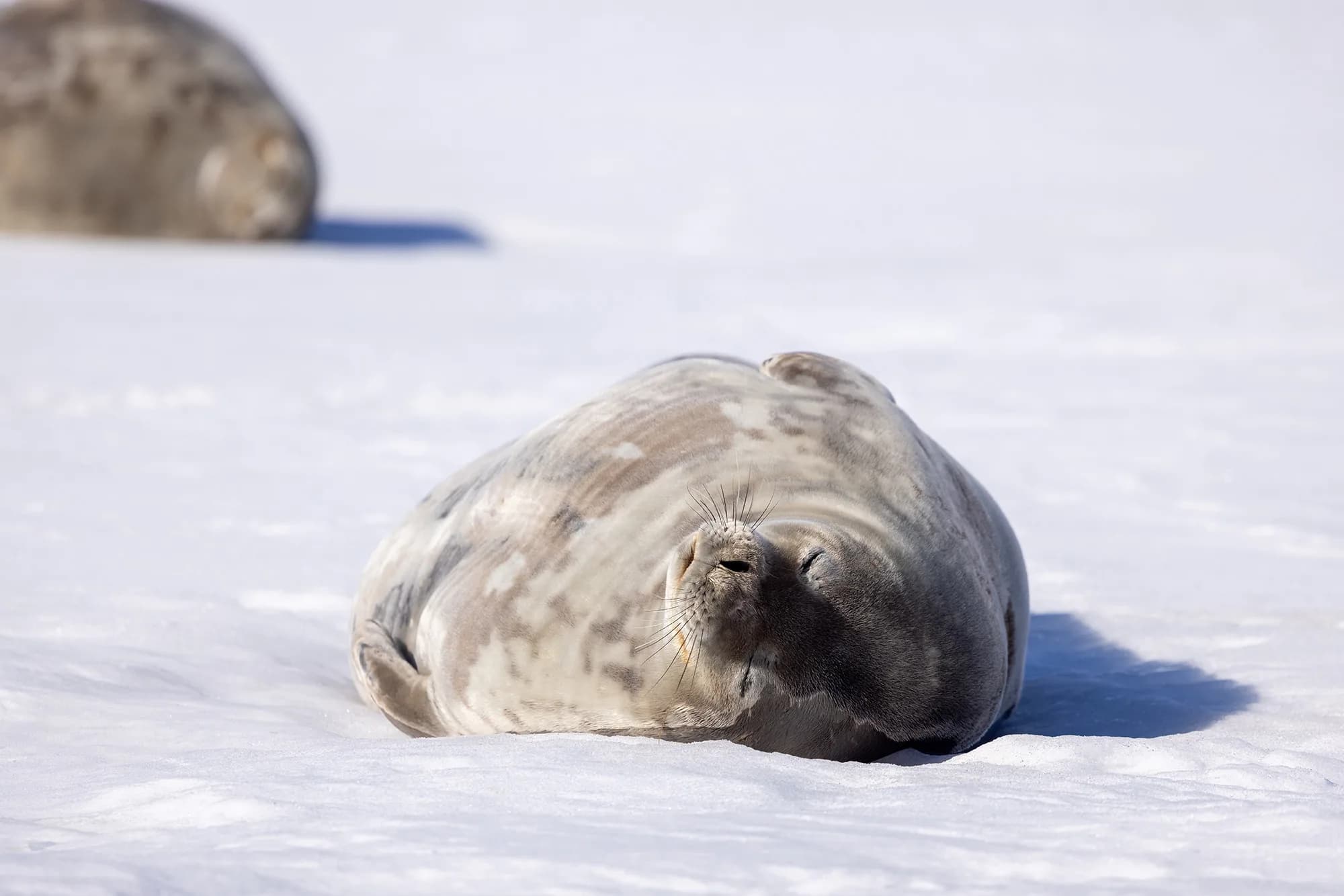
Rounding out our marine mammal experiences, we hope to witness southern elephant seals in the rugged and fabled South Shetland Islands. We’ll also keep our fingers crossed for sightings of fin whales. We’ll explore this geological and historic archipelago while prioritizing shore landings, which offer further opportunities for wildlife sightings. Arriving in March allows us the rare opportunity to potentially explore key excursion sites such as Hannah Point, which is deemed a Restricted Area from early to mid-season. Massive populations of elephant seals and southern giant petrels make for awe-inspiring experiences. As with any expedition, shore landings along the coast are dependent on favorable weather.
Today is the start of the journey back across the Drake Passage. This is an excellent opportunity to spend more time engaging with the Friedlaender Lab scientists, or attend one of the scheduled polar presentations.
Today is your last opportunity to visit Quark Expeditions’ new Science Hub and contribute to citizen science that will support marine mammal conservation efforts. In the words of Sir David Attenborough: “No one will protect what they don’t care about. And no one will care about what they have never experienced.”
You will arrive in Ushuaia in the morning and disembark after breakfast. You will then make your way towards your group charter flight to Buenos Aires.You will arrive in Ushuaia in the morning and disembark after breakfast. You will then make your way towards your group charter flight to Buenos Aires.
About the Ship
Name
World Voyager
Operator
Quark Expeditions


World Voyager—the newest addition to our fleet— is a modern expedition ship built for science and discovery. Every design element, from the deluxe, all-balcony suites—with direct views into the surrounding polar wilderness—to the presentation theater and Science Hub, embody the spirit of discovery: the never-ending urge to explore and learn more about our rugged polar landscapes.
Loading...


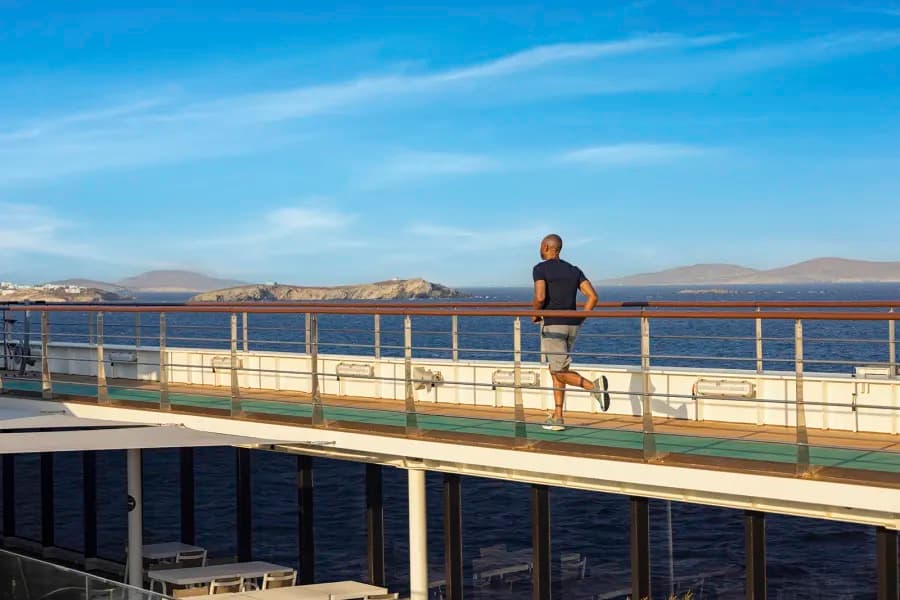


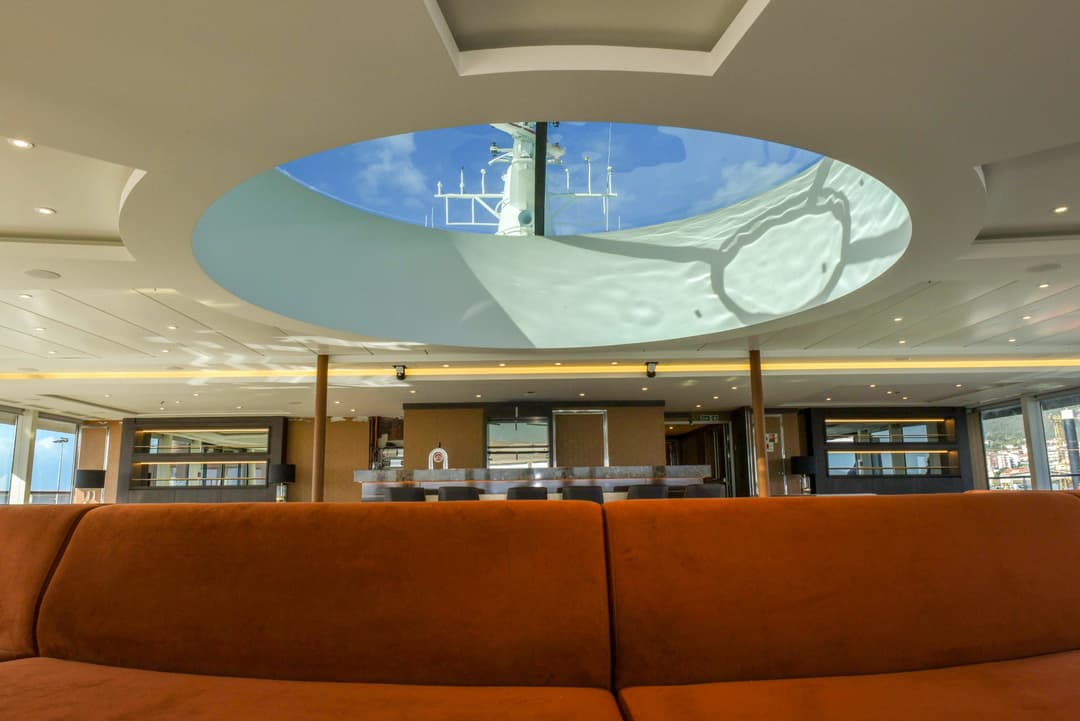
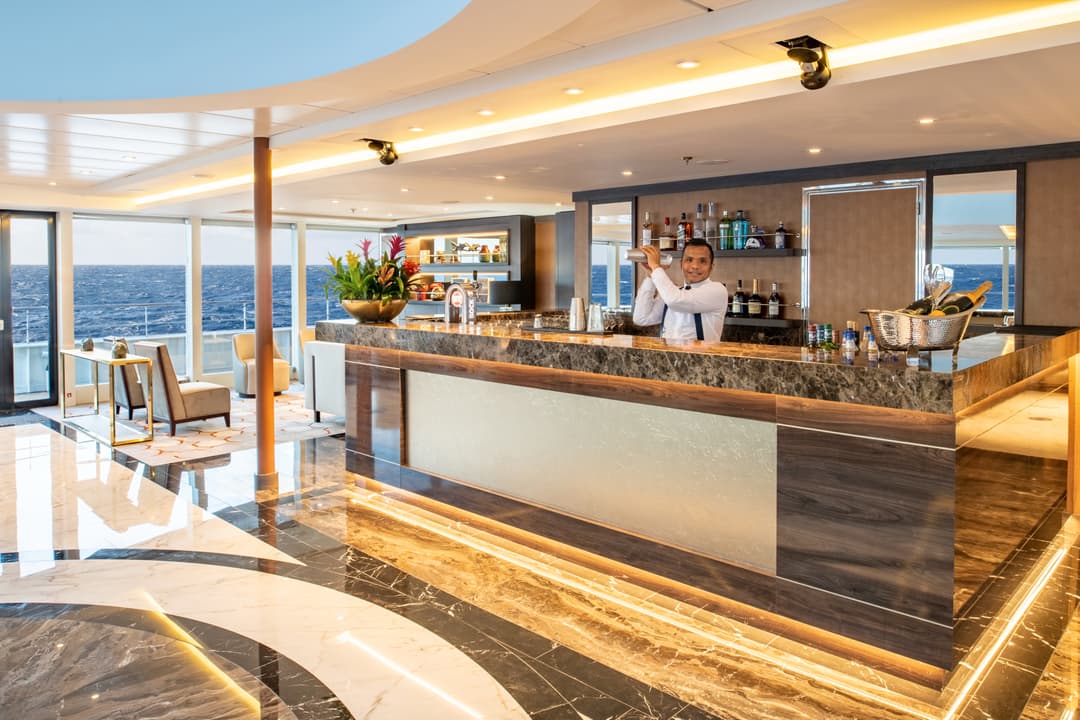


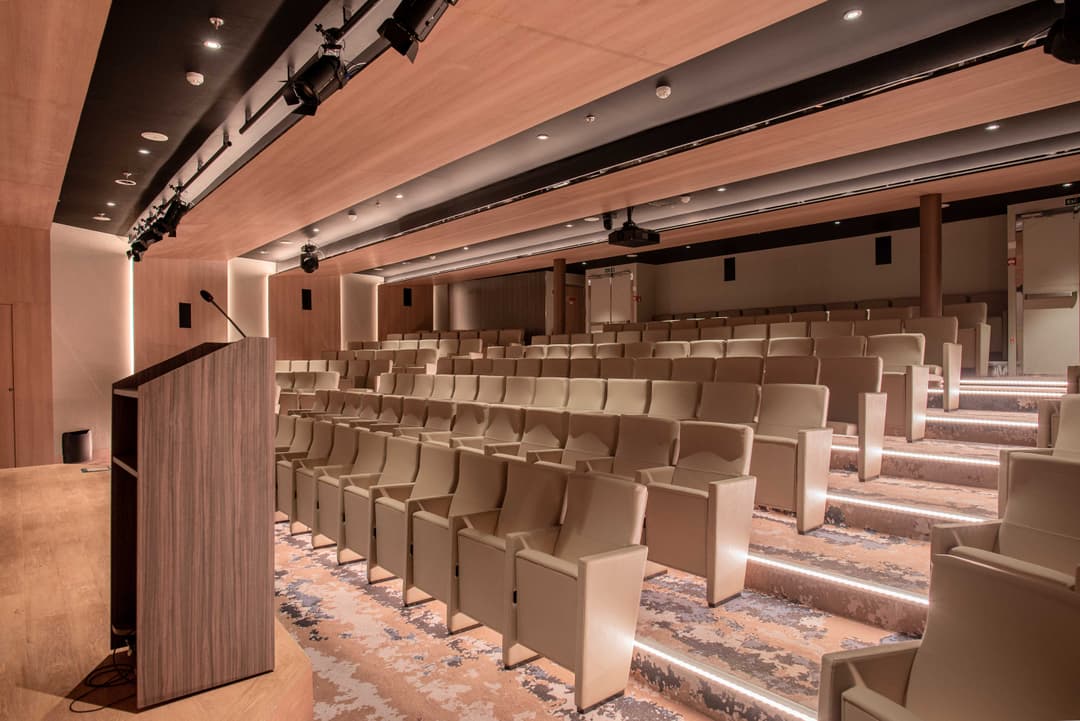

Wellness amenities, such as the spa, sauna, swimming pool, Jacuzzis and outdoor running track, allow guests to rejuvenate throughout their polar expedition. The beautifully designed restaurant and spacious lounges are ideal for guests to gather and engage in lively discussions about the day’s discoveries.


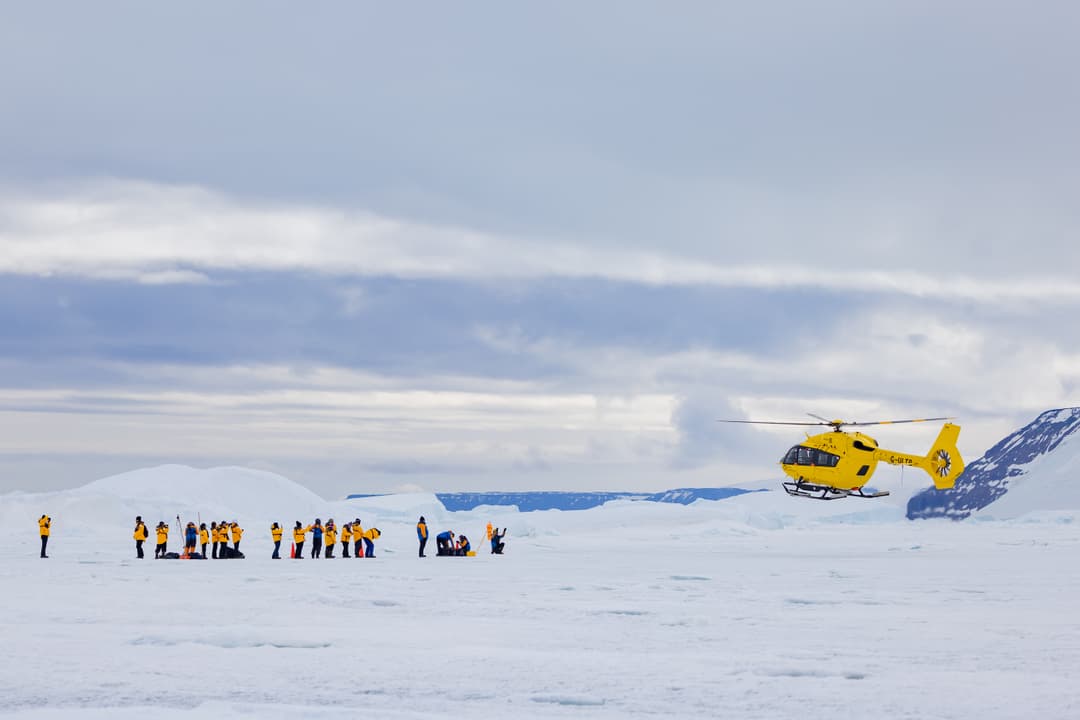
Every voyage starts on a ship, but the real adventure happens off-ship. In the polar wilds, we camp, kayak, mountain bike, hike and fly by helicopter to remote locations. We paddleboard on icy waters, and rise above the polar landscape in hot air balloons. With the most adventure options available, how you experience the Polar Regions is entirely up to you.
Loading...
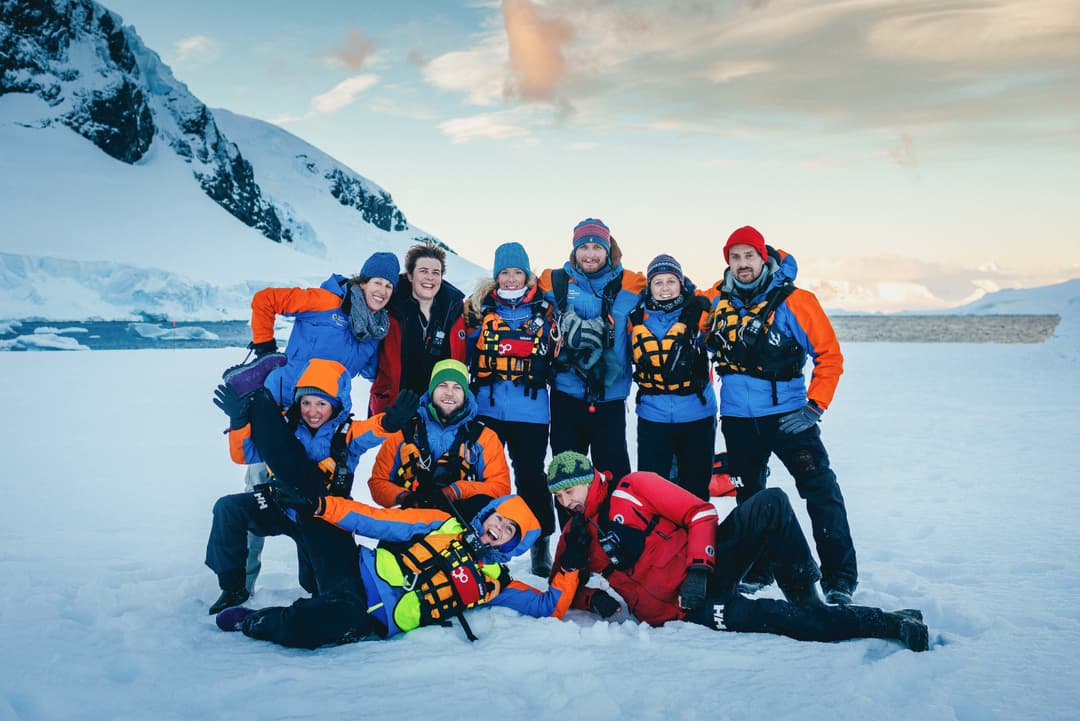
The perfect polar expedition doesn't just happen. It takes a team of talented, knowledgeable and experienced professionals to bring it all together. Our Expedition Team is comprised of seasoned veterans with rich backgrounds in marine biology, history, glaciology, geology and more. With the highest staff-to-guest ratio in the industry, our Expedition Teams safely deliver your trip-of-a-lifetime to maximize your polar adventure every step of th....
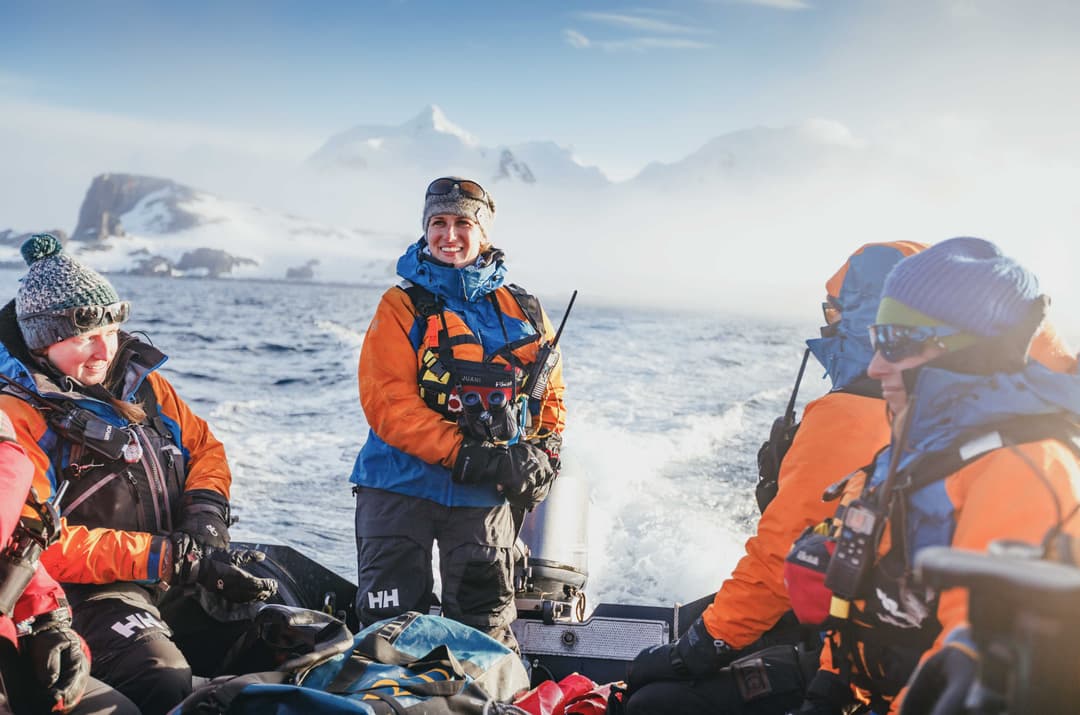
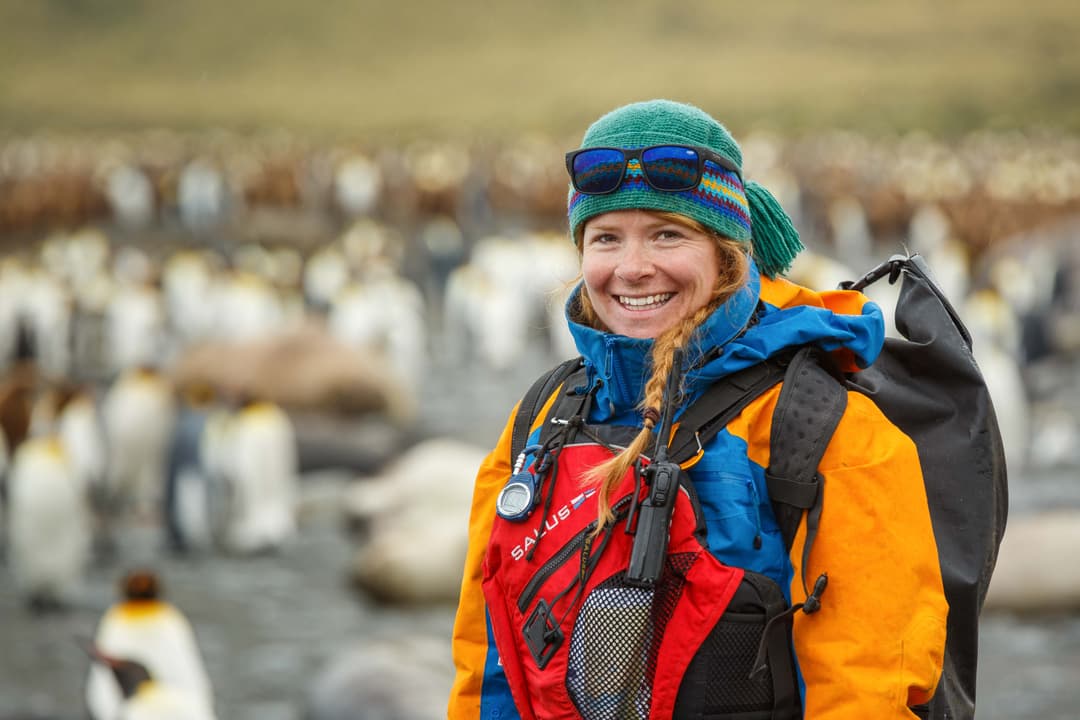

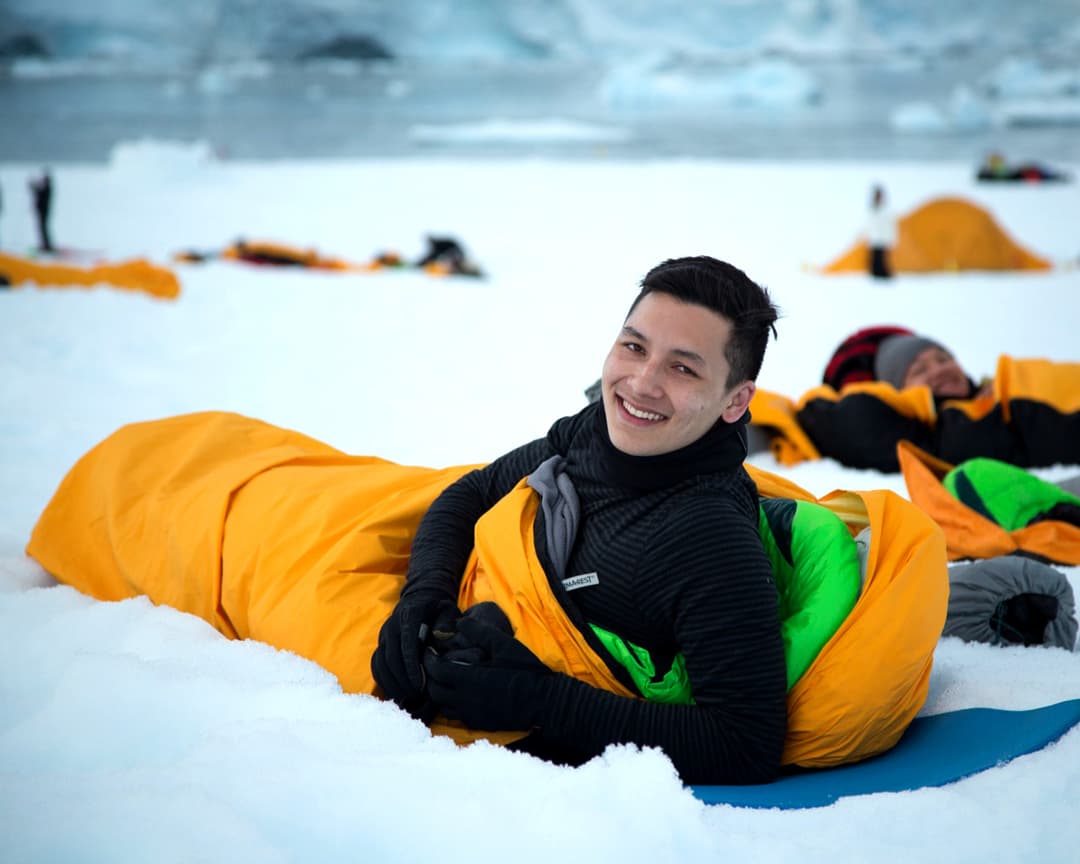
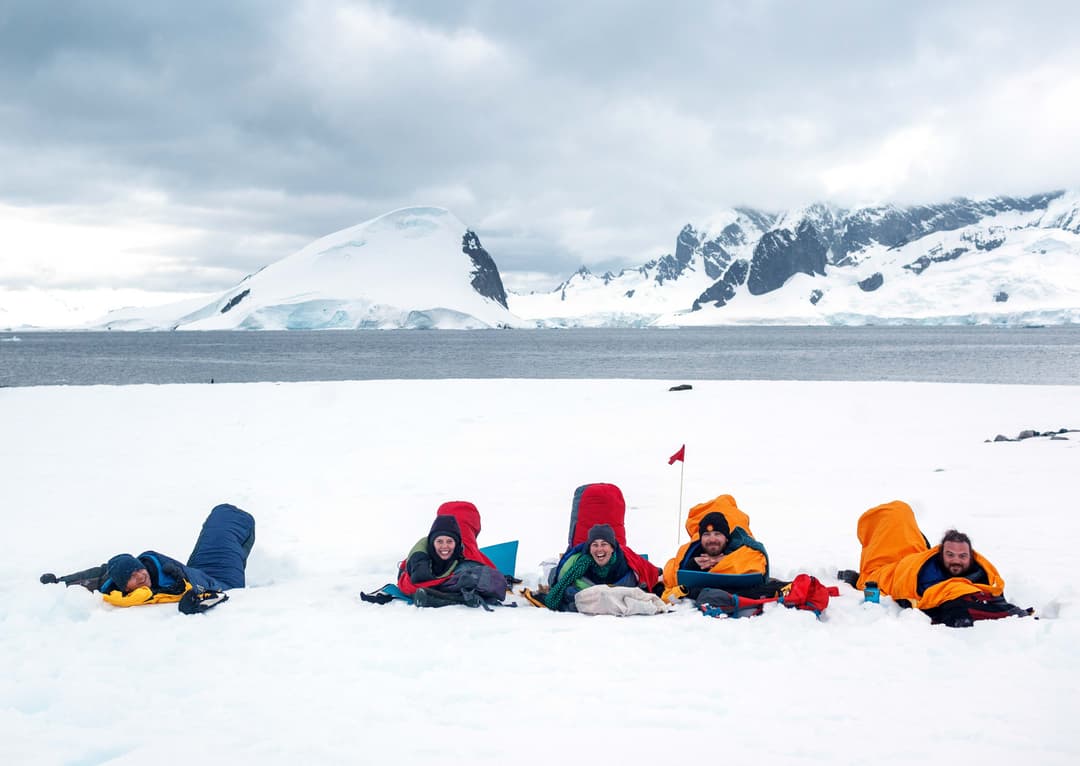
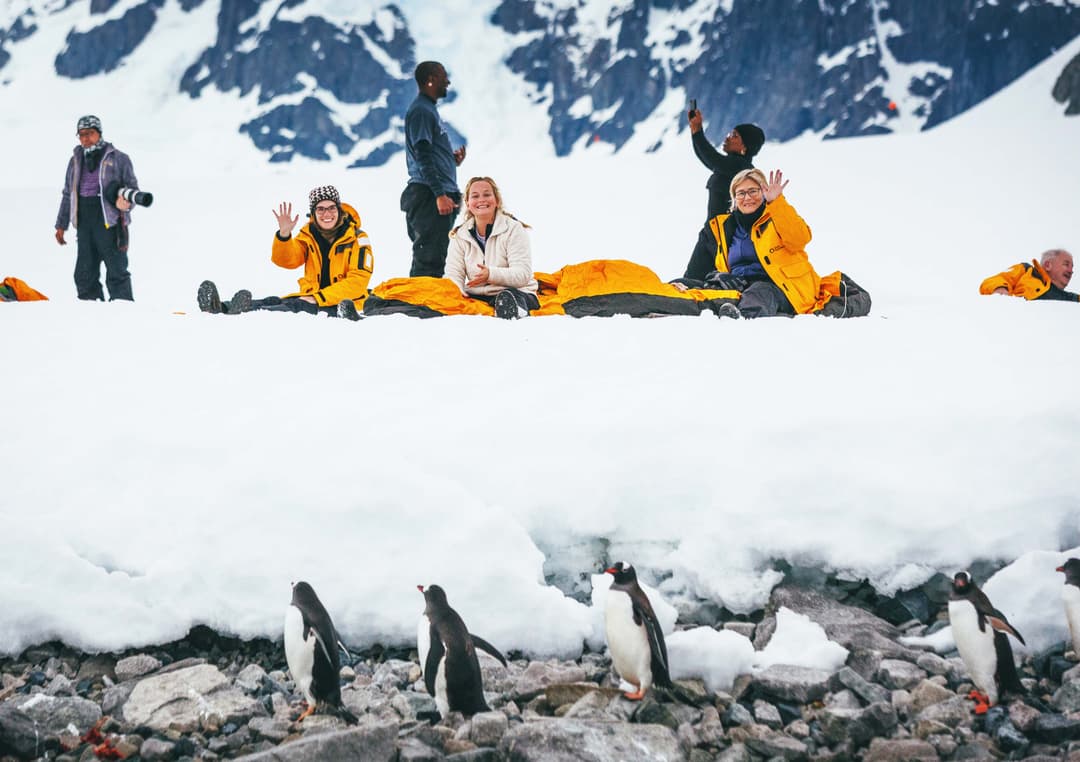
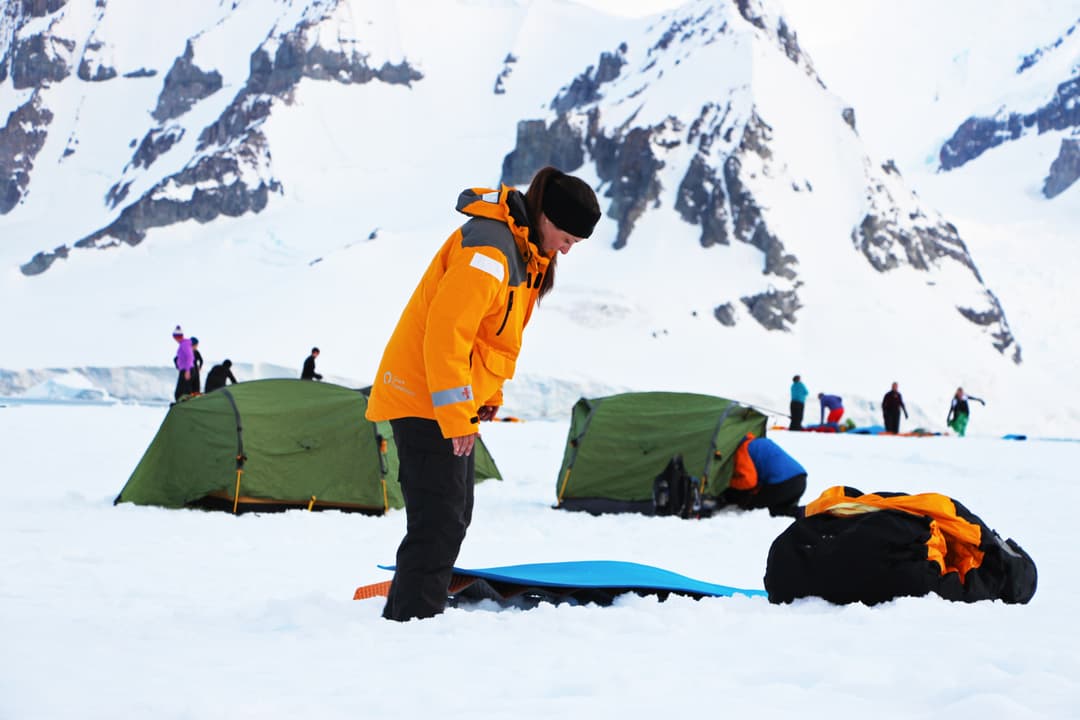
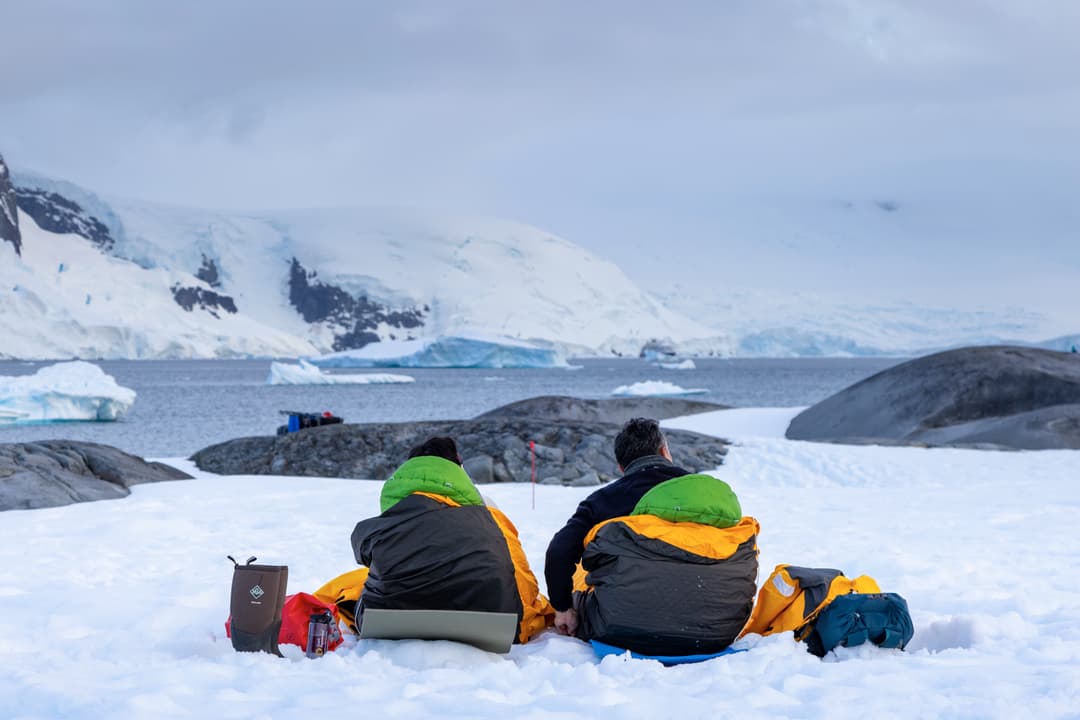
Imagine for a moment, staring at the stars in the indigo glow of an Antarctic night as you bed down for the night outside in the elements. The buzz of your daily life becomes a distant memory as you listen to the bray of penguin, the ethereal calls of the Weddell sea – even the exhalation of a humpback whale. And then you fall asleep.
Antarctic Camping with Quark Expeditions is an unforgettable experience. After dinner onboard, you'll be....

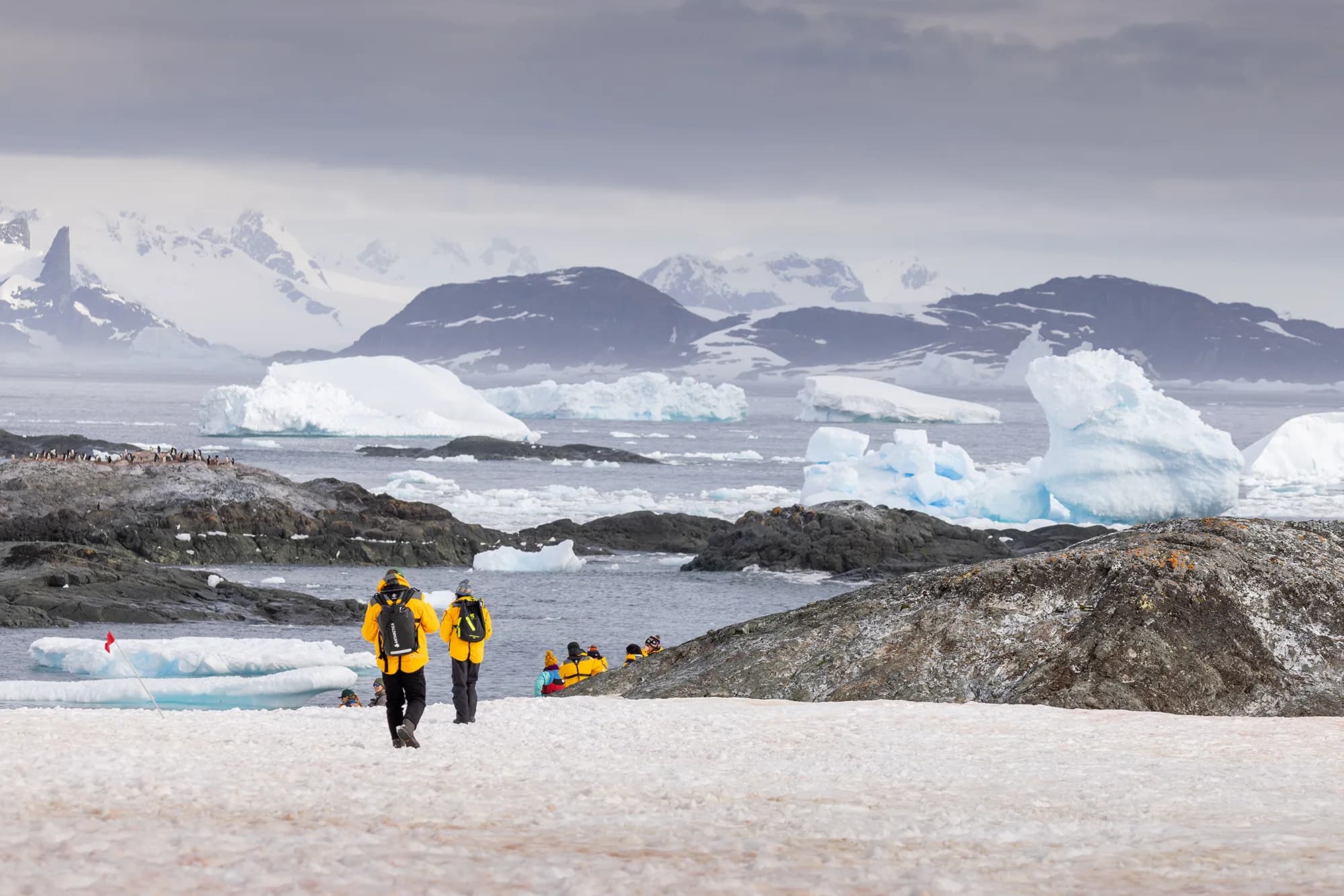
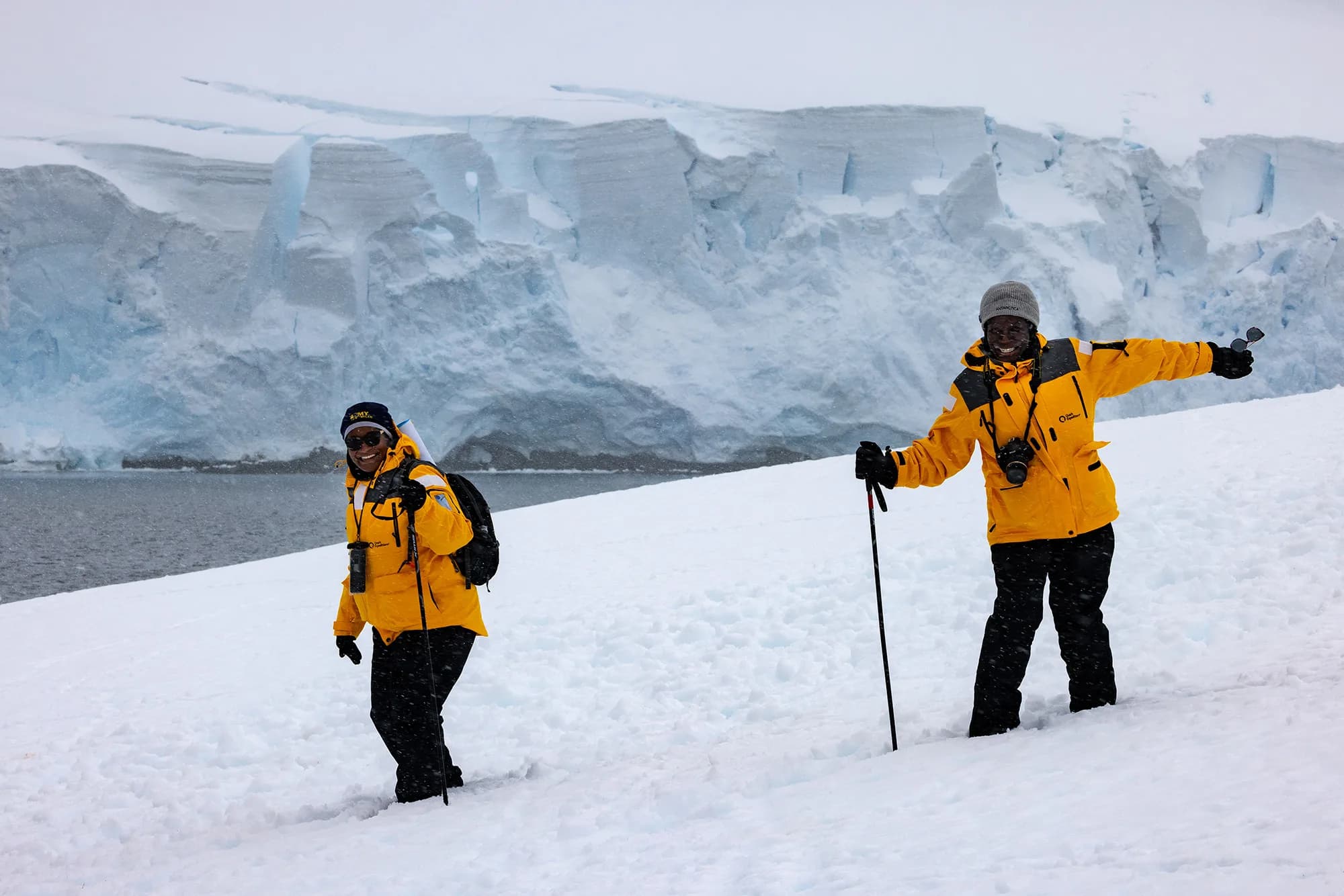
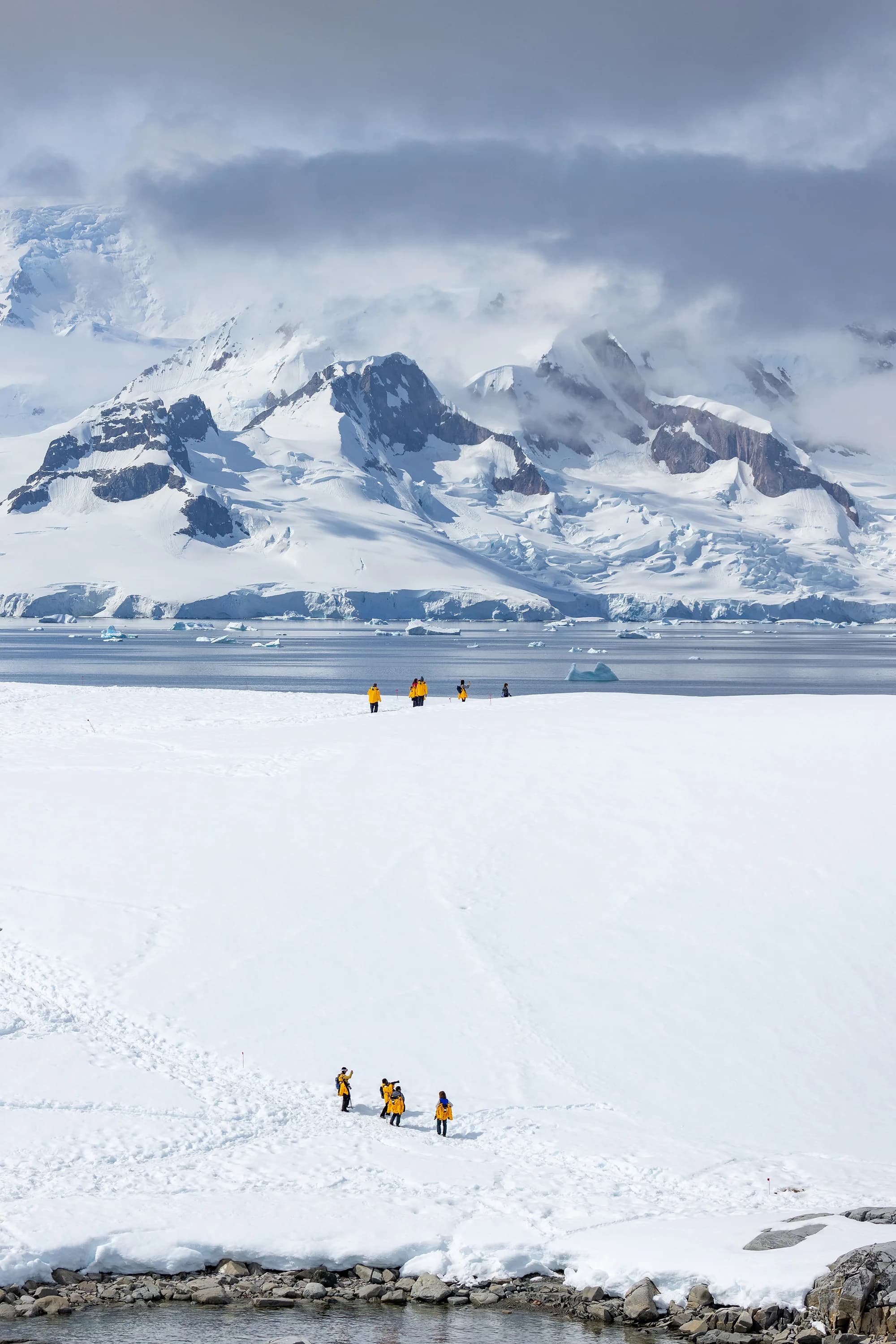
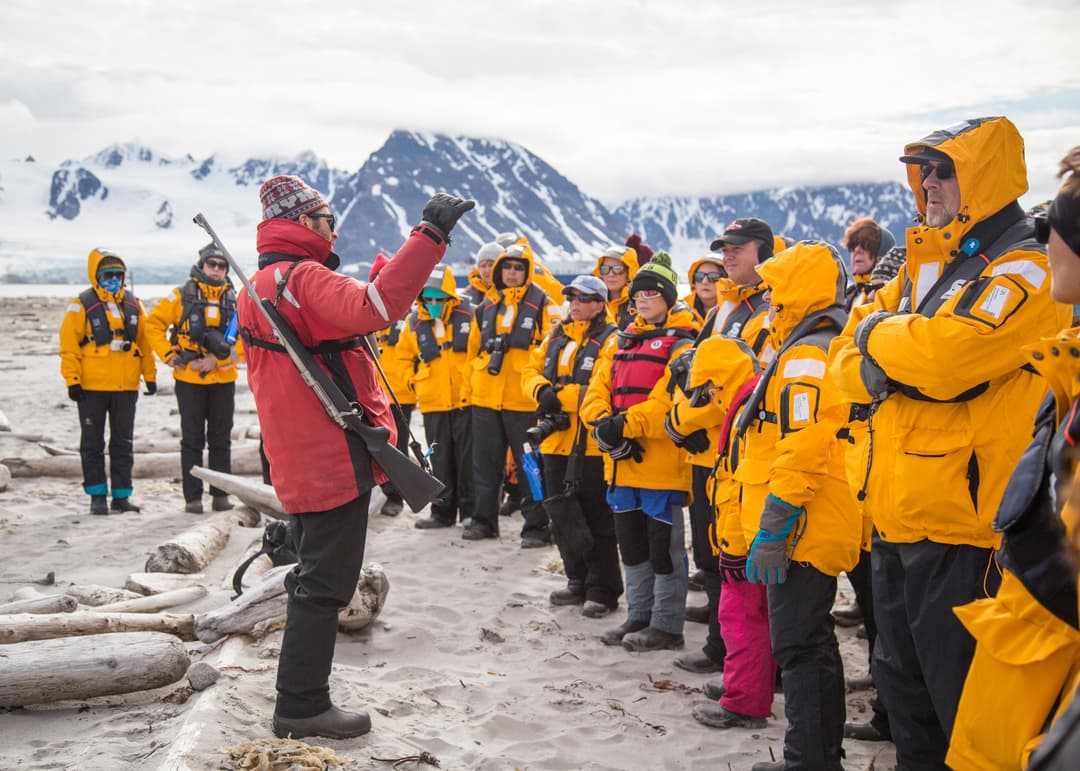
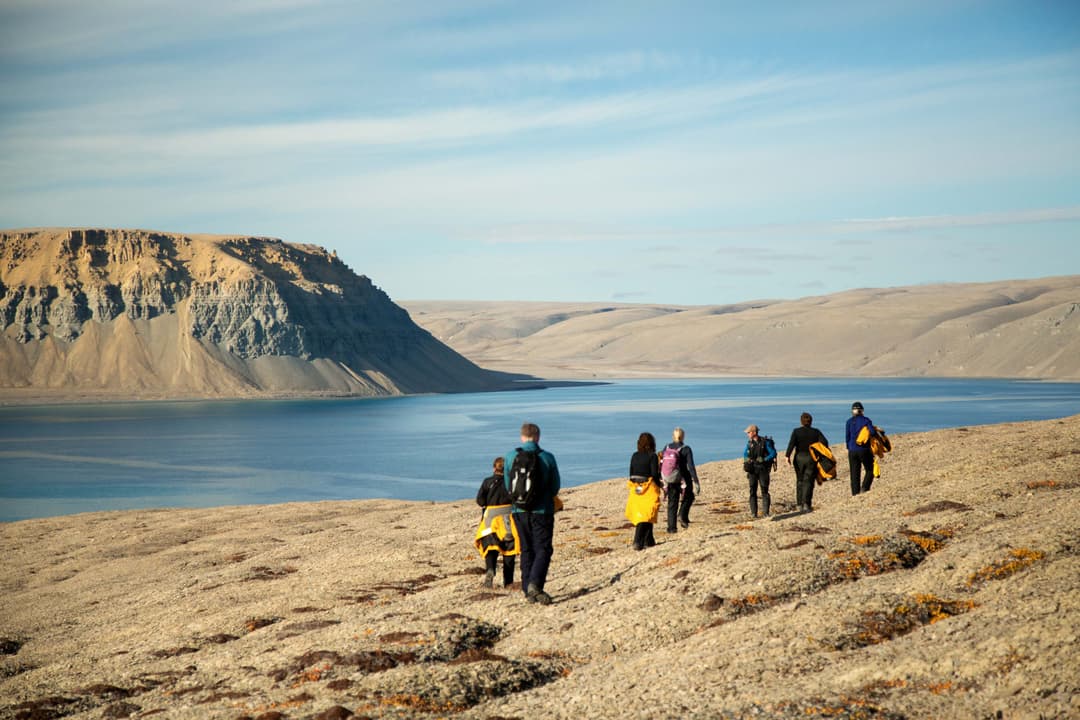
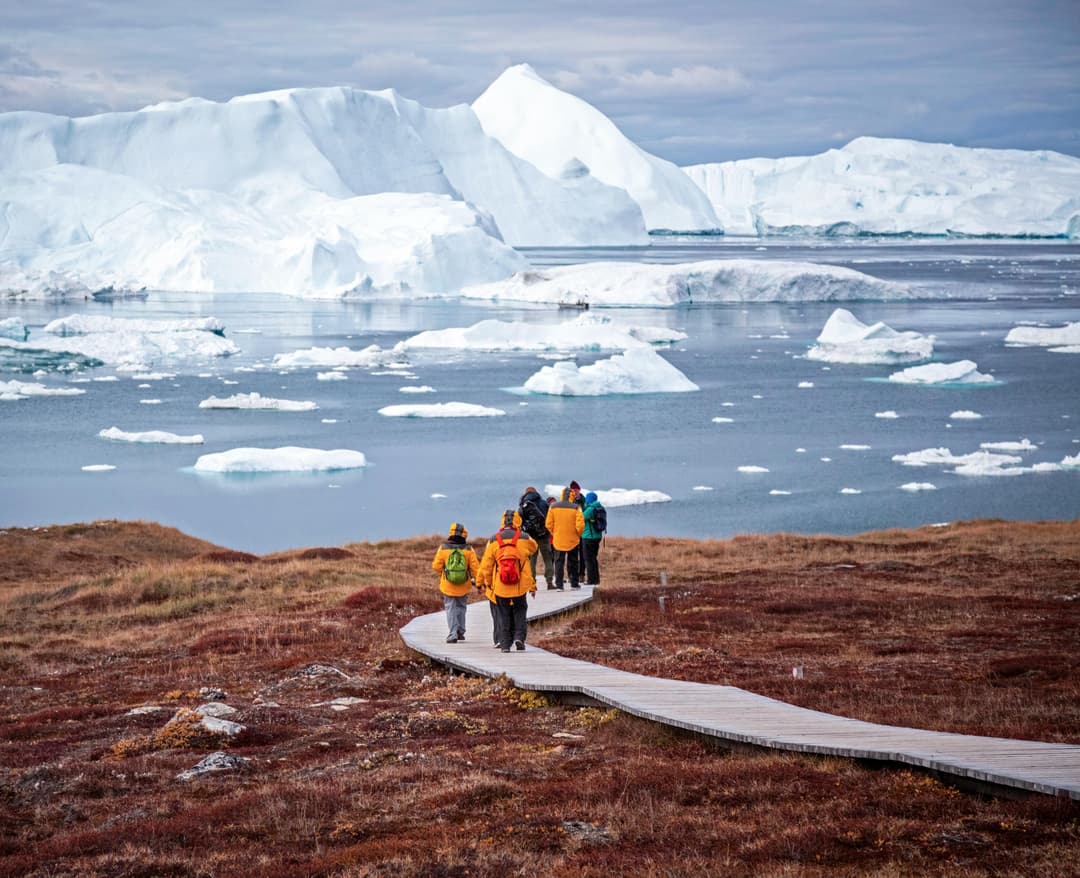
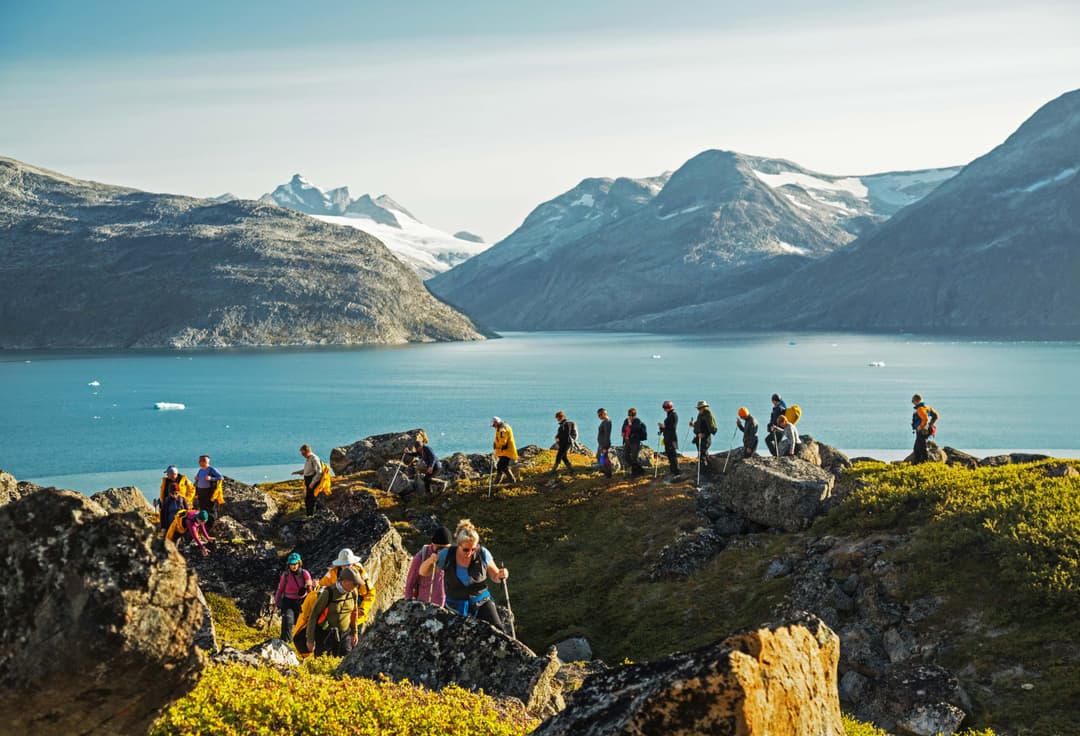
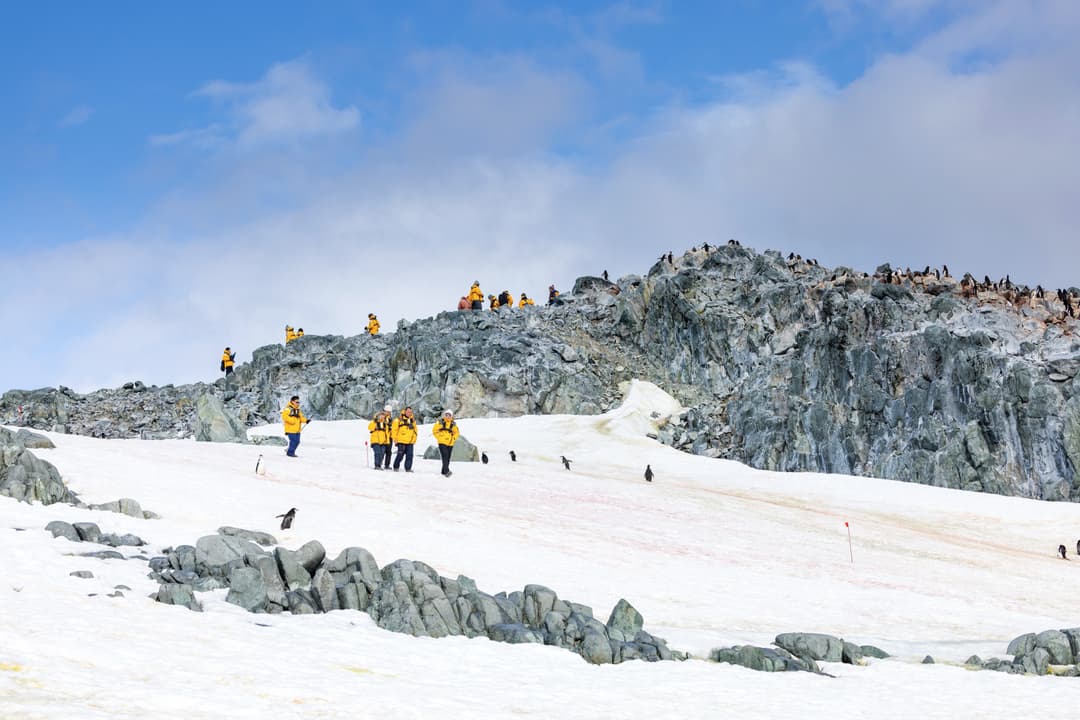
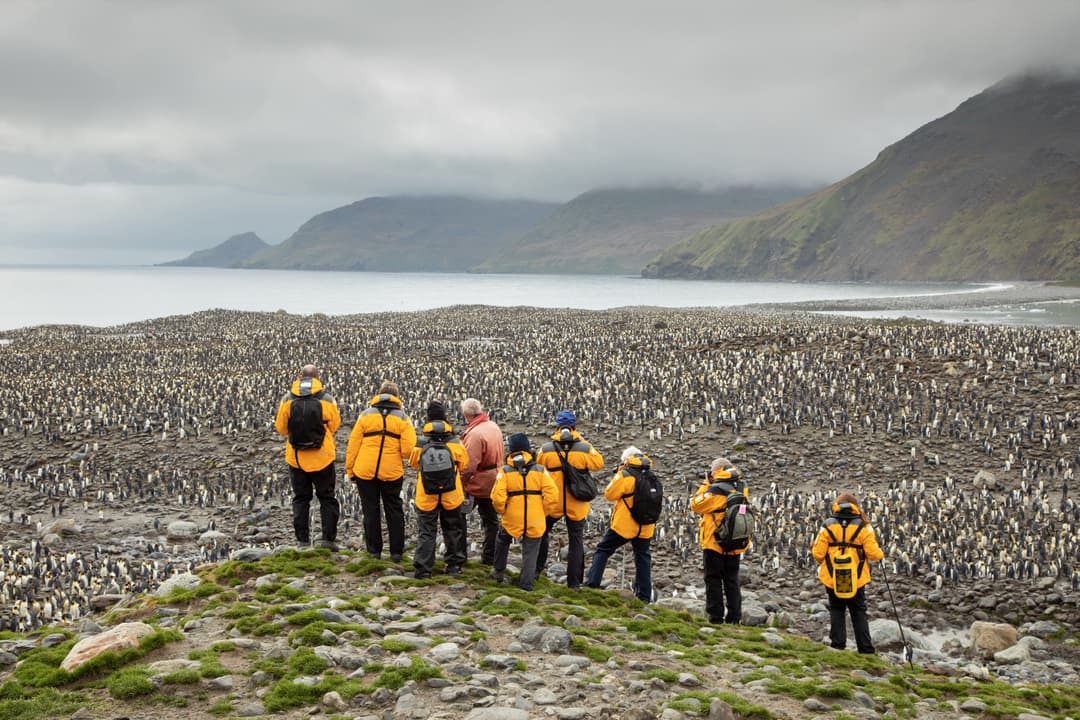
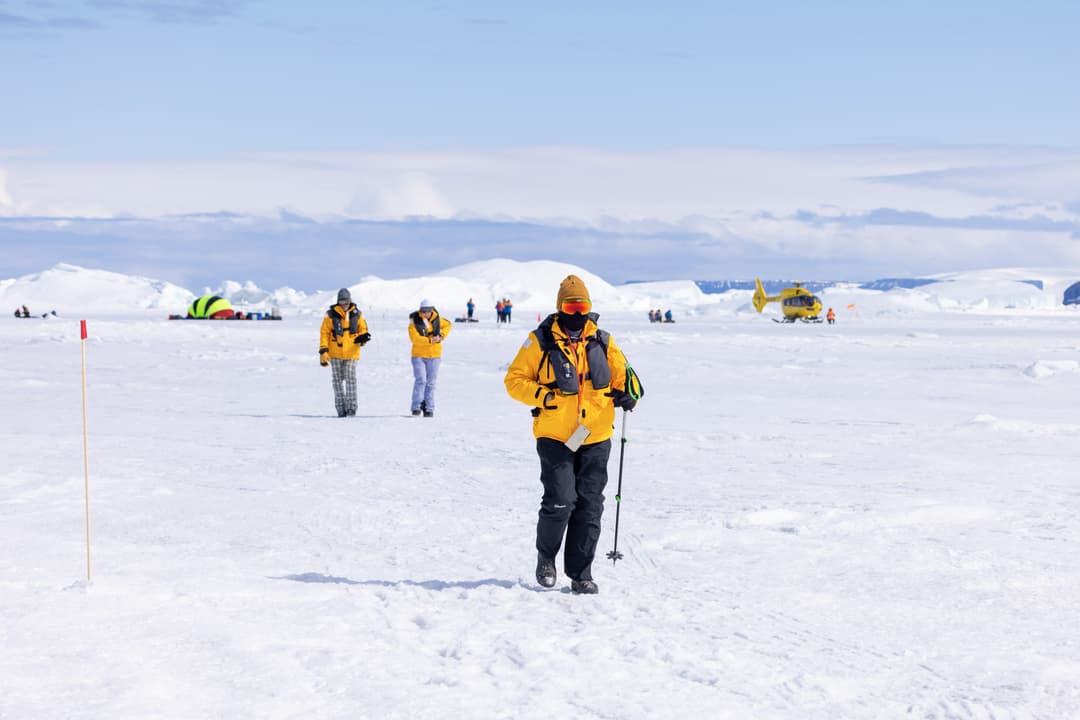
Hiking in the polar regions differs from your typical trail experience. Here, in a tree-less terrain, you are the tallest figure on the landscape as you walk over spongy tundra, crusty snow or sandy beaches in remotes parts of the Arctic and Antarctica. Stepping ashore anywhere in the polar regions means you’re not a distant observer.
Our organized hikes range from short jaunts to the top of lookouts or visits to see wildlife or longer w....





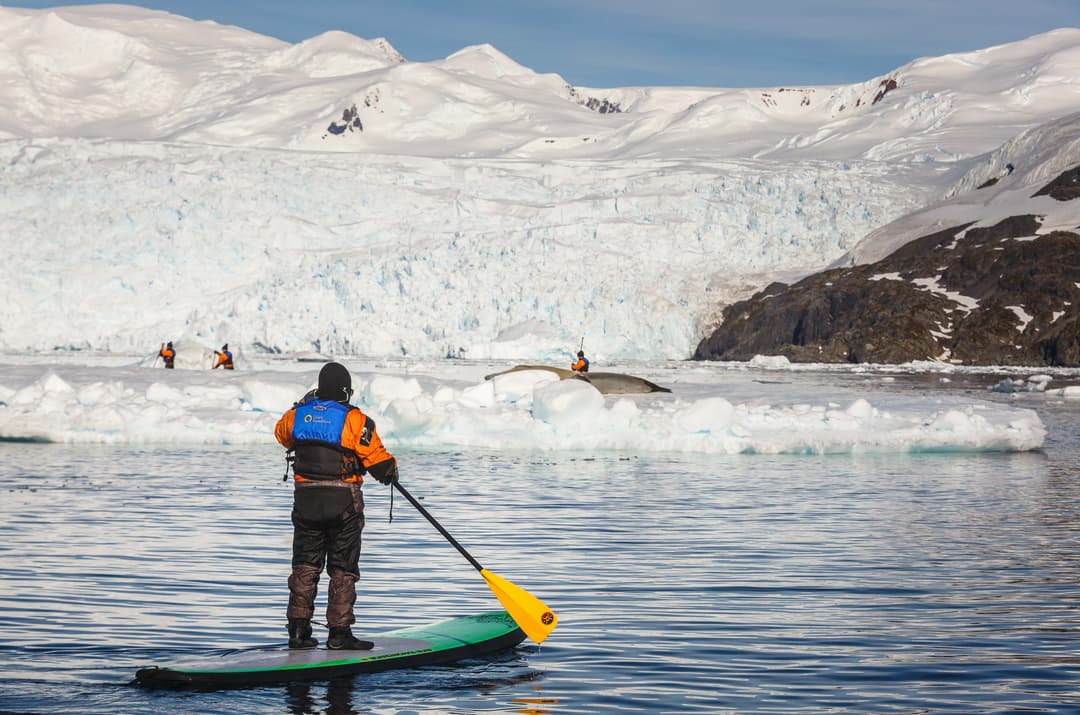
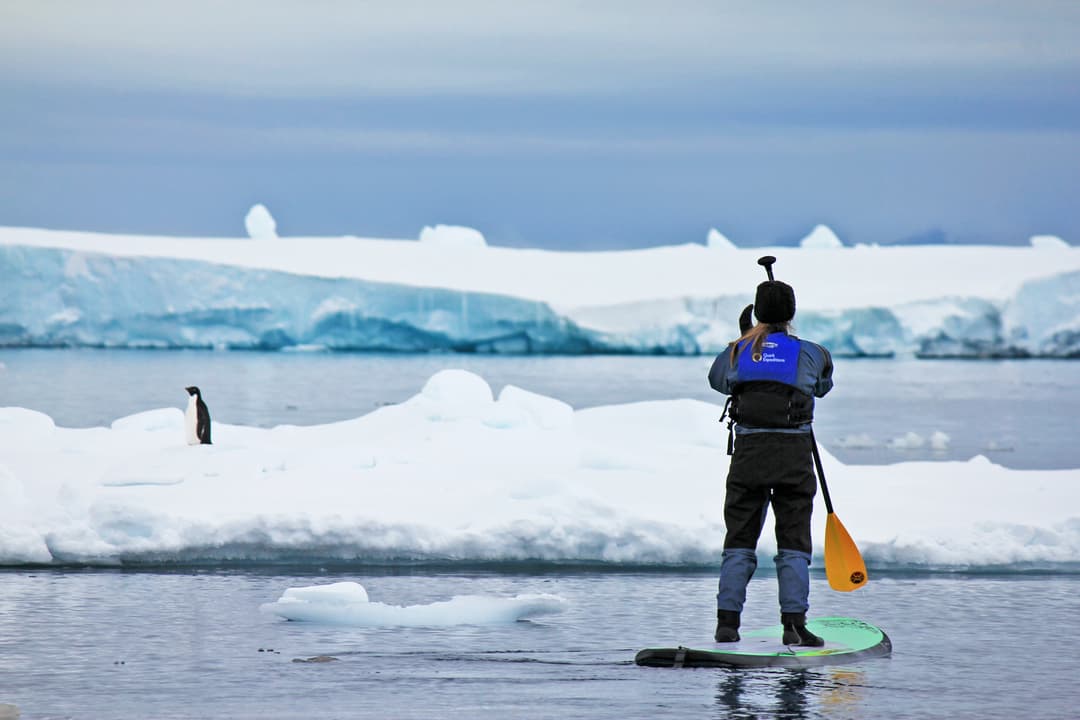
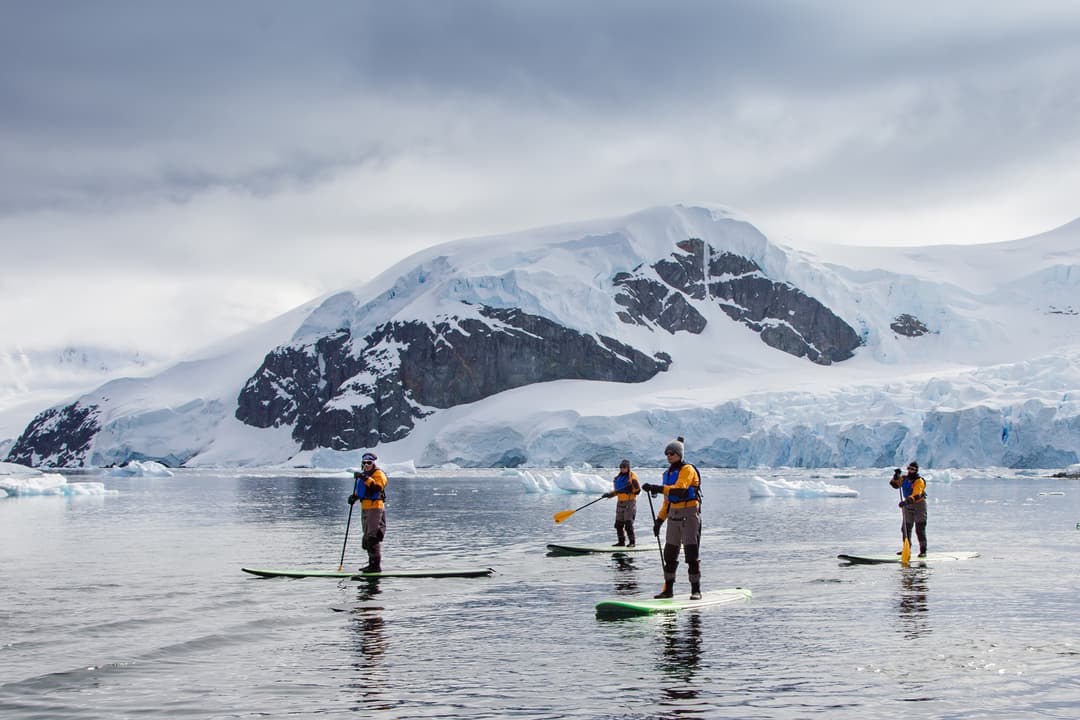
Stand-up Paddleboarding, popularly known as SUPing, originated in Hawaii. Quark Expeditions is the first company to bring this watersport all the way to Antarctica.
SUPing combines the immersive experience of kayaking but in a standing position. Participants, if they prefer, can kneel, sit or even lie down and stare up at the azure Antarctic sky. Because of their wide base and tail fins, SUP boards are quite stable, enabling participants....
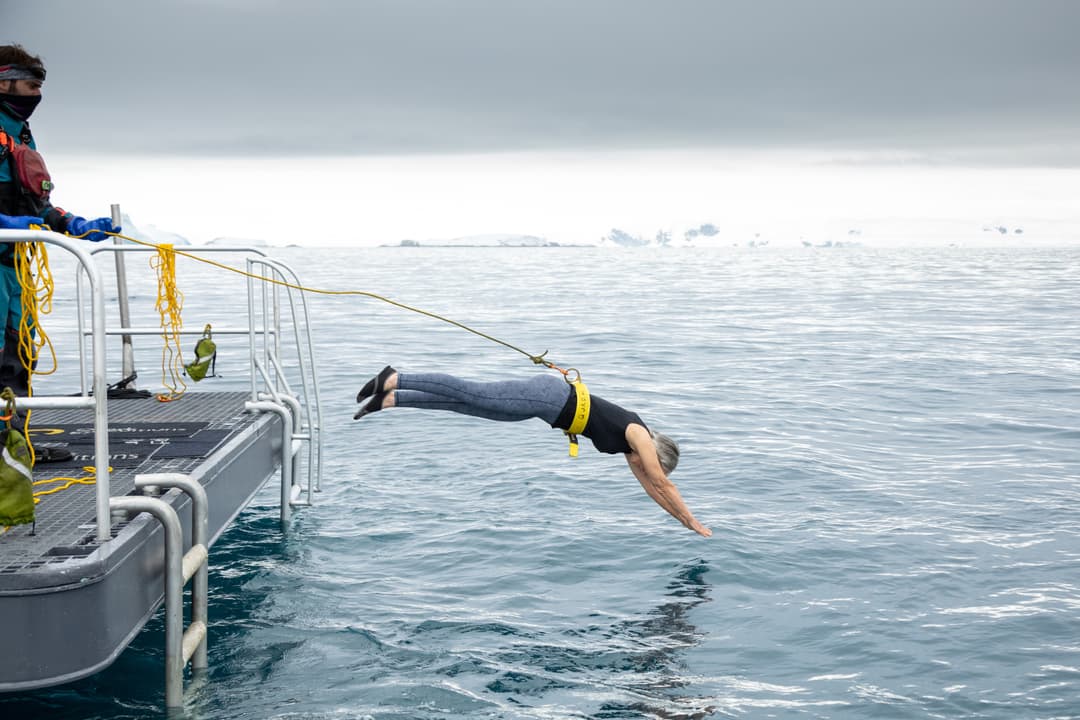
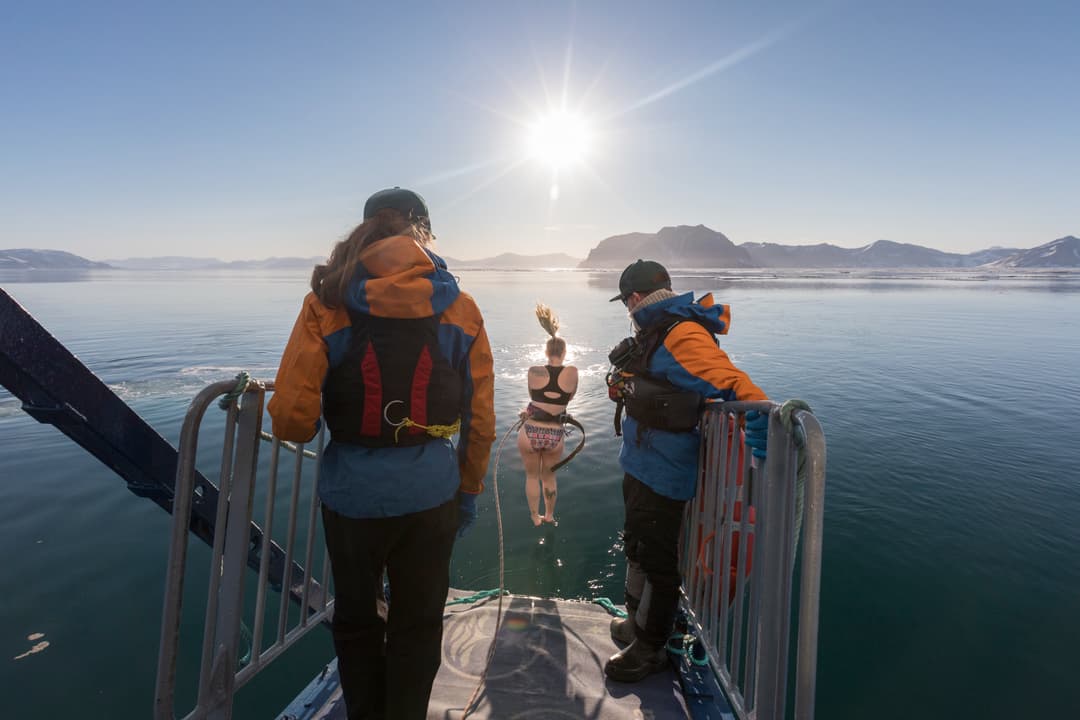
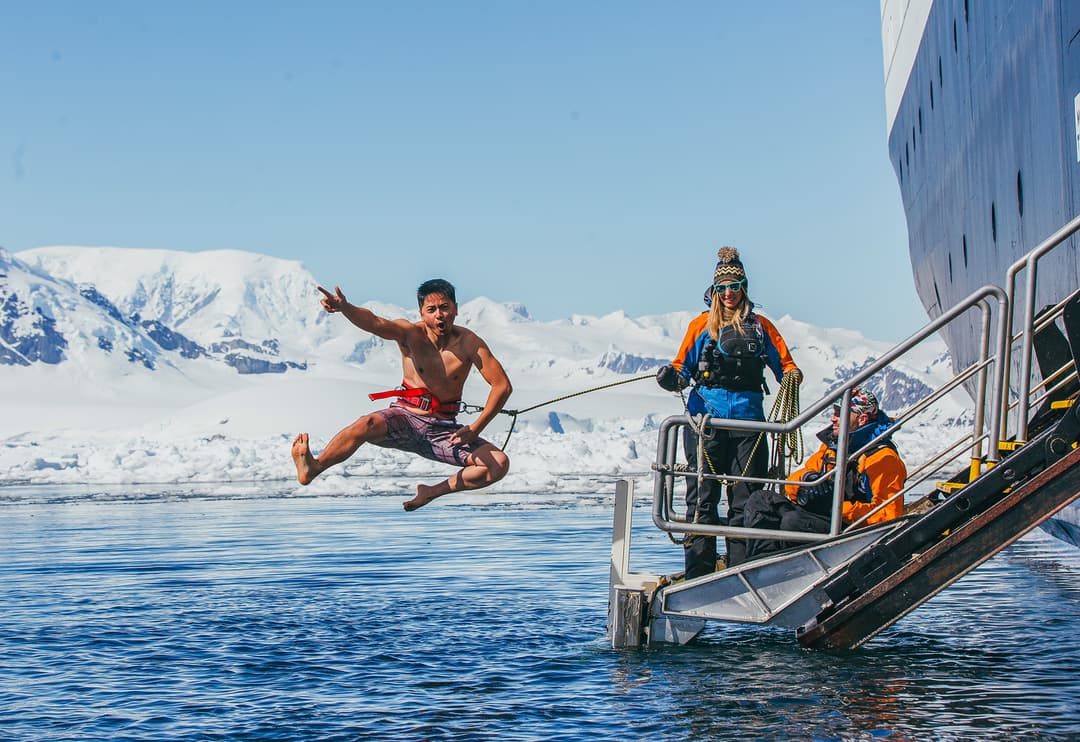
The Polar Plunge is scheduled once during each voyage. Throughout the journey, the Expedition Leader and Captain constantly monitor conditions in order to choose the optimal time and location. The Polar Plunge sometimes takes place onshore or, in many cases, from the gangway or Zodiac. All participants wear a tethered harness and plunge into the polar waters from the side of Zodiac or safety of the gangplank cheered on, of course, by fellow pa....

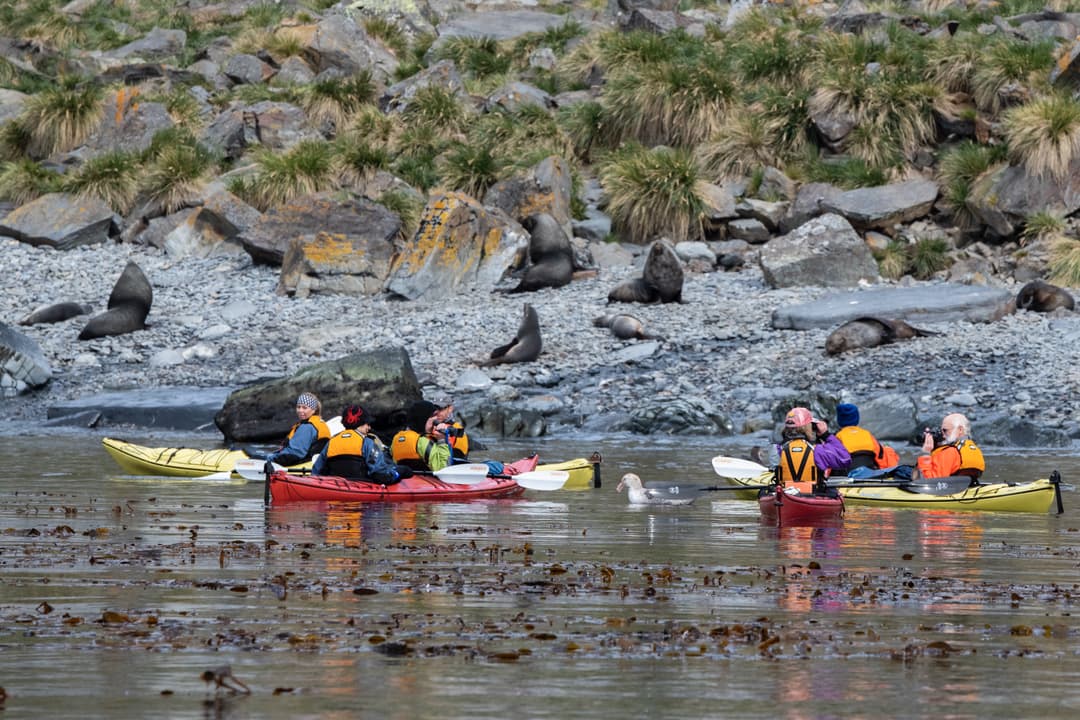
Sea kayaking is offered on all of our departures and you require no previous experience to enjoy this activity. Our sea kayaks are the ideal means by which to get some good exercise and explore the cliffs and shores of the various visitor sites around the archipelago. A typical cruise week offers great opportunities to go kayaking around secluded coves, shores, mangrove estuaries and beautiful beaches. Galapagos penguins, flightless cormorants....






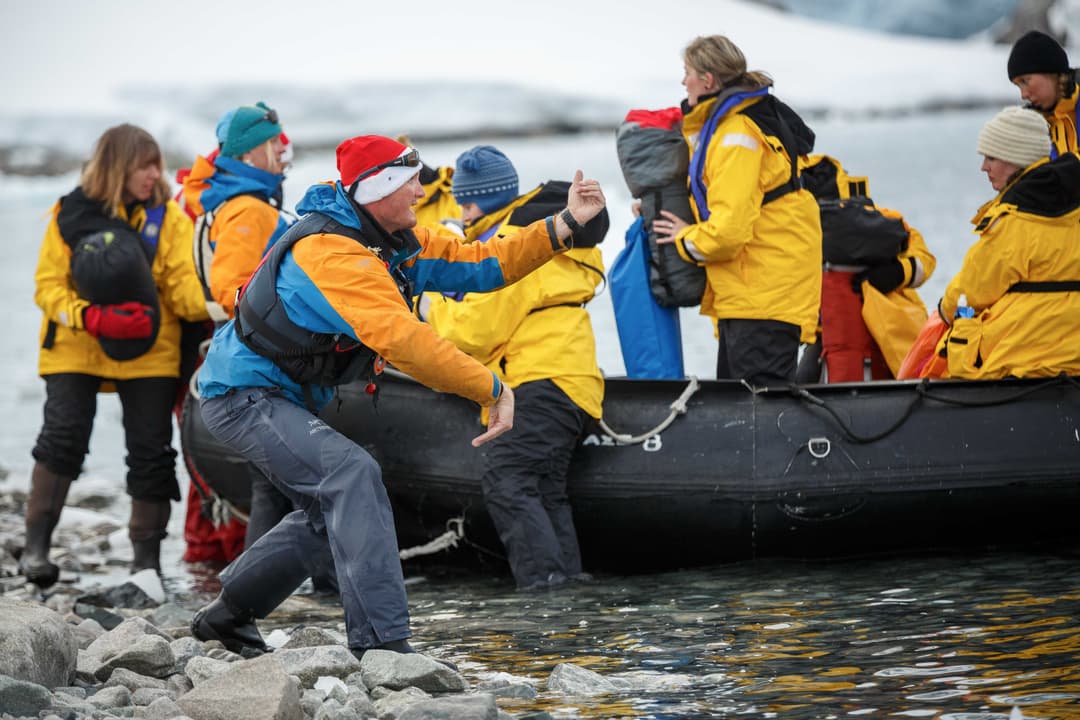
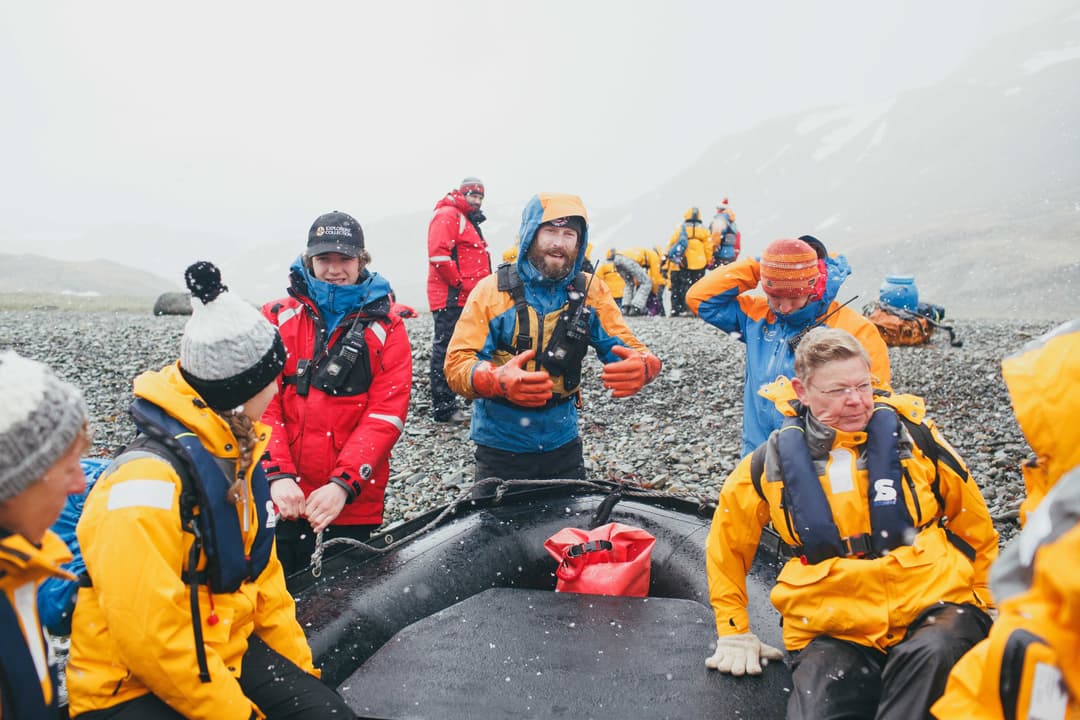
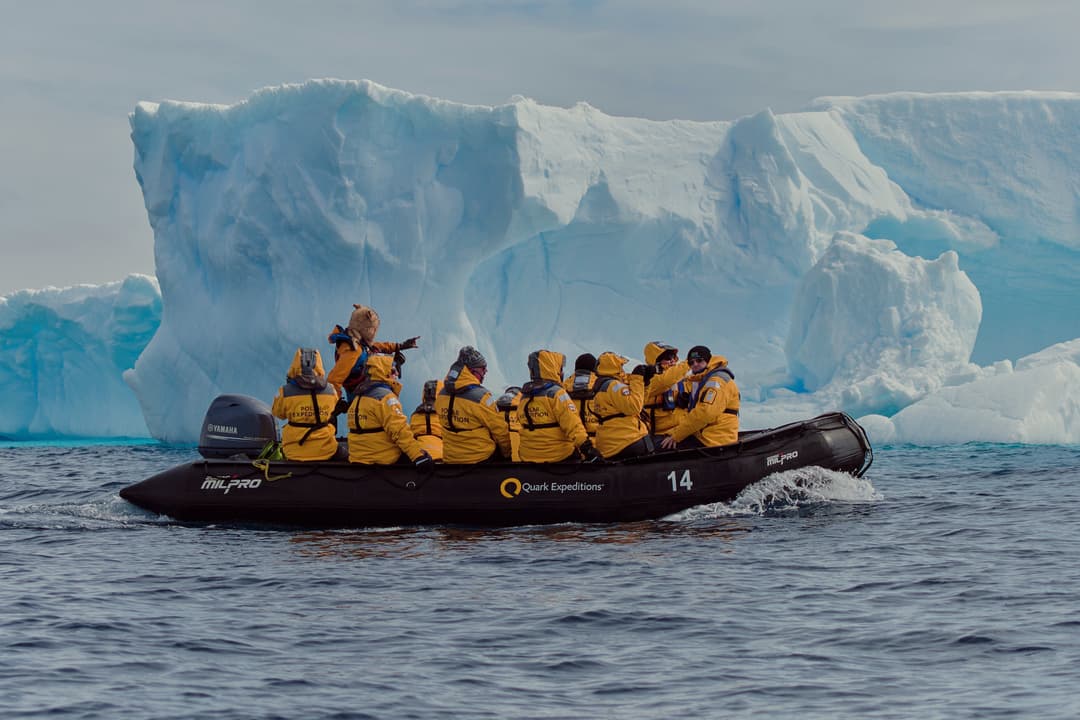
Zodiacs are used for transferring you ashore, transporting your luggage when necessary and for taking you ocean-level cruising among icebergs, whales and seabirds. During the expedition, you will visit remote and isolated sites that are accessible only by Zodiac.
These large, heavy-duty inflatable vessels are extremely safe and were specially designed for expedition work. Zodiacs are the workhorses of Polar expeditions. Separate air comp....
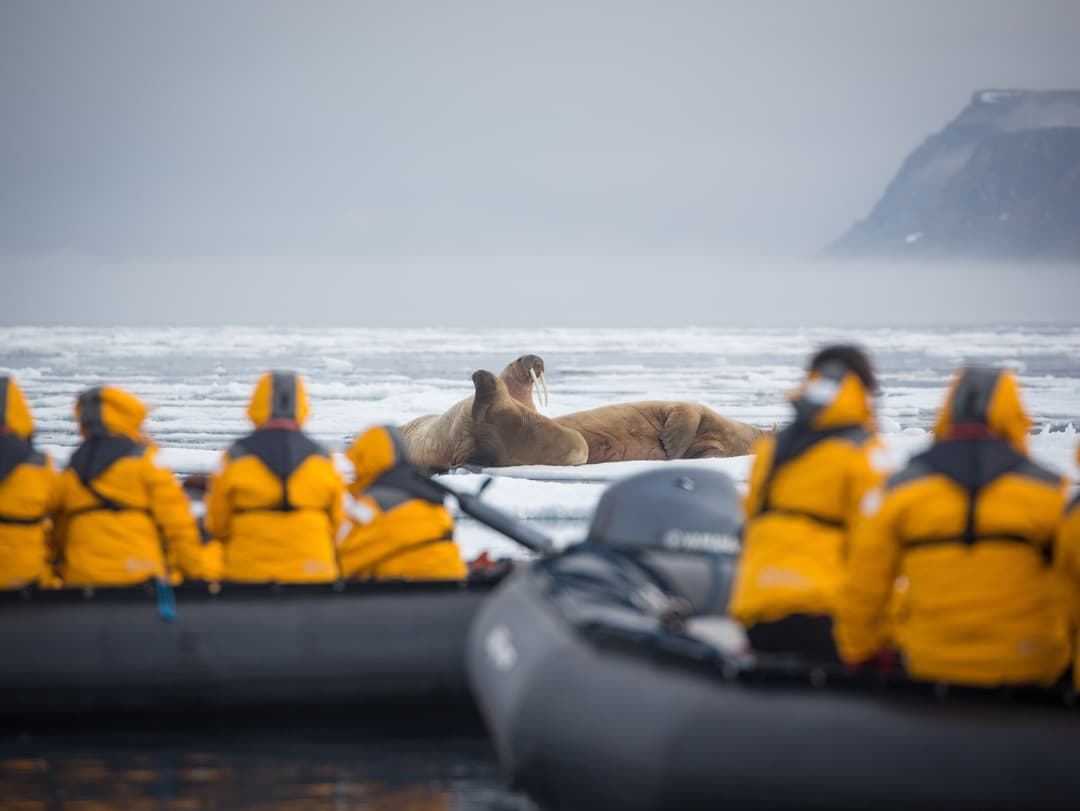

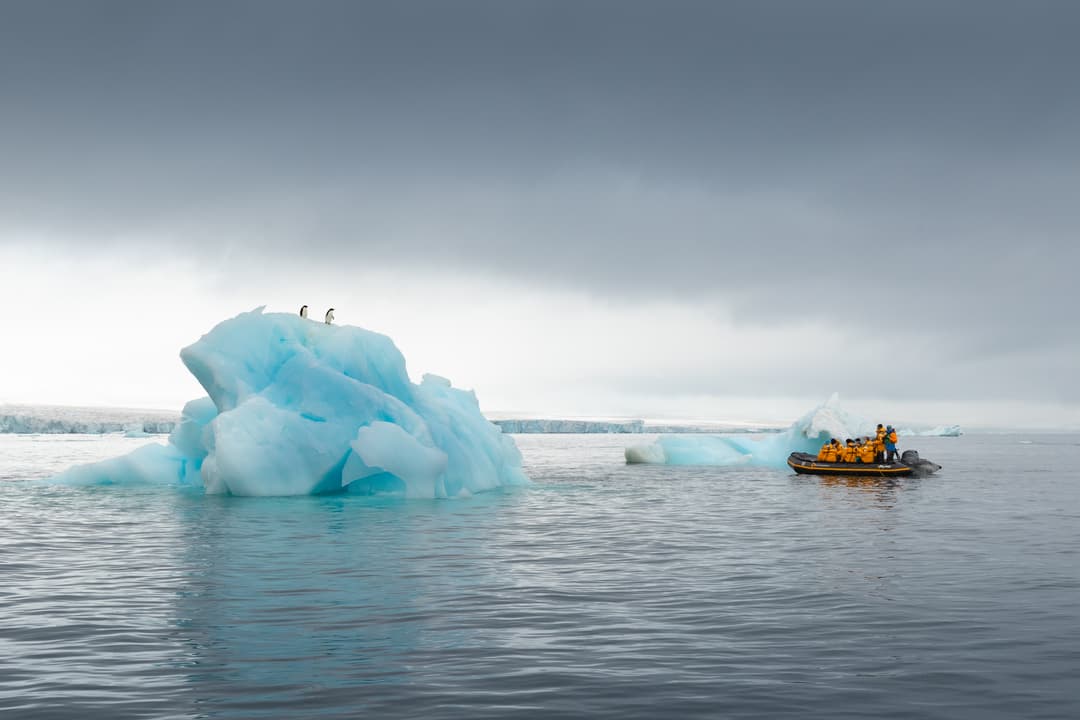

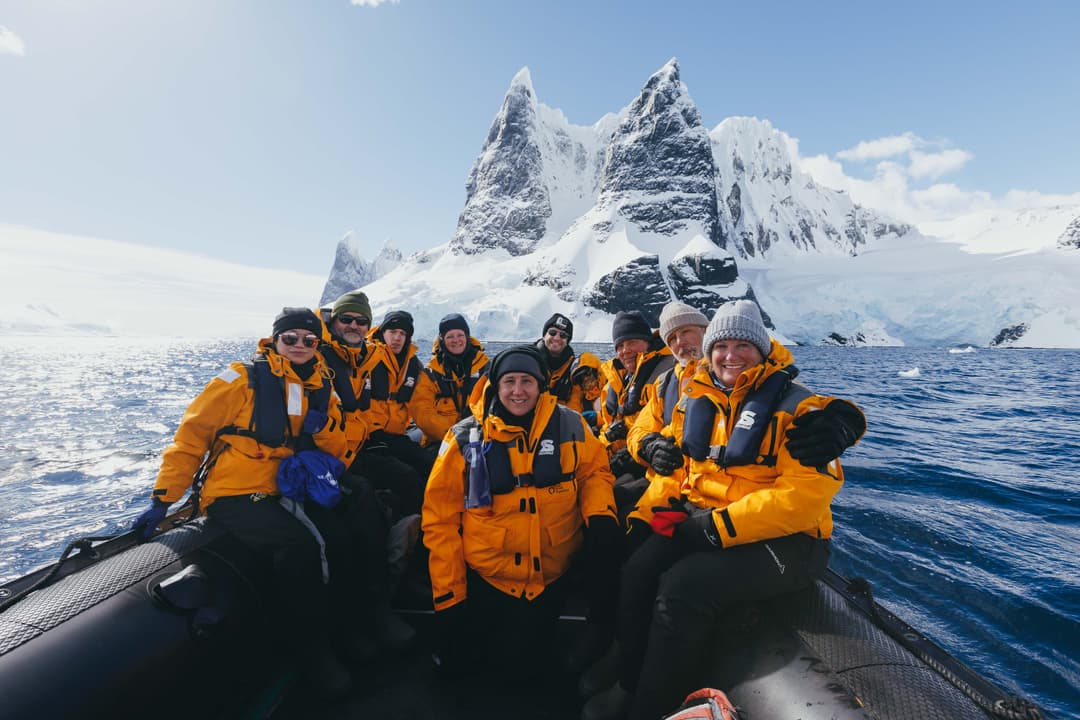
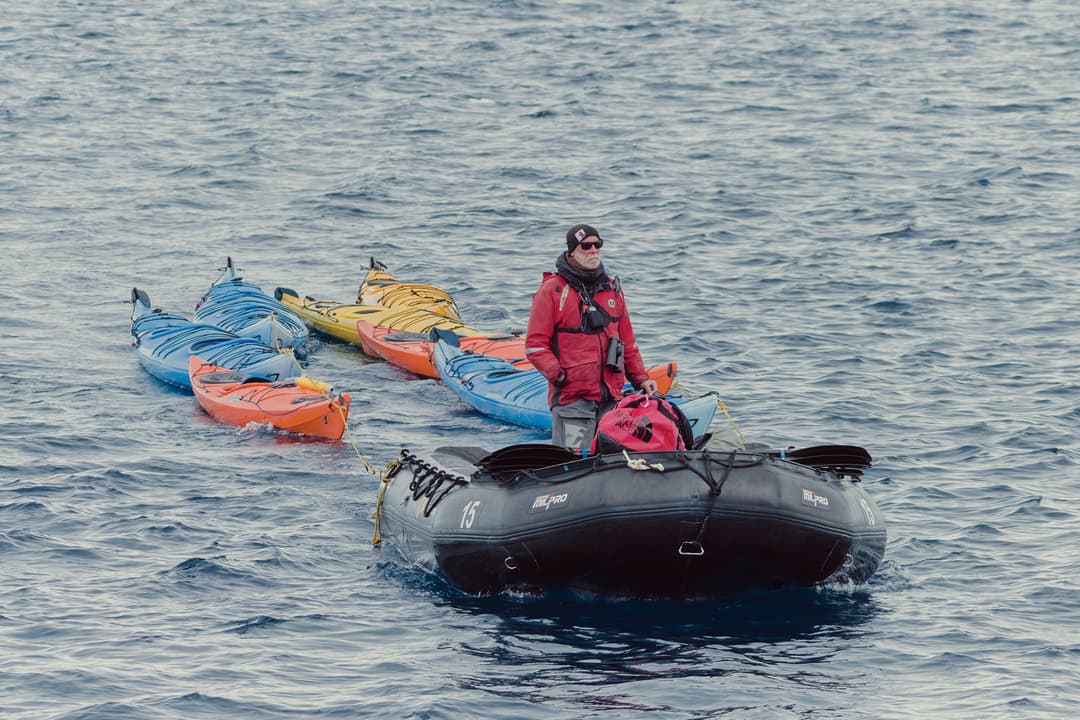
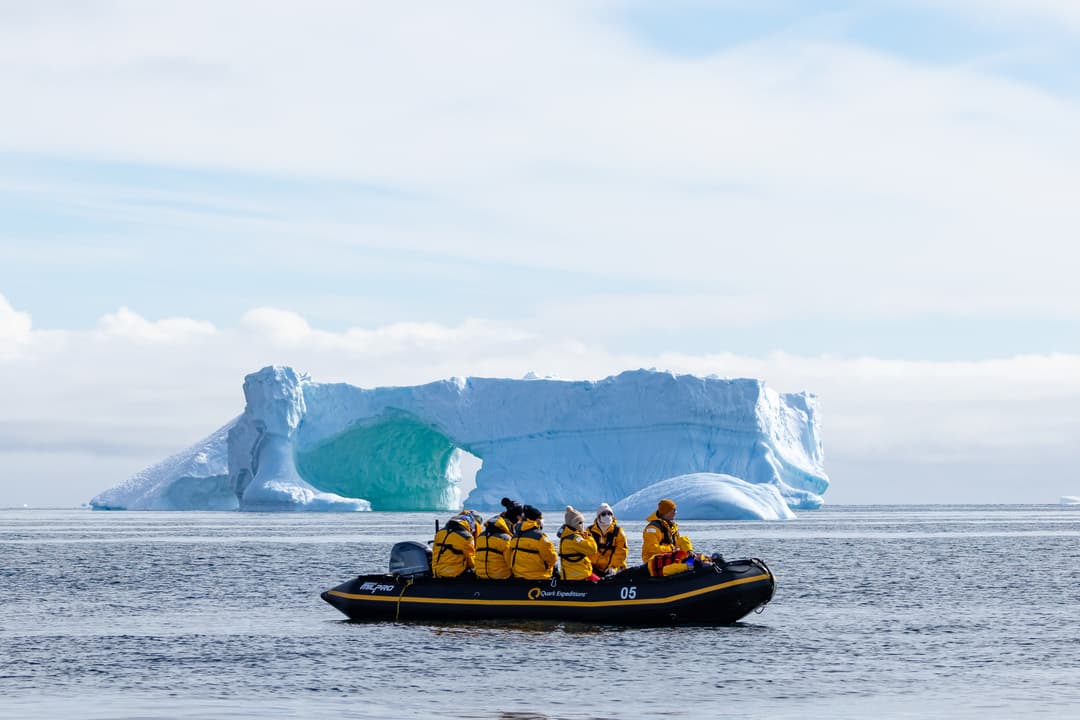


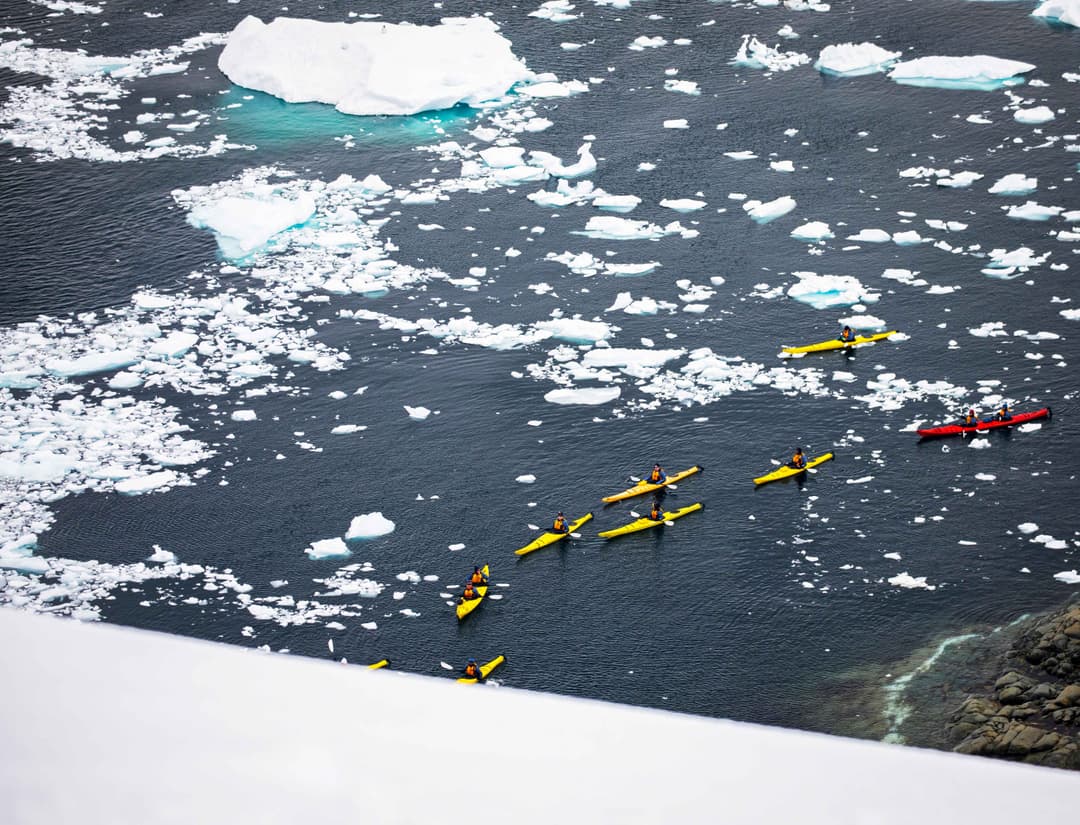
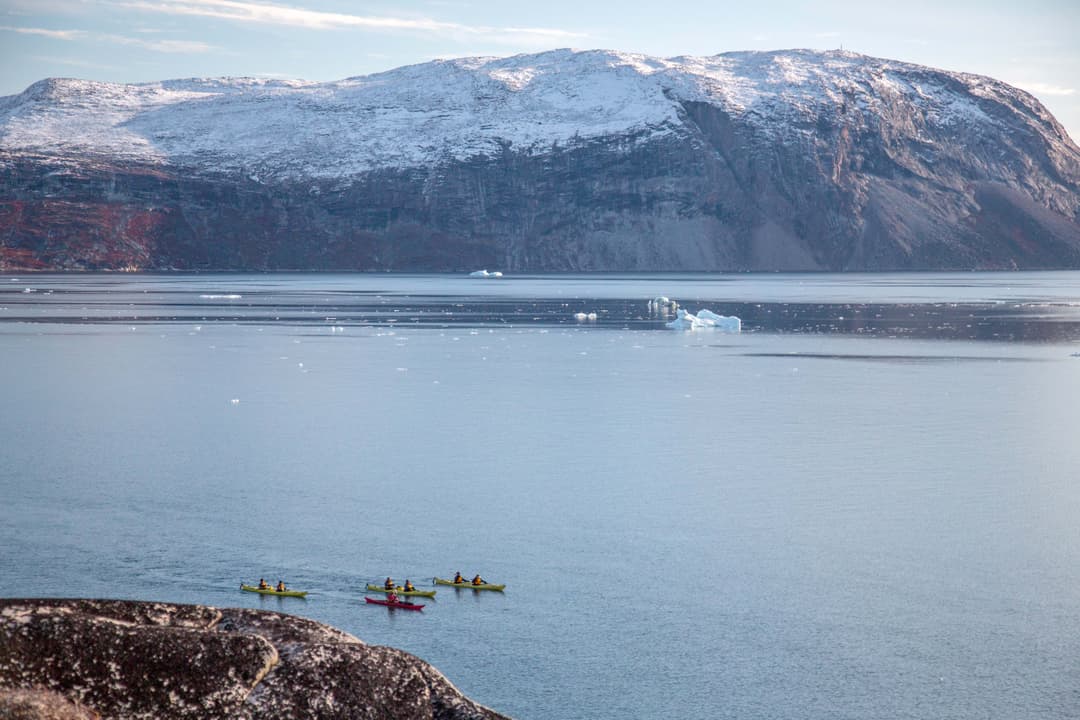
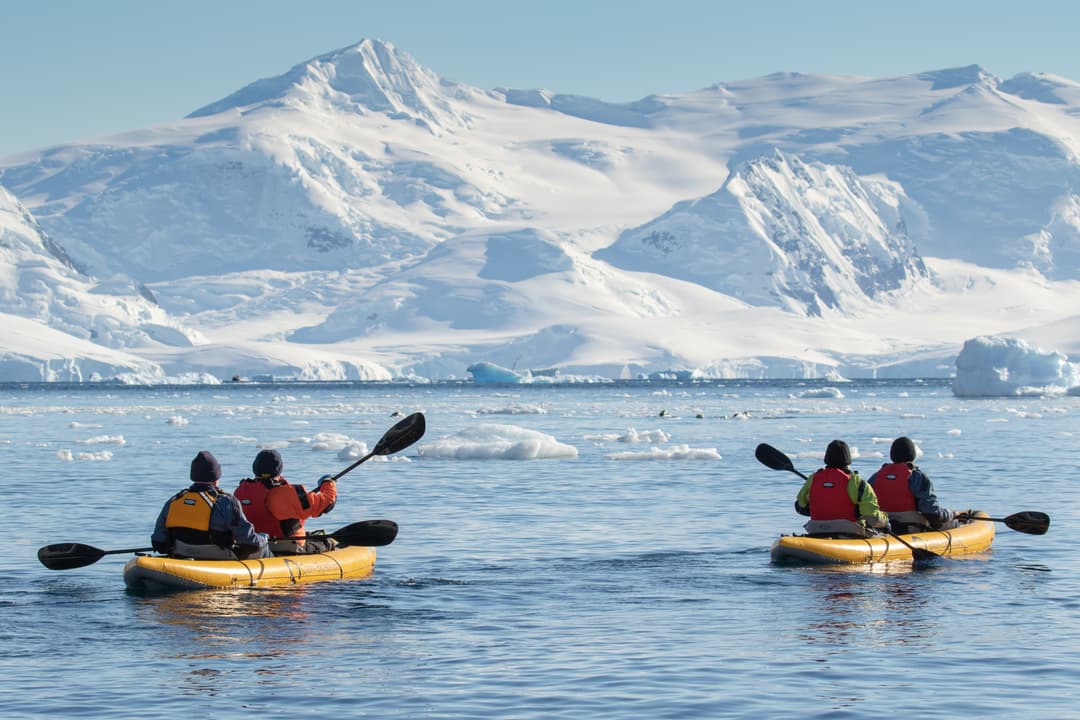
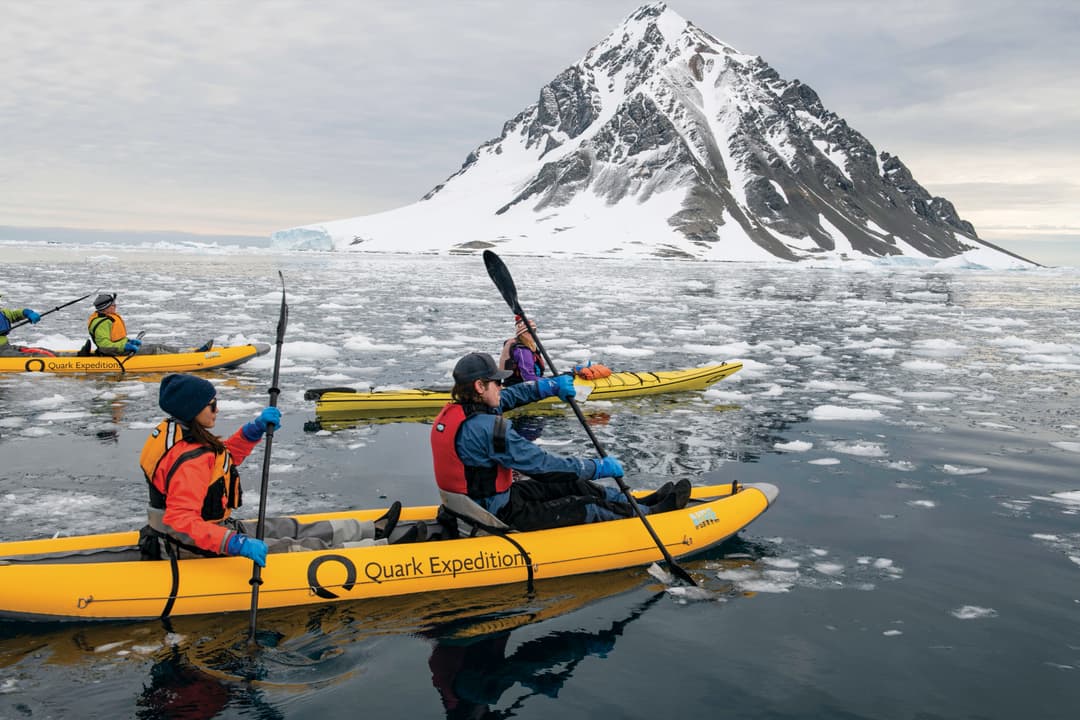
Every sweep of the paddle as your craft glides through the pristine polar waters creates an incredible soundtrack: the jostle of glacial ice, the lapping of waves against the rocky shore, the perpetual drip from your paddle, the call of seabirds, and the occasional splash as wildlife break the surface of the water.
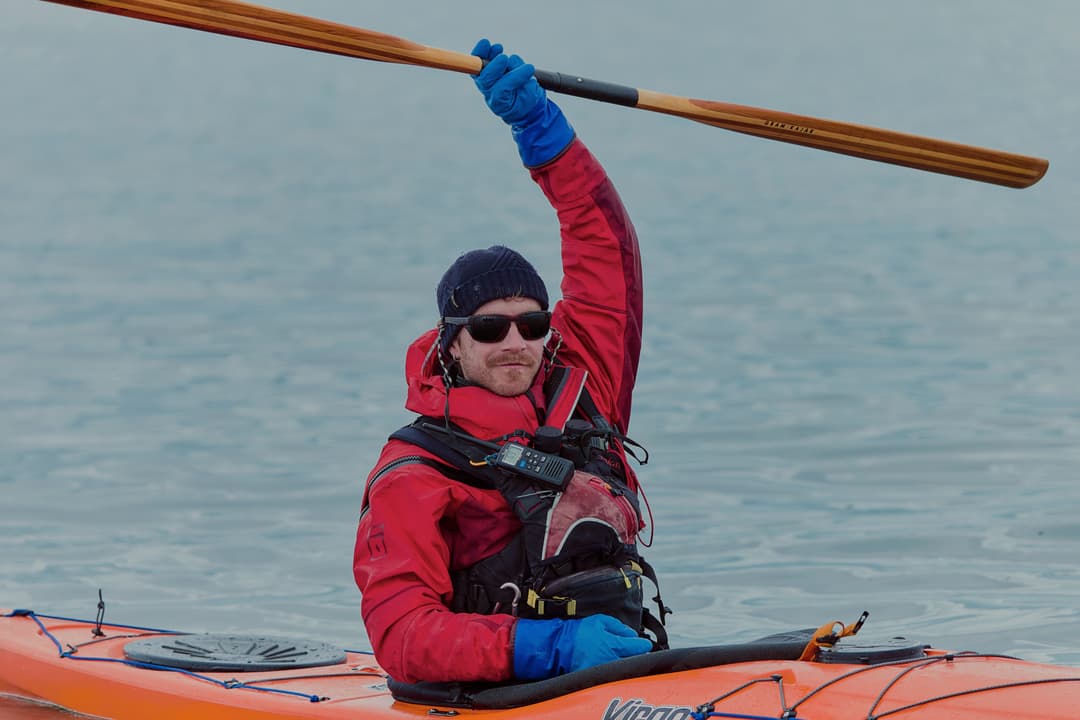
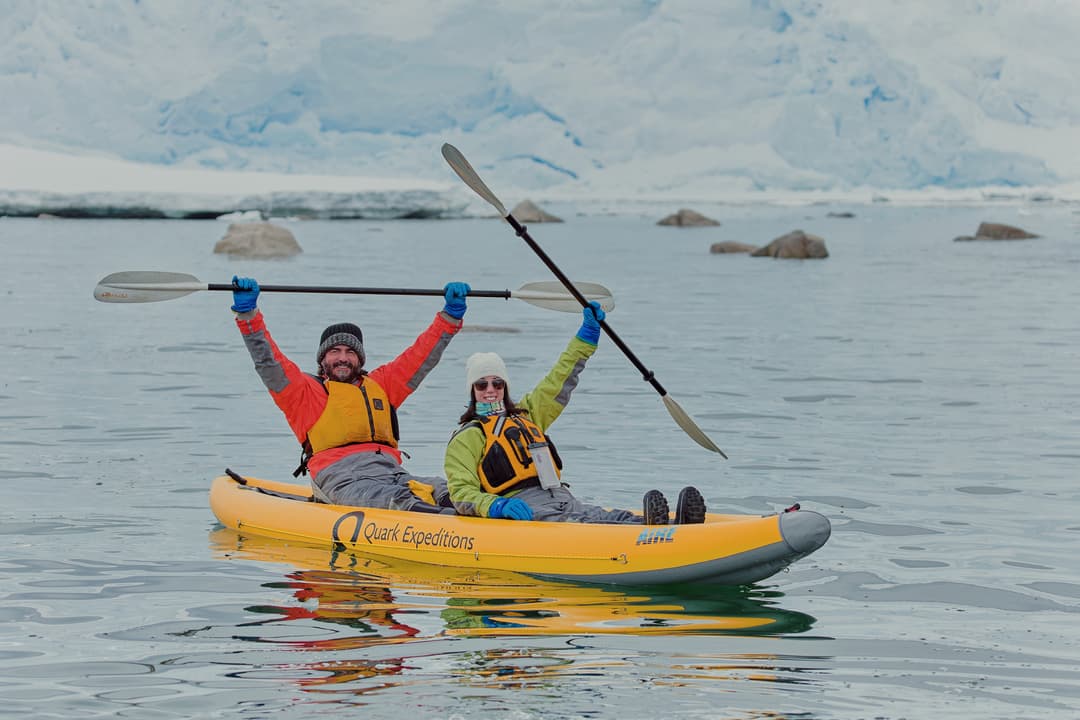
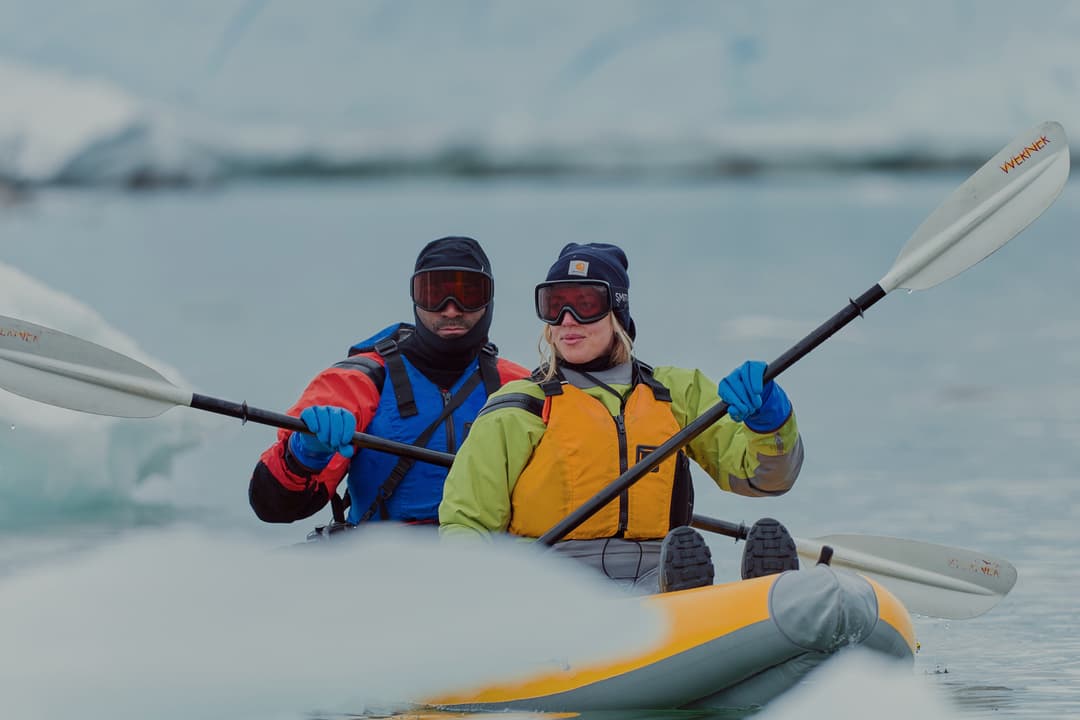
Our Paddle Excursion Program provides sit-on-top, two-person, inflatable kayaks that provide guests with an intimate, water-....


Please note: There are no dedicated children's facilities on board.
Loading...
DOCTOR
Quark provides an English-speaking doctor on board who manages a medical clinic stocked with a supply of common prescription medicines and basic first aid equipment. If you are under regular treatment for any ailment, you must bring a sufficient supply of medicine for yourself. We cannot accept responsibility for not having a specific brand or type of drug on board. Should you fall ill, the doctor will refer to the medical ....
To Wear on Board
- Comfortable casual clothing like lighter shirts, pants or jeans, etc. (in case the ship gets warm)
- Comfortable non-slip closed-toed, heelless shoes (flip flops, sandals or slip-on shoes should not be worn on board due to safety concerns)
- Workout attire (for the fitness center and other indoor activities)
- Swimsuit (for the Polar Plunge! Some vessels may also have a pool, hot tub, sauna ....
To protect the health and safety of its guests, Quark Expeditions® maintains a no smoking or vaping policy in the interior of the ship including cabins, near Zodiacs and on landings. Smoking or vaping on the ship is permitted in the designated smoking area only, which your Expedition Team members will be happy to point out for you. Always make sure to extinguish cigarettes properly and dispose of them in the proper receptacle. Please, never th....
If you do not eat meat there is a wide selection of vegetables, pasta, grains and fruit available. Quark Expeditions® is able to cater to most special dietary requests, as long as you clearly indicated your needs on the required expedition forms when you booked your voyage.
Menus will be clearly labeled for vegetarian and gluten free options, but please do notify your server of the dietary restrictions you indicated on your form. We regr....
Quark Expeditions welcomes passengers age of 8 and above on all trips with a signed waiver by a parent prior to trip commencement. There are however some caveats and restrictions to be aware of:
Children on Ship-based trips
Quark Expeditions welcomes passengers age of 8 and above and under the age of 16 at time of travel with a signed waiver by a parent prior to commencement on any Quark Expeditions trip, provided they meet ....
What is life like on an expedition? During days at sea, you’ll enjoy lectures and workshops presented by our Expedition Team and spend time on deck looking for seabirds and cetaceans. Other days are packed full with multiple landings,
Zodiac cruises and activities. Exhausting or relaxing, smiles abound as do great meals from your onboard chefs! We have a number of policies and procedures that help make sure things run smoothly on the Wor....
WATER
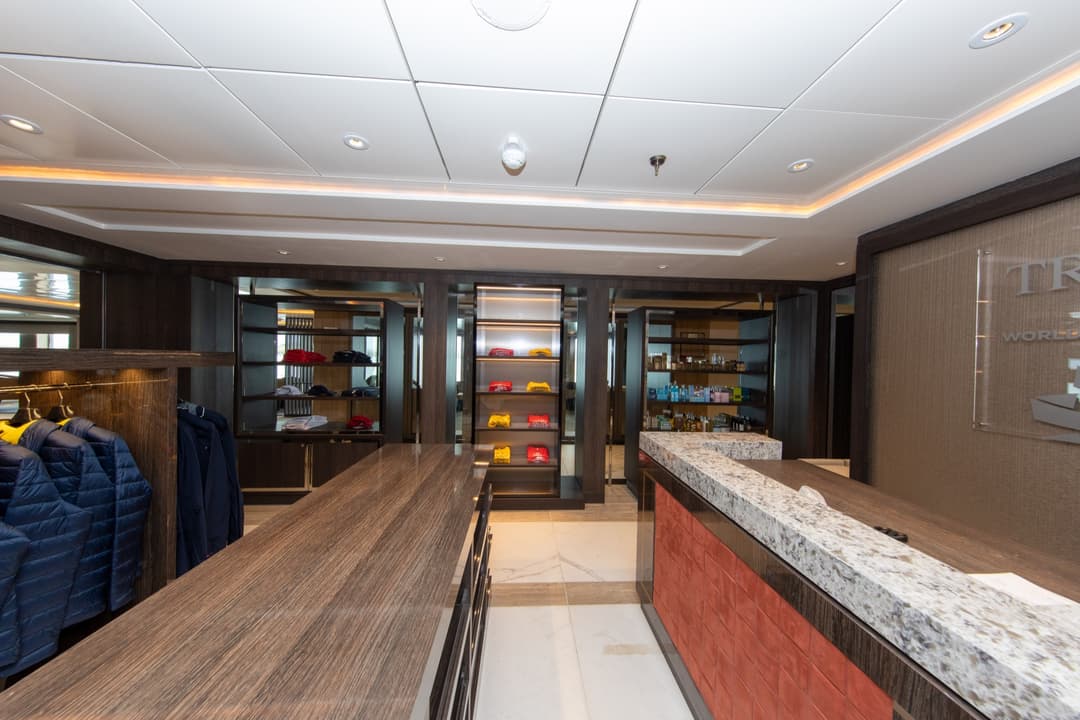
All passengers receive an eco-friendly, reusable water bottle in their cabin upon arrival. You can refill your water bottle at any of the bars on board, or at the self filling stations on Deck 4 across from the Polar Boutique, or on Deck 3 in the mudroom.
ON BOARD ACCOUNTS
To make things as stress-free as possible, items you purchase from the Polar Boutique, lounge or bar (including drinks) are charged to ....
When you are not busy exploring the natural beauty of the Polar Regions, you may wish to connect with family and friends back home to share some of your voyage highlights. Guests on Quark Expeditions can now enjoy free Wi-Fi as part of our “Raise a Glass and Stay Connected Free” program. This complementary Wi-Fi service permits basic Internet browsing and voice applications.
Please note that we travel to some of the most remote parts of ....
SHOWERS AND TOILETS
Each cabin has a private bathroom with shower, toilet and wash basin. L’Occitane shampoo, conditioner and shower gel are provided for your use. The toilet system is very sensitive and can only handle toilet paper. Please do not deposit any tissues, paper towels, feminine products, etc. in the toilet.
ELECTRIC CURRENT
The electrical supply on board is dual voltage 220/110 volts. You will find....